Last weekend, I had dinner with one of the oldest and best-performing technology managers in Silicon Valley. We met at a small out-of-the-way restaurant in Oakland near Jack London Square so no one would recognize us. It was blessed with a very wide sidewalk out front and plenty of patio tables.
The service was poor and the food indifferent, as are most dining experiences these days. I ordered via a QR code menu and paid with a touchless Square swipe.
I wanted to glean from my friend the names of the best tech stocks to own for the long term right now, the kind you can pick up and forget about for a decade or more, a “lose behind the radiator” portfolio.
To get this information I had to promise the utmost in confidentiality. If I mentioned his name you would say “Oh my gosh!”
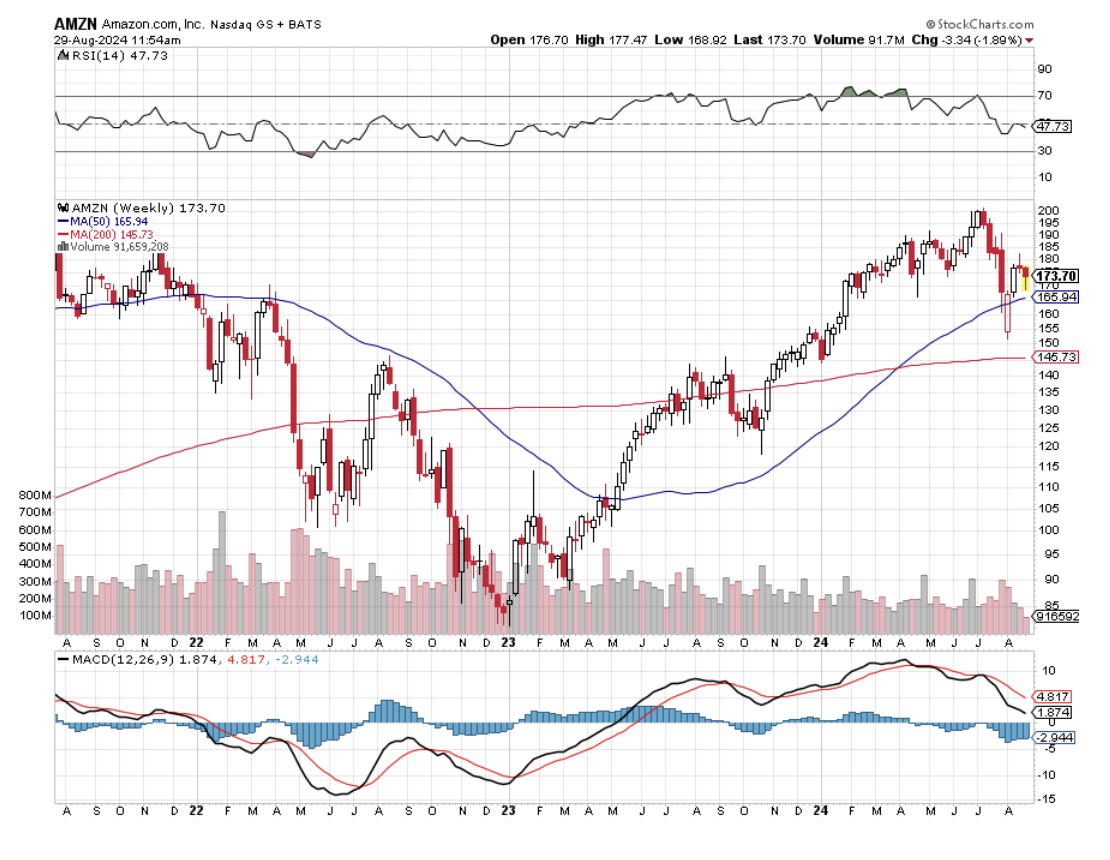
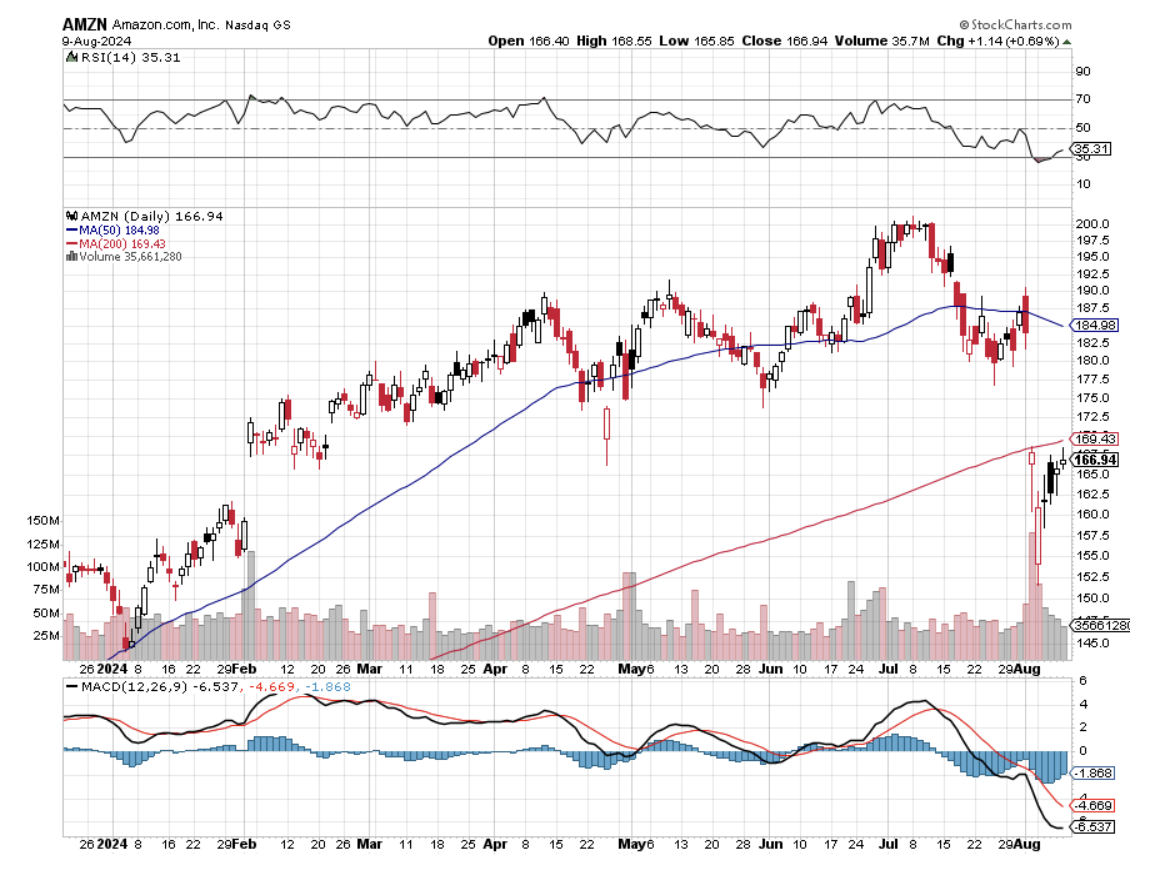
Amazon (AMZN) is now his largest holding, the current leader in cloud computing. Only 5% of the world’s workload is on the cloud presently so we are still in the early innings of a hyper-growth phase there.
By the time you price in all the transportation, labor, and warehousing costs, Amazon breaks even with its online retail business at best. The mistake people make is only focusing on these lowest-of-margin businesses.
It’s everything else that’s so interesting. While its profitability is quite low compared to the other FANG stocks, Amazon has the best growth outlook. For a start, third-party products hosted on the Amazon site, most of what Amazon sells, offer hefty 30% margins.
Amazon Web Services (AWS) has grown from a money loser to a huge earner in just four years. It’s a productivity improvement machine for the world’s cloud infrastructure where they pass all cost increases on to the customer, who once in, buys more services.
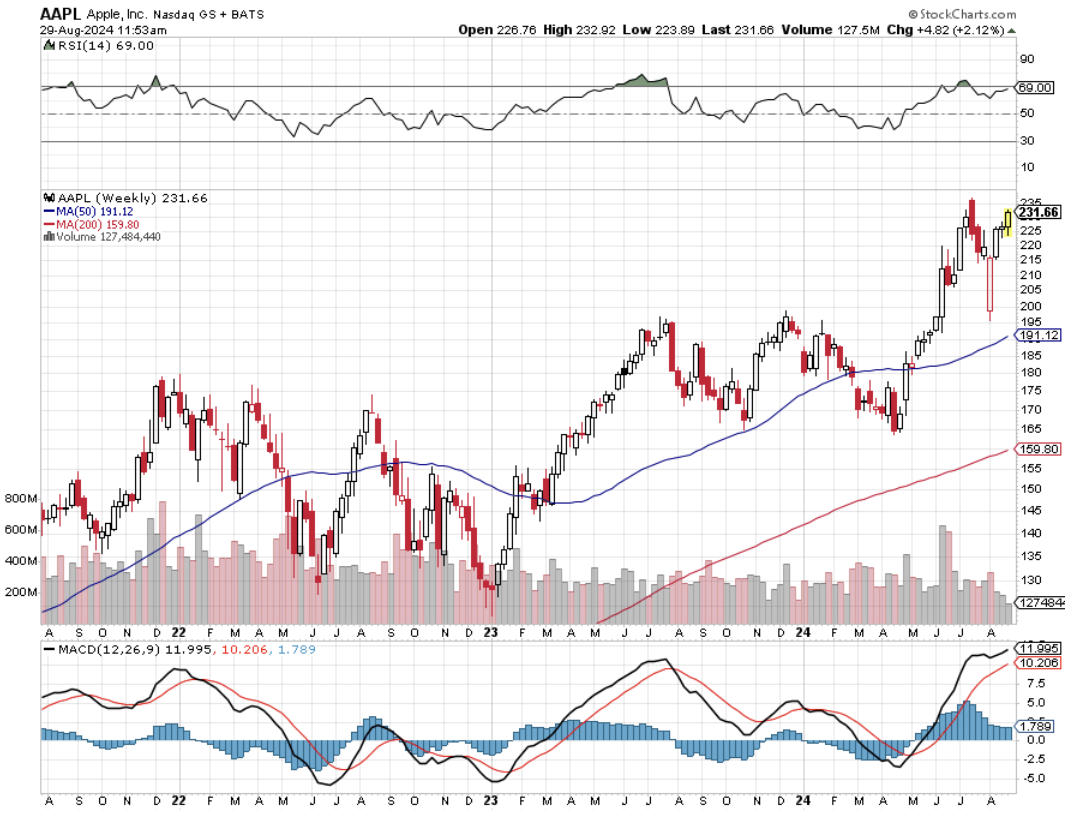
Apple (AAPL) is his second holding, the next AI stock. The company is in transition now justifying a massive increase in earnings multiples, from 9X to 25X over the last several years. The iPhone has become an indispensable device for people around the world, and it is the services sold through the phone that are key.
The iPhone is really not a communications device but a selling device, be it for apps, storage, music, or third-party services. The cream on top is that Apple is at the very beginningof an enormous replacement cycle for its installed base of over one billion phones. Moving from up-front sales to a lifetime subscription model will also give it a boost.
Half of these are more than four years old and positively geriatric in the tech world. More than half of these are outside the US. 5G will add a turbocharger.
Netflix (NFLX) is another favorite. The world is moving to “over-the-top” content delivery and Netflix is already spending twice as much on content as any other company in this area. This is why the company won an amazing 21 Emmys this year. This will become a much more profitable company as it grows its subscriber base and amortizes its content costs. Their cash flow is growing by leaps and bounds, which they can use to buy back stock or pay a dividend.
Generally speaking, there is no doubt that the pandemic has pulled forward some future technology demand with the stay-at-home trend. But these companies have delivered normal growth in a hard world. Tech growth will accelerate in 2021 and 2022.
5G will enable better Internet coverage for everyone and will increase the competitiveness of telecom companies. Factory automation will be another big area for 5G, as it is reliable and secure, and can be integrated with artificial intelligence.
Transportation will benefit greatly. Connected self-driving cars will be a big deal, improving safety and the quality of life.
My friend is not as worried about government-threatened breakups as regulation. There will be more restraints on what these companies can do going forward. Europe, which has no big tech companies of its own, views big American tech companies simply as a source of revenue through fines. Driving companies out of business through cutthroat competition is simply not something Europeans believe in.
Google (GOOG) is probably more subject to antitrust proceedings both in Europe and the US. The founders have both retired to pursue philanthropic activities, so you no longer have the old passion (“don’t be evil”).
Both Google and Meta (META) control 70% of the advertising market, which is inherently a slow-growing market, expanding at 5% a year at best. (META)’s growth has slowed dramatically, while it has reversed at (GOOG).
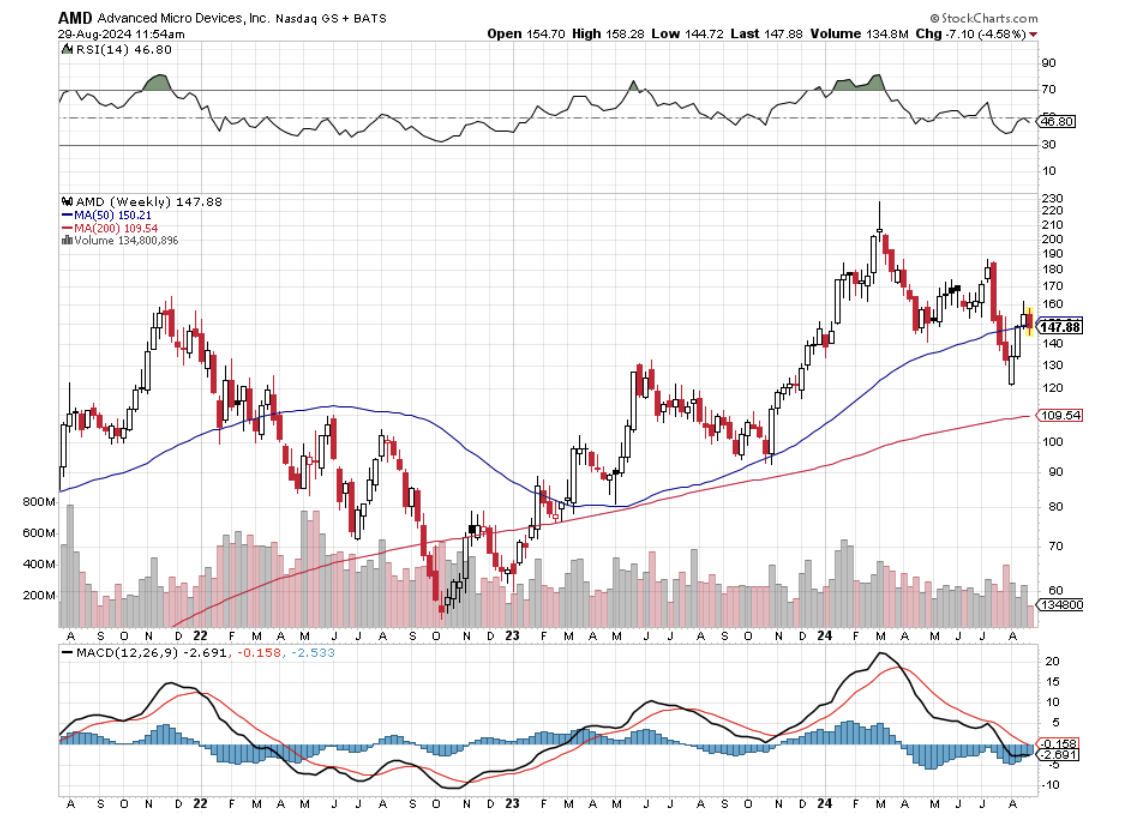
He is a big fan of (AMD), one of his biggest positions, which is undervalued relative to the other chip companies. They out-executed Intel (INTC) over the last five years and should pass it over the next five years.
He has raised the value of tech stocks from 15% to 30% of his portfolio. Apple used to be one of these. Semiconductor companies today also fall into this category. Samsung with 40% margins in its memory business is a good example. Selling for 10X earnings it is ridiculously cheap. It is just a matter of time before semiconductors get rerated too.
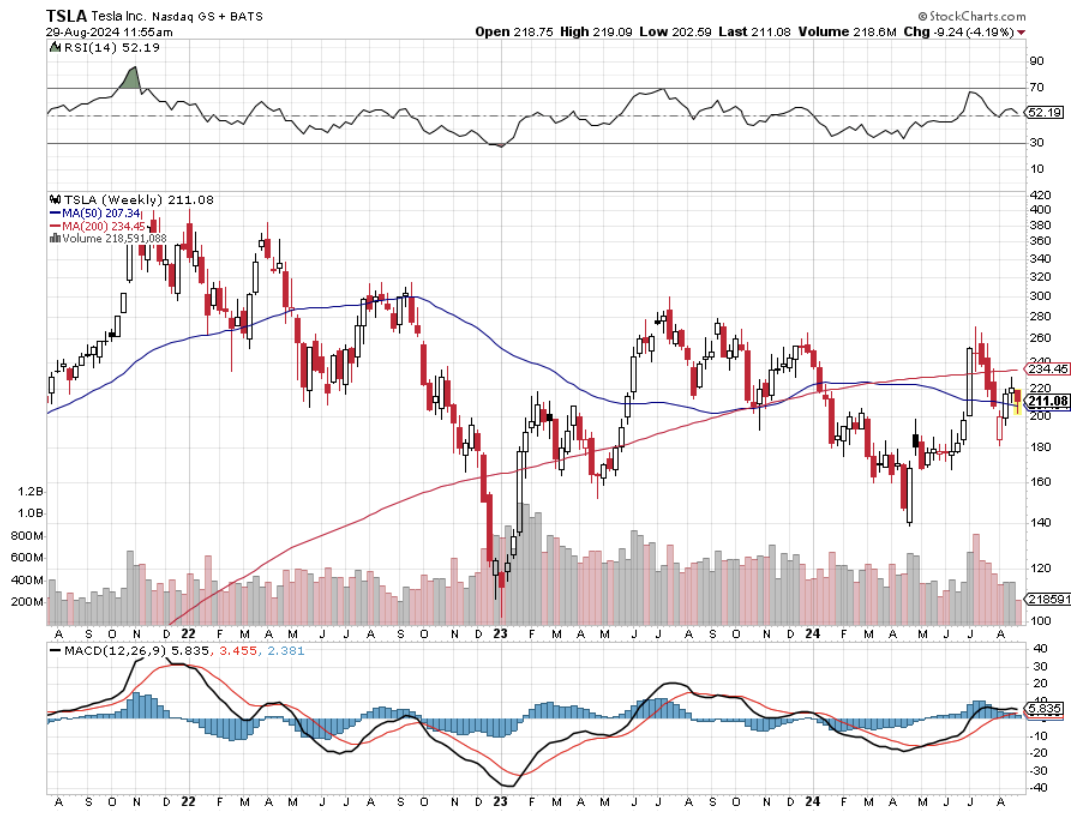
He was an early owner of Tesla (TSLA) back in the nail-biting days when it was constantly running out of cash. Now they have the opposite problem, using their easy access to cash through new share issues as a weapon to fight off the other EV startups. Tesla is doing to Detroit what Apple did to the cell phone companies, redefining the car.
Its stock is overvalued now but will become much more profitable than people realize. They also are starting to extract service revenues from their cars, like Apple has. Tesla will grow revenues by 30%-50% a year for the next two or three years. They should sell several million of the new small SUV Model Y. Most other companies bringing EVs will fall on their faces.
EVs are a big factor in climate change, even in China, the world’s biggest polluter. In Europe, they are legislating gasoline cars out of existence. If you can make money building cars in Fremont, CA, you can make a fortune building them in China.
Tech valuations are high, there is no doubt about it. However, interest rates are much lower. The Fed is forcing people to buy stocks, enabling these companies to evolve even faster.
When rates rise in a year or so tech stocks may have to come down. They have a lot more things going for them than against them. The customers keep coming back for more.
Needless to say, the above stocks should make up your shortlist for LEAPS to buy at the coming market bottom.
https://www.madhedgefundtrader.com/wp-content/uploads/2020/09/oakland-fire-dept.png408608april@madhedgefundtrader.comhttps://madhedgefundtrader.com/wp-content/uploads/2019/05/cropped-mad-hedge-logo-transparent-192x192_f9578834168ba24df3eb53916a12c882.pngapril@madhedgefundtrader.com2024-08-29 09:02:202024-08-29 14:30:47Seven Tech Stocks to Buy at the Next Market Bottom
Unshackling the restraints on human labor – that is where tech is headed.
I’m talking about AI.
Robots aren’t able to perform complicated tasks and that is the holy grail of AI.
If headway is made just on this one issue then the sky is the limit.
Profits are then unlimited and the world will change into something we could have never imagined.
If stakes weren’t high enough, the next explosive leg up in tech shares is now centered on this concept.
There is only so much balance sheet maneuvering can add to the bottom line.
Magnificent 7 stocks who are experts are juicing up the balance sheet will gradually run out of levers to pull.
Technology stocks demand that management move the needle along because the alternative is that the company will get left behind.
When the Department of Defense commenced its robotics challenge in 2015, the stated goal was to develop ground robots that can aid in disaster recovery with the help of human operators.
Nearly a decade later, generative AI is accelerating that learning curve, pushing human-like machines to pick up new tasks in real-time.
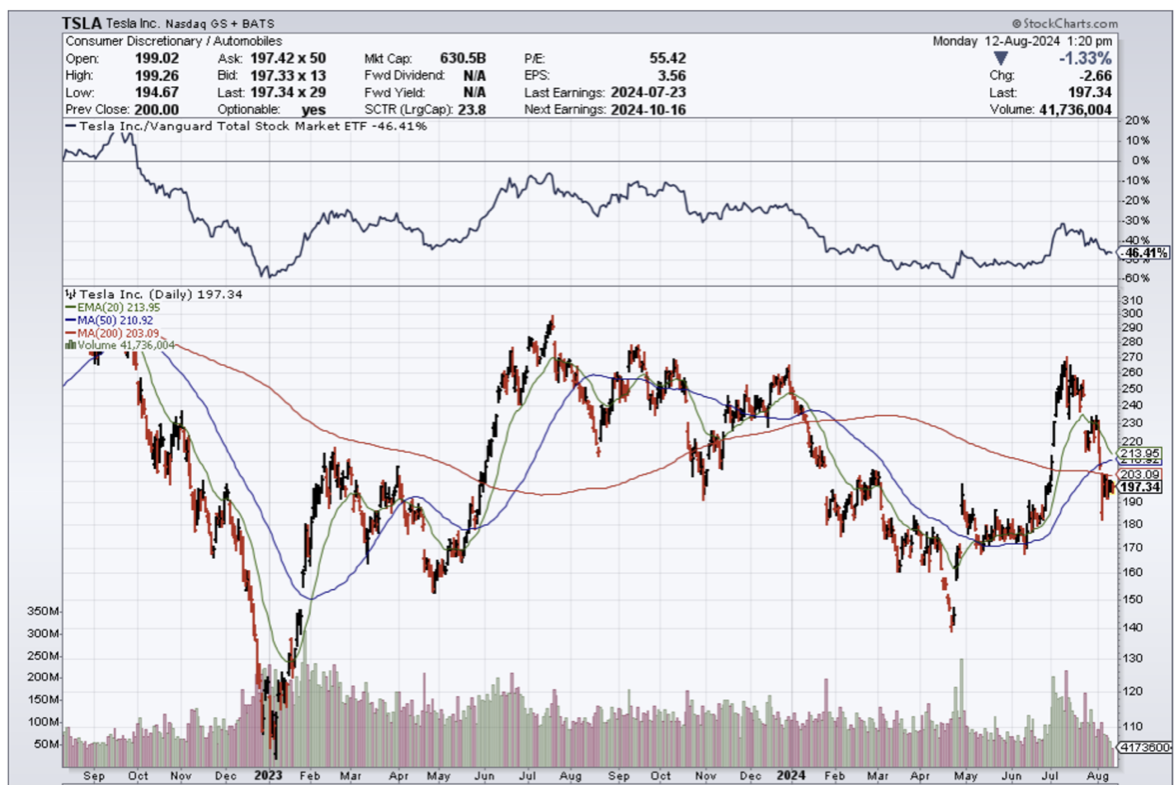
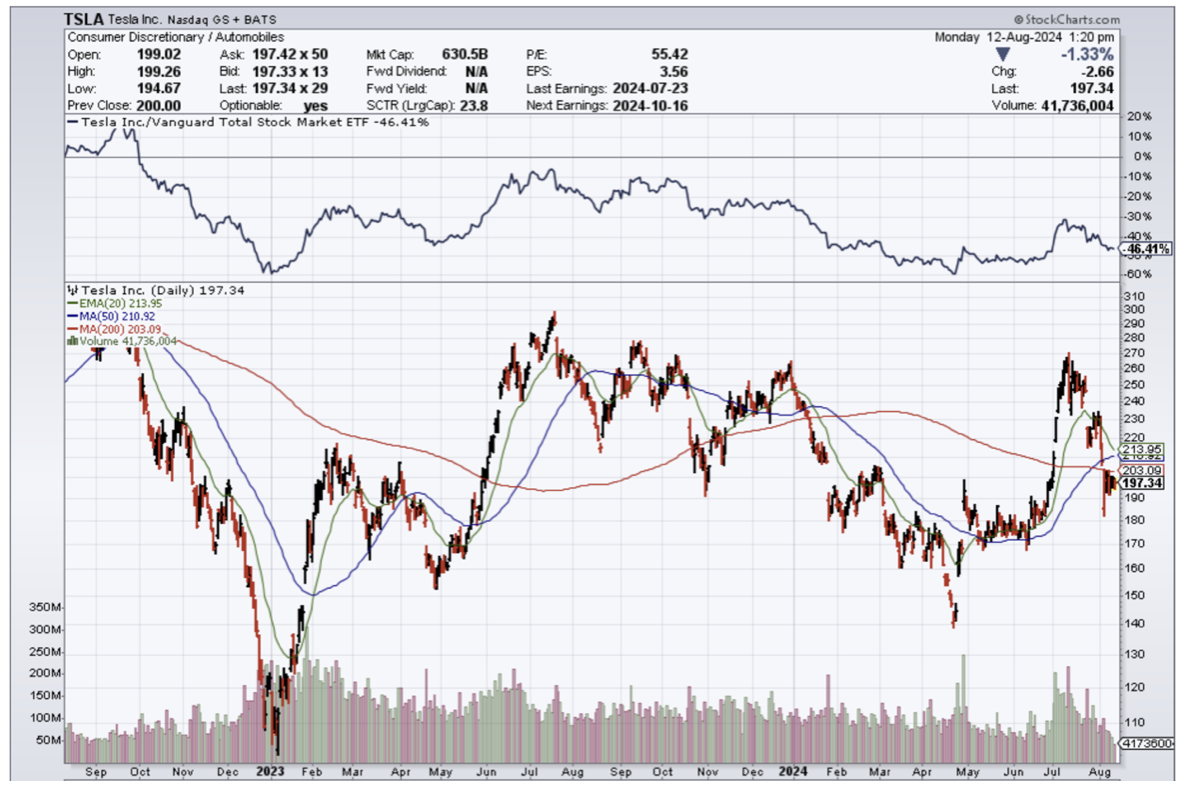
And in June, Tesla (TSLA) presented an updated version of its Optimus robot at Tesla’s Investor Day and showed it roaming a factory floor. CEO Elon Musk touted the robot’s potential, saying it had the ability to push the company’s market cap to $25 trillion.
Humanoids that can adapt to existing environments have long been seen as the ultimate test if they can work alongside humans in spaces built for them.
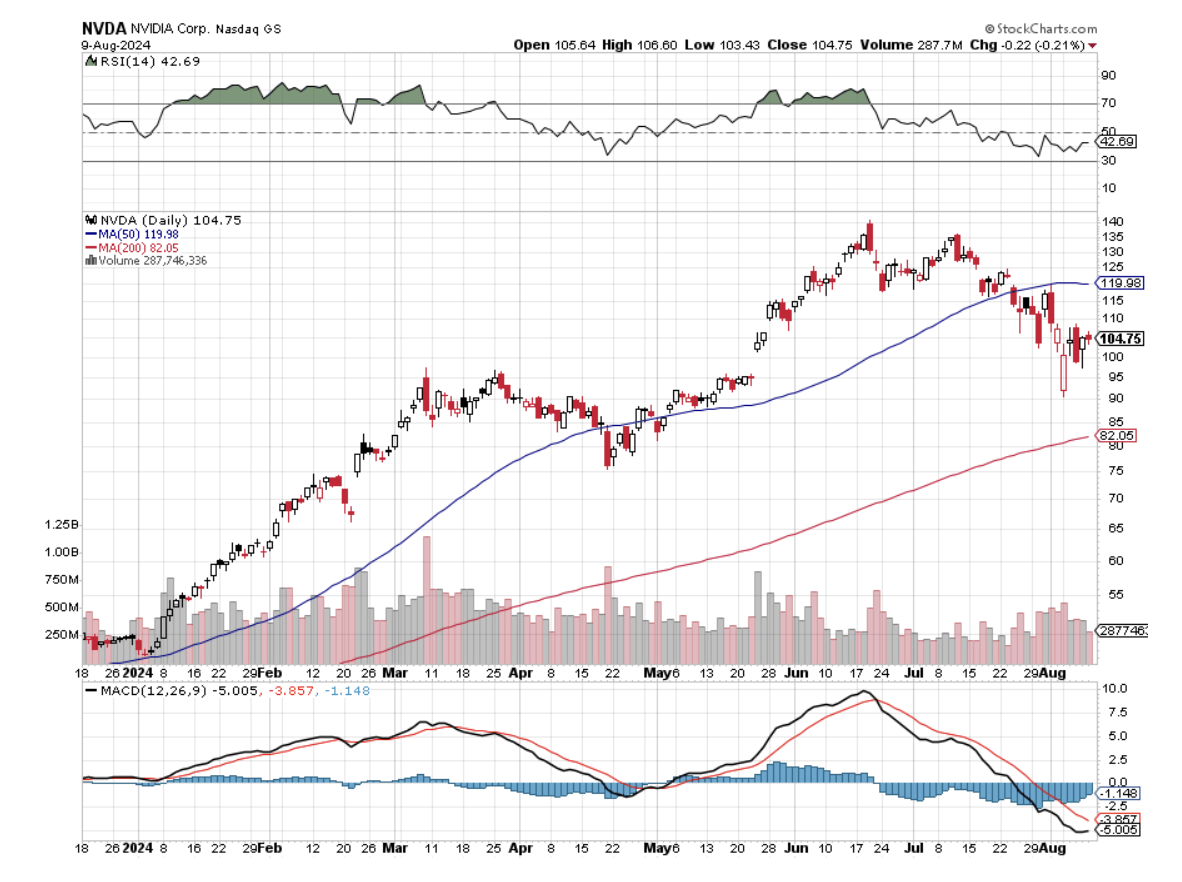
Nvidia (NVDA) is driving rapid development through an ecosystem built specifically for humanoids. It combines high-powered chips that process data at high speeds with a digital world that allows users to train robots on skills applied in the real world.
Just last month, Nvidia unveiled “NIM Microservices,” a visual training ground that allows generative AI models to visually interpret their surroundings in 3D.
Nvidia’s ecosystem now enables robots to train using text and speech input, in addition to live demonstrations.
Humanoids have already begun taking their first steps into reality. Musk has said two Optimus robots are working at Tesla’s Fremont factory, and he expects a few thousand to be deployed by next year. Amazon (AMZN) has partnered with Oregon-based Agility to utilize its Digit robot at a test facility. Apptronik is working with Mercedes-Benz to integrate Apollo into its manufacturing line.
The goal is to adapt humanoid for the future which will allow them to operate beyond industrial use. They could become as ubiquitous if companies are able to scale and bring costs down to $10,000 per machine.
Technology is still in the stage of calculating how they bring the expenses under control.
It is not very cost-effective if a company needs to spend 5 times the actual cost of running the AI division on retrofitting the environment for a humanoid and resetting the language models for different tasks.
Much of these technical aspects are being worked out, and these companies are inching their way closer to a day when companies might be able to work fully without a human worker or alongside a minimum amount of workers.
Tesla is a company long-term that needs to be looked at and this assumption is solely based on their robotics and humanoid business. It is highly plausible that Elon Musk is at peace with sacrificing his EV business in the medium time as long as moving up the value chain to become the leader of what is next which is looking more like robotics using AI.
Musk is skating to where the puck is next and that is where the future will be.
https://madhedgefundtrader.com/wp-content/uploads/2019/05/cropped-mad-hedge-logo-transparent-192x192_f9578834168ba24df3eb53916a12c882.png00april@madhedgefundtrader.comhttps://madhedgefundtrader.com/wp-content/uploads/2019/05/cropped-mad-hedge-logo-transparent-192x192_f9578834168ba24df3eb53916a12c882.pngapril@madhedgefundtrader.com2024-08-12 14:02:132024-08-12 15:10:19Unlocking The Future Of Tech
(MARKET OUTLOOK FOR THE WEEK AHEAD or THE ROUND TRIP TO NOWHERE), plus (A VISIT TO TRINITY),
(ROM), (TQQQ), ($VIX), (TLT), (SLRN), (CAT), (AMZN), and (BRK/B). (NVDA), (TSLA), (AAPL), and (META), ($INDU), (TSLA), (DHI), (DE), (AAPL), (JPM), (DE), (GLD), (DHI)
I am writing this to you from the airport in Vilnius, Lithuania, which is under construction. The airport is packed because people are flying all planes to Paris to catch the closing ceremony of the 2024 Olympics. There is also the inflow of disappointed Taylor Swift fans returning from three concerts in Vienna, Austria that had been canceled due to terrorist threats. Some 150,000 tickets had to be refunded.
It is hard to focus on my writing because every 30 seconds, a beautiful woman walks by.
And I am told at my age I am not supposed to learn. I should know better.
Well, that was some week!
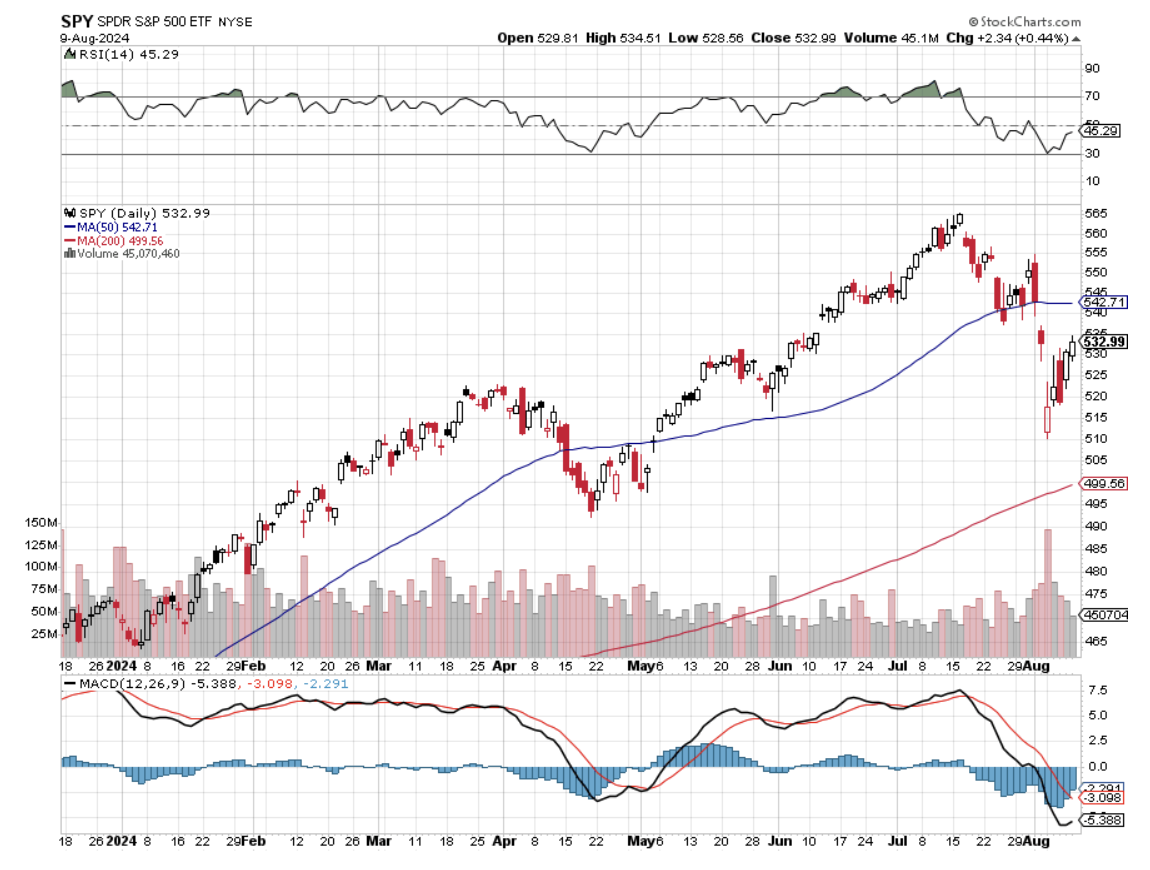
If you had taken a ten-day cruise to Alaska, you would wonder what all the fuss was about, for last week the stock market was basically unchanged. The worst day in two years, down 3%, followed by the best, up 2 ½% amounts to a big fat nothing burger.
It all reminds me of one of those advanced aerobatics classes I used to take. I was busier than a one-armed paper hanger, sending out some 13 trade alerts in all.
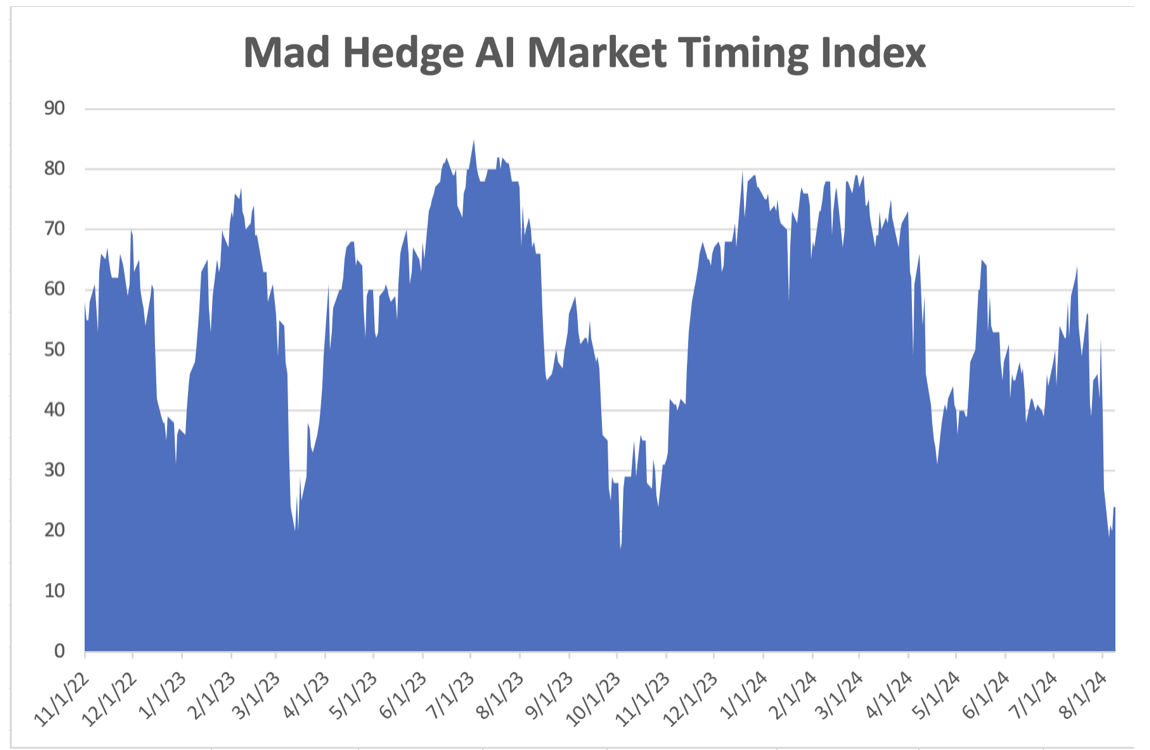
And while the volatility is certainly not over, it is probably at least two-thirds over, meaning that we can step out for a cup of coffee and NOT expect a 1,000 move in the Dow Average by the time we get back.
Is the Bottom IN?
I don’t think so. The valuation disparity between big tech and value is still miles wide. Uncertainty reaches a maximum just before the US presidential election. A bottom for the year is coming, but not quite yet. When it does, it will be the buying opportunity of the year. Watch this space! And watch (ROM) and (TQQQ) too.
The average drawdown per year since 2020 stands at 15%, so with our 10% haircut, the worst is over. What will remain in high volatility? After staying stuck at $12 for most of 2024 and then spiking to $65 in two days, the $20 handle should remain for the foreseeable future.
That is a dream come true and a license to print money for options traders because the higher options prices effectively double the profit per trade. So, expect a lot of trade alerts from the Mad Hedge Fund Trader going forward. That is, until the ($VIX) returns to $36, then the potential profit triples.
Up until July, I had been concerned that the market might not sell off enough to make a yearend rally worth buying into. There was still $8 trillion in cash sitting under the market buying even the smallest dips.
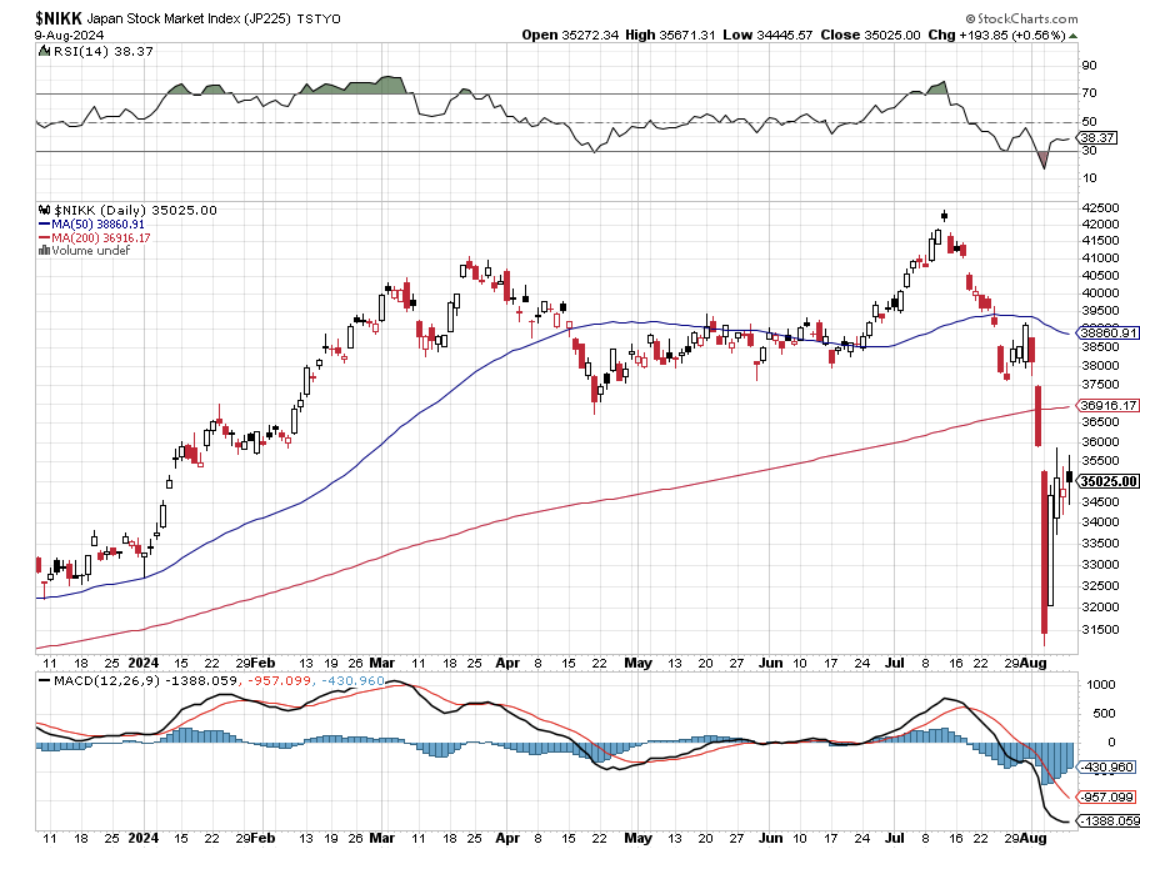
The Japanese took care of that in a heartbeat with a good old-fashioned financial crisis. In hours trillions of dollars’ worth of yen carry trades unwound, creating an unprecedented 14% move UP in the Japanese currency and a 26% move DOWN in the Japanese stock market.
Suddenly, the world was ending. Or at least the financial media thought it was.
Some hundreds of hedge funds probably went under as their leverage is so great at 10X-20X. But we probably won’t know who until the redemption notices go out at yearend.
It couldn’t happen to a nicer bunch of people.
Don’t expect the Fed to take any emergency action, such as a surprise 50 basis point rate cut, to help us out. Things are just not bad enough. The headline Unemployment Rate is still a low 4.3%. Corporate profits are at all-time highs. We are nowhere near a credit crisis or any other threats to the financial system. The US still has the strongest major economy in the world.
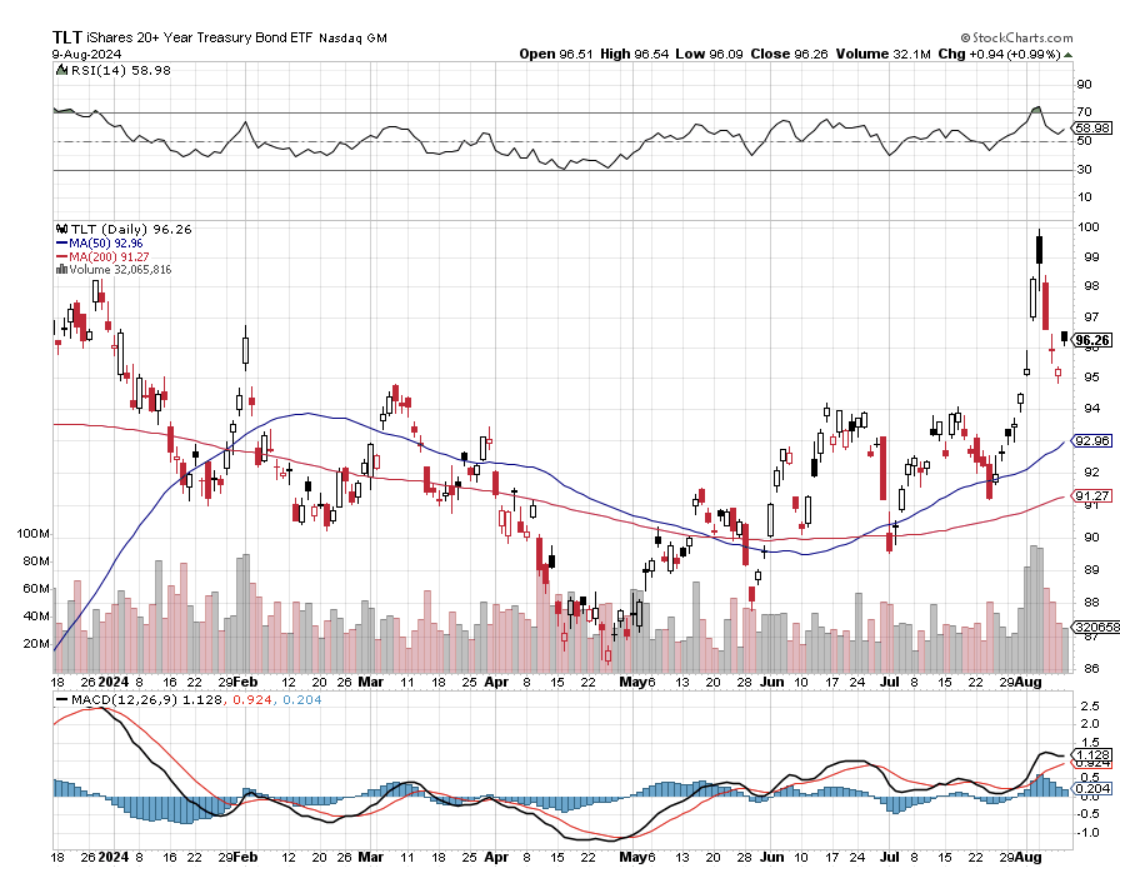
Of course, if you followed my advice and went heavy into falling interest rate plays, as I have been begging you to do for months, last week was your best of the year. The United States US Treasury Bond Fund (TLT) rocketed to a year high at $100. Junk bonds (JNK), REITS (CCI), BB-rated loan ETFs (SLRN), and high-yield stocks (MO) went up even more.
It's still not too late to pile into yield plays because the Fed hasn’t actually cut interest rates YET. Volatility Index ($VIX) Hits Four-Year High at $65, the most since the 2020 pandemic. That implies a 2% move in the S&P 500 (SPX) every day for the next 30 days, which is $103.42 (SPX) points or $774 Dow ($INDU) points. No doubt, massive short covering played a big role with traders covering shorts they sold in size at $12. Spikes like this are usually great long-term “BUY” signals. $150 Billion in Volatility Plays were Dumped on Monday. Volatility-linked strategies, including volatility funds and equities trend-following commodity trading advisers (CTAs), are systematic investment strategies that typically buy equities when markets are calm and sell when they grow turbulent. They became heavy sellers of stocks over the last few weeks, exacerbating a market rout brought on by economic worries and the unwind of a massive global carry trade.
Weekly Jobless Claims Drop to 233,000, sparking a 500-point rally in the market. It’s a meaningless report, but traders are now examining every piece of jobs data with a magnifying glass.
Commercial Real Estate Has Bottomed, which will be great news for regional banks. Visitations are up big in Manhattan, with Class “A” properties gaining the most attention. New leasing is now exceeding vacations.
Warren Buffet Now Owns More T-Bills than the Federal Reserve. The Omaha, Nebraska-based conglomerate held $234.6 billion in short-term investments in Treasury bills at the end of the second quarter. That compared with $195.3 billion in T-bills that the Fed owned as of July 31. The Oracle of Omaha wisely unloaded $84 billion worth of Apple at the market top.
No Recession Here says shipping giant Maersk. U.S. inventories are not at a level that is worrisome says CEO Vincent Clerc, as fears of a recession in the world’s largest economy mount. Chinese exports have helped drive overall container demand in the most recent quarter reported a decline in year-on-year underlying profit to $623 million from $1.346 billion in the second quarter and a dip in revenue to $12.77 billion from $12.99 billion.
A Refi Boom is About to Begin. Mortgage rates in the high fives are now on offer. Over 40% of existing mortgages have rates of over 6%. It’s all driven by the monster rally in the bond market this week which took the (TLT) to $100 and ten-year US Treasury yields down to 3.65%.
Google (GOOG) Gets Hit with an Antitrust Suit, a Federal judge ruling that the company has a monopoly in search, with a 92% market share. The smoking gun was the $20 billion a year (GOOG) paid Apple (AAPL) to remain their exclusive search engine. Apple is the big loser here, which I just sold short.
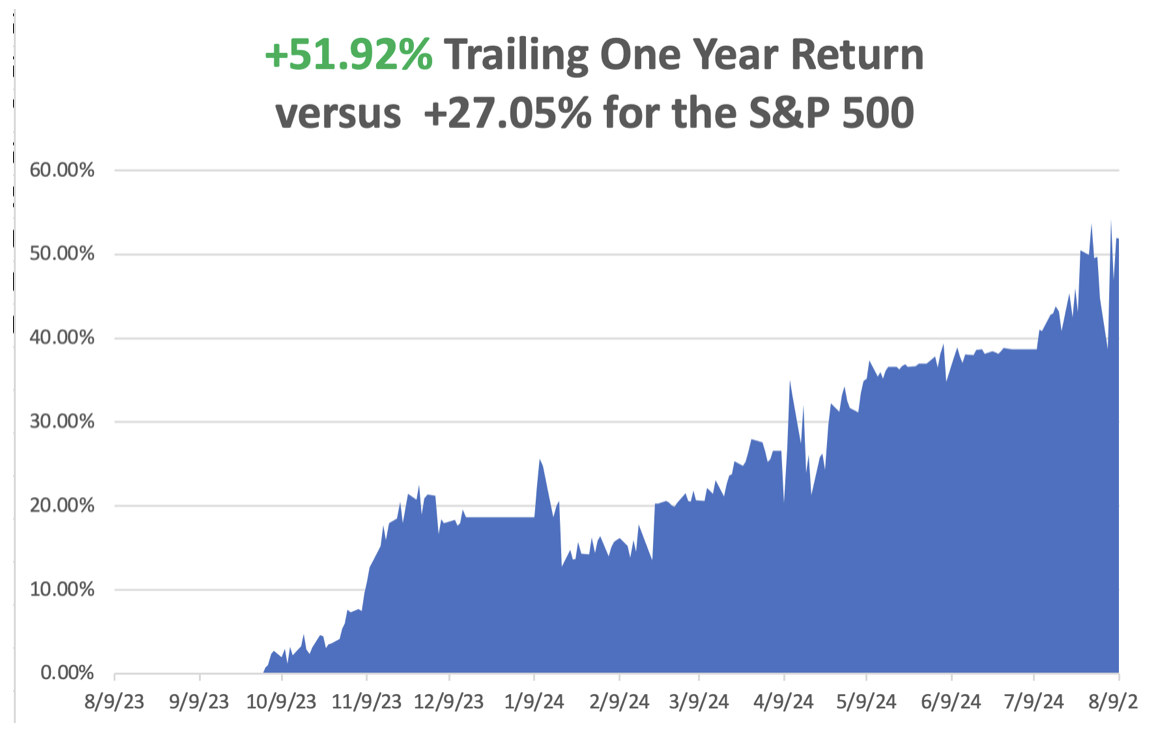
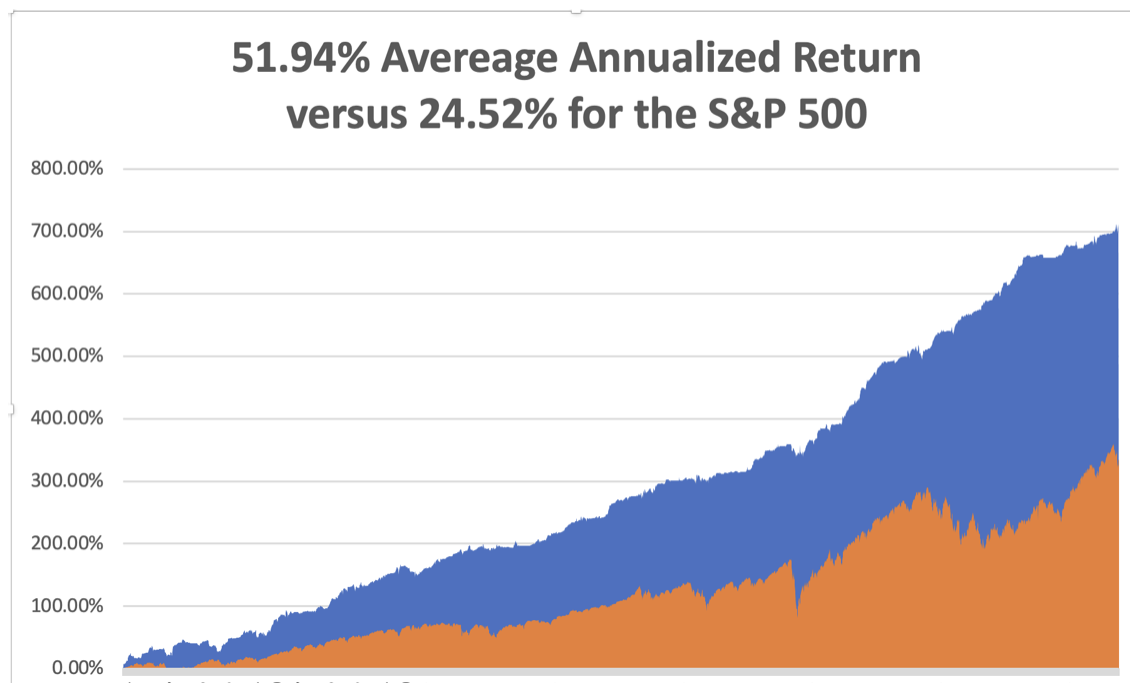
In July we ended up a stratospheric +10.92%. So far in August, we are up by +2.51% My 2024 year-to-date performance is at +33.45%.The S&P 500 (SPY) is up +7.34%so far in 2024. My trailing one-year return reached +51.92. That brings my 16-year total return to +710.08.My average annualized return has recovered to +51.94%.
I used the market crash to stop out of three STOP LOSS positions in (CAT), (AMZN), and (BRK/B). When the ($VIX) hit $65 I then made all the losses back when I piled on four new technology longs in (NVDA), (TSLA), (AAPL), and (META). After the Dow Average ($INDU) rallied 2,000 points and volatility was still high I then pumped out short positions in (TSLA), (DHI), (DE), (AAPL), and (JPM). I stopped out of my position in (DE) at breakeven.
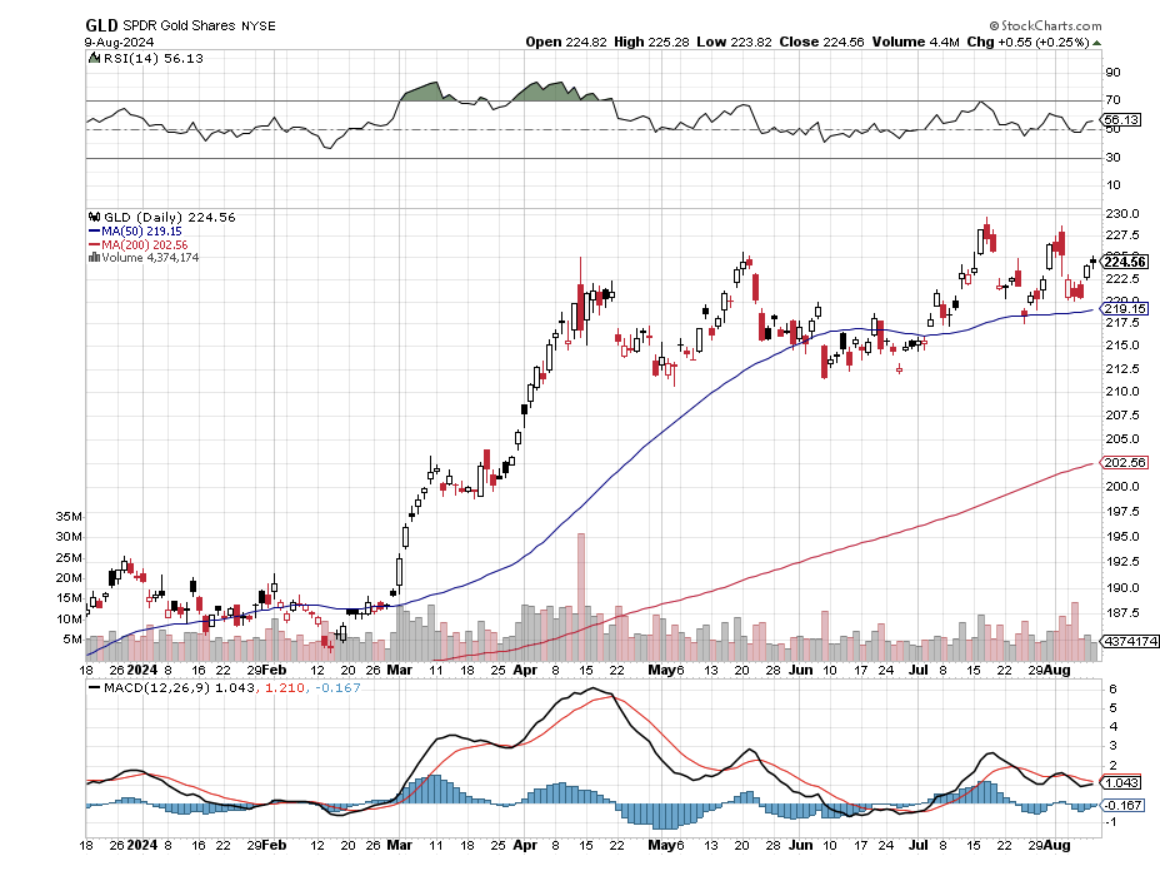
This is in addition to existing longs in (GLD) and (DHI), which I will likely run into the August 16 option expiration.
Some 63 of my 70 round trips, or 90%, were profitable in 2023. Some 48 of 66 trades have been profitable so far in 2024, and several of those losses were really break-even. That is a success rate of 72.73%.
If you were wondering why I was sending out so many trade alerts out last week it is because we were getting months’ worth of market action compressed into five days. Make hay while the sun shines and strike while the iron is hot!
Try beating that anywhere.
My Ten-Year View
When we come out the other side of the recession, we will be perfectly poised to launch into my new American Golden Age or the next Roaring Twenties. The economy decarbonizing and technology hyper accelerating, creating enormous investment opportunities. The Dow Average will rise by 600% to 240,000 or more in the coming decade. The new America will be far more efficient and profitable than the old.
Dow 240,000 here we come!
On Monday, August 12 at 8:30 AM EST, the Consumer Inflation Expectations is out. On Tuesday, August 13 at 9:30 AM, the Producer Price Index ispublished.
On Wednesday, August 14 at 8:30 AM, the new Core Inflation Rate is printed.
On Thursday, August 15 at 8:30 AM, the Weekly Jobless Claims are announced. Retail Sales are also printed.
On Friday, August 16 at 8:30 AM, Building Permits are disclosed. We also get the University of Michigan Consumer Sentiment. At 2:00 PM, the Baker Hughes Rig Count is printed.
As for me, with the overwhelming success of the Oppenheimer movie, I thought I’d review my long and fruitful connection with America’s nuclear program.
When the Cold War ended in 1992, the United States judiciously stepped in and bought the collapsing Soviet Union’s entire uranium and plutonium supply.
For good measure, my client George Soros provided a $50 million grant to hire every Soviet nuclear engineer. The fear then was that starving scientists would go to work for Libya, North Korea, or Pakistan, which all had active nuclear programs. They ended up here instead.
That provided the fuel to run all US nuclear power plants and warships for 20 years. That fuel has now run out and chances of a resupply from Russia are zero. The Department of Defense attempted to reopen our last plutonium factory in Amarillo, Texas, a legacy of the Johnson administration.
But the facilities were deemed too old and out of date, and it is cheaper to build a new factory from scratch anyway. What better place to do so than Los Alamos, which has the greatest concentration of nuclear expertise in the world?
Los Alamos is a funny sort of place. It sits at 7,320 feet on a mesa on the edge of an ancient volcano so if things go wrong, they won’t blow up the rest of the state. The homes are mid-century modern built when defense budgets were essentially unlimited. As a prime target in a nuclear war, there are said to be miles of secret underground tunnels hacked out of solid rock.
You need to bring a Geiger counter to garage sales because sometimes interesting items are work castaways. A friend almost bought a cool coffee table which turned out to be part of an old cyclotron. And for a town designing the instruments to bring on the possible end of the world, it seems to have an abnormal number of churches. They’re everywhere.
I have hundreds of stories from the old nuclear days passed down from those who worked for J. Robert Oppenheimer and General Leslie Groves, who ran the Manhattan Project in the early 1940s. They were young mathematicians, physicists, and engineers at the time, in their 20’s and 30’s, who later became my university professors. The A-bomb was the most important event of their lives.
Unfortunately, I couldn’t relay this precious unwritten history to anyone without a security clearance. So, it stayed buried with me for a half century, until now.
Some 1,200 engineers will be hired for the first phase of the new plutonium plant, which I got a chance to see. That will create challenges for a town of 13,000 where existing housing shortages already force interns and graduate students to live in tents. It gets cold at night and dropped to 13 degrees F when I was there.
I was allowed to visit the Trinity site at the White Sands Missile Test Range, the first visitor to do so in many years. This is where the first atomic bomb was exploded on July 16, 1945. The 20-kiloton explosion set off burglar alarms for 200 miles and was double to ten times the expected yield.
Enormous targets hundreds of yards away were thrown about like toys (they are still there). Half the scientists thought the bomb might ignite the atmosphere and destroy the world but they went ahead anyway because so much money had been spent, 3% of US GDP for four years. Of the original 100-foot tower, only a tiny stump of concrete is left (picture below).
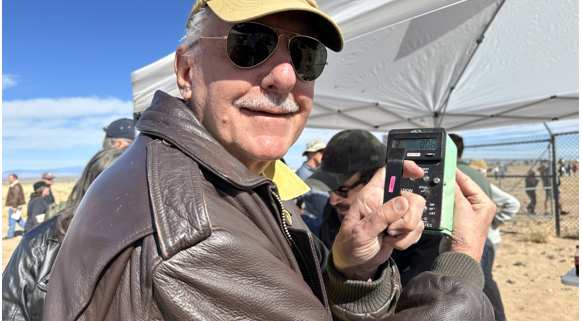
With the other visitors, there was a carnival atmosphere as people worked so hard to get there. My Army escort never left me out of their sight. Some 78 years after the explosion, the background radiation was ten times normal, so I couldn’t stay more than an hour.
Needless to say, that makes uranium plays like Cameco (CCJ), NextGen Energy (NXE), Uranium Energy (UEC), and Energy Fuels (UUUU) great long-term plays, as prices will almost certainly rise and all of which look cheap. US government demand for uranium and yellow cake, its commercial byproduct, is going to be huge. Uranium is also being touted as a carbon-free energy source needed to replace oil.
At Ground Zero in 1945
What’s Left of a Trinity Target 200 Yards Out
Playing With My Geiger Counter
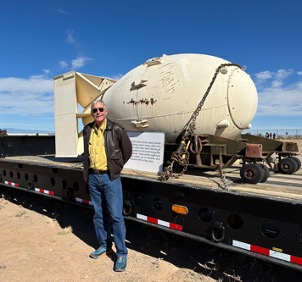
Atomic Bomb No.3 Which was Never Used on Tokyo
What’s Left from the Original Test
Good Luck and Good Trading,
John Thomas
CEO & Publisher
The Diary of a Mad Hedge Fund Trader
https://www.madhedgefundtrader.com/wp-content/uploads/2024/03/geiger-counter.png438582april@madhedgefundtrader.comhttps://madhedgefundtrader.com/wp-content/uploads/2019/05/cropped-mad-hedge-logo-transparent-192x192_f9578834168ba24df3eb53916a12c882.pngapril@madhedgefundtrader.com2024-08-12 09:02:452024-08-12 10:40:38The Market Outlook for the Week Ahead or The Round Trip to Nowhere
(MARKET OUTLOOK FOR THE WEEK AHEAD or DID JAY POWELL BLOW IT?) and CHASING EARNEST HEMINGWAY),
($VIX), (INTC), (CCI), (TLT), (COPX), (BHP), (USO) (NVDA), (SLV), (FXY), (CAT), (IWM), (IBKR), (AMZN), (GLD), (BRK/B), (DE)
Before I took off for the current trip to Europe, I logged into my Amazon Prime account to buy some lightweight polyester T-shirts, size 4XL. Not only are these ideal for long-distance hiking but they can be washed in a hotel sink and dried quickly when I am traveling too fast to use the house laundry.
The next morning when I logged into my laptop, my email account was flooded with ads for every kind of T-shirt in the world, from heavy-duty sports types FOR $100 to bargain basement $5 ones from China (although the Chinese ones were a little light on the 4X sizes).
That is Amazon’s AI at work. And you know what? It is getting smarter. And while the big fear among investors is that the US government will break up this retail giant for antitrust reasons, Amazon is integrating faster than ever. The impact on profits will be enormous.
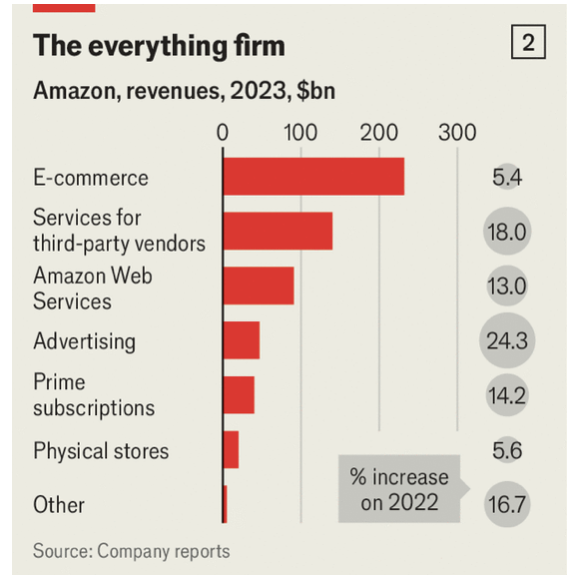
My friend Jeff Bezos’ creation has a lot to work with. Amazon not only pioneered online retail. It subsequently invented the Kindle, an e-reader (click here where the John Thomas autobiography is for sale) Alexa, a smart speaker and, more consequentially, cloud-computing—Amazon Web Services has a 31% share of that $300bn market (full disclosure: Mad Hedge uses their service).
It also runs Prime Video, America’s fourth-most-watched video-streaming service (full disclosure: Mad Hedge is a Prime member). Its newish, high-margin advertising business is already the third largest in the world behind Alphabet (GOOGL) (Google’s parent company) and Meta (META) (Facebook’s).
Amazon also has a few moonshot projects of its own. One subsidiary, Zoox, is building self-driving cars. Another, Kuiper, is developing a fleet of communications satellites in low-Earth orbit, in competition with SpaceX Starlink (full disclosure: Mad Hedge is a Starlink user).
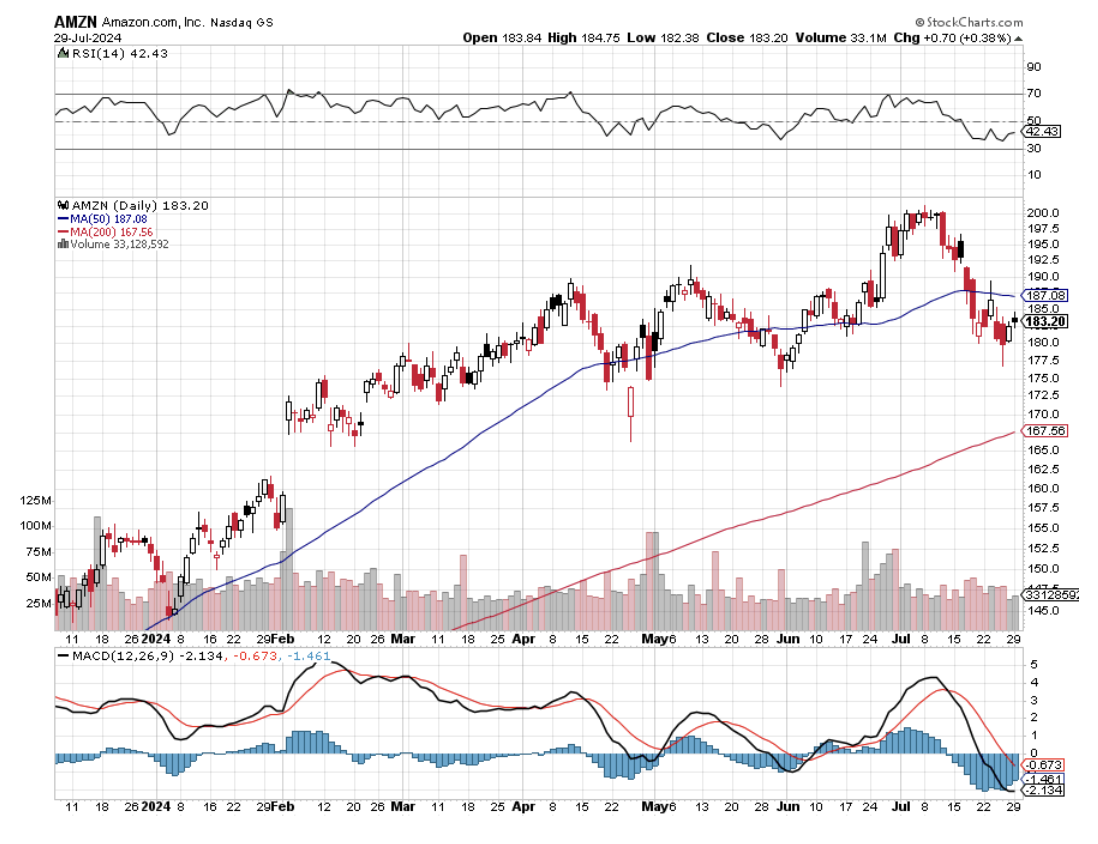
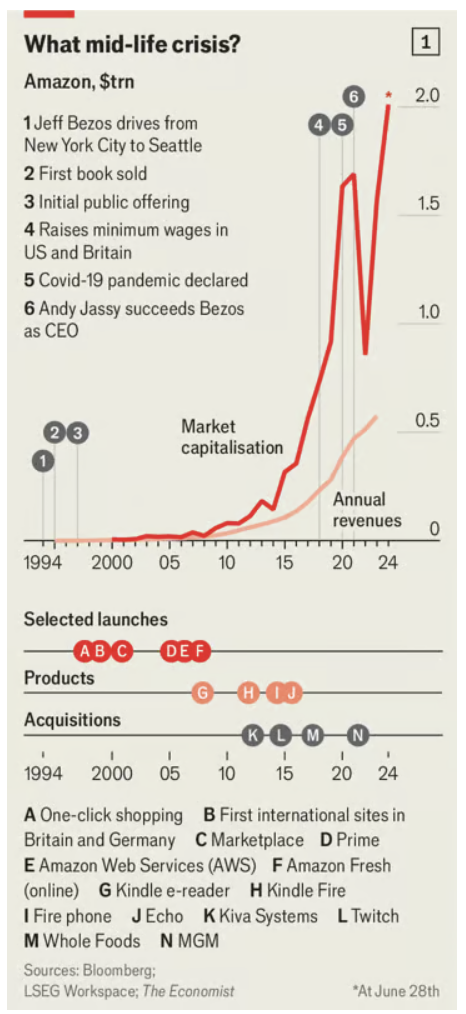
This year, Amazon’s websites will sell a staggering $554bn-worth of goods in America. That gives it a 42% share of American e-commerce, far beyond the 6% captured by Walmart (WMT), its nearest online competitor (and the country’s biggest retailer overall). The reward for all these efforts was a $2 trillion market capitalization in June and an all-time high share price of $203.
Amazon’s fourth decade looks poised to be an era of integration. The company has grown to the size that any needle-moving new investment is costly and high-risk. Andy Jassy, the former boss of AWS whom Bezos appointed as his successor as CEO in 2021, therefore appears keen to generate value by stitching the company’s existing businesses together more tightly.
Jeff, who I knew at Morgan Stanley, still retains a 9% stake after some hefty recent sales and a big say over strategy, seems to approve. This metamorphosis would make Amazon more similar to Apple (AAPL) and Microsoft (MSFT), two older big-tech rivals that have bundled and cross-sold their way to world domination in consumer devices and business software, respectively—and to $3trn valuations.
Retail and advertising appear to be the first to integrate. The thread running through the two businesses is Prime, Amazon’s $139 a-year subscription service, which has 300m-odd members around the world, providing shoppers with free delivery and access to Prime Video. Prime members like me spend twice as much on Amazon’s websites as non-members do and they tend to be logged in more often. Amazon also has intimate knowledge of their shopping behavior, which allows it to target ads more accurately.
Advertising is another great hope at Amazon. Advertisers are willing to pay handsomely for this service: analysts estimate that Amazon’s ads business enjoys operating margins of around a mind-blowing 40%, higher even than those of the cloud operation, not to mention the much less lucrative retail division.
Most of these ads, responsible for four-fifths of the company’s ad sales, are nestled among search results on its app or next to information about products, as with my above-mentioned T-shirts. But a growing share is coming from third-party websites and, most recently, from Prime Video. In January Amazon started showing commercials to viewers in America, Britain, Canada, and Germany.
Analysts reckon that video ads alone will boost Amazon’s ads sales by about 6% this year, adding $3bn to the top line. Given the ad operation’s fat margins, the impact on profit will be considerably larger.
To turn more Prime members into actual ad-watchers, Amazon is splurging on content. It recently signed a contract with Mr. Beast (??), a YouTube superstar, rumored to be worth $100m. It is trying to seal a deal in which it would pay $2bn a year for the rights to show National Basketball Association games on Prime Video. It is already reportedly spending $1bn annually to stream some National Football League (NFL) fixtures.
This hefty price tag is worth it, the company thinks, because popular sporting moments, such as “Thursday Night Football”, have turned out to be among the biggest sign-up days for Prime. Ads aired during sports events are some of the most lucrative in all of the ad business.
Analysts speculate that clever AWS software may also be assisting the retail operation’s 750,000 warehouse robots in sorting shoppers’ packages. And having a business as gigantic as Amazon’s retail arm as a captive customer gives AWS the confidence to scale up, helping spread costs.
The most important thread stitching Amazon’s two main businesses together is generative AI. Most rivals will struggle to match Amazon’s access to specialized AI hardware, which is in short supply but which it has in abundance thanks to long-standing commercial partnerships with companies like Nvidia (NVDA), which makes advanced AI semiconductors.
Amazon’s recent share-price rise was uninterrupted by a Fair Trade Commission lawsuit. But for every cloud customer that AWS loses to rivals such as Microsoft Azure or Google Cloud Platform, it could win one that is repelled by Microsoft’s and Google’s new businesses in their own increasingly tightly-knit empires.
It all looks like a giant, super-efficient machine to me which should justify at least a 50% gain in Amazon’s share price in the next year or two.
https://www.madhedgefundtrader.com/wp-content/uploads/2024/08/The-everything-firm.png580576april@madhedgefundtrader.comhttps://madhedgefundtrader.com/wp-content/uploads/2019/05/cropped-mad-hedge-logo-transparent-192x192_f9578834168ba24df3eb53916a12c882.pngapril@madhedgefundtrader.com2024-08-01 09:02:372024-08-01 10:14:35Why Amazon is the Most Undervalued AI Play Out There
There is a very high degree of risk involved in trading. Past results are not indicative of future returns. MadHedgeFundTrader.com and all individuals affiliated with this site assume no responsibilities for your trading and investment results. The indicators, strategies, columns, articles and all other features are for educational purposes only and should not be construed as investment advice. Information for futures trading observations are obtained from sources believed to be reliable, but we do not warrant its completeness or accuracy, or warrant any results from the use of the information. Your use of the trading observations is entirely at your own risk and it is your sole responsibility to evaluate the accuracy, completeness and usefulness of the information. You must assess the risk of any trade with your broker and make your own independent decisions regarding any securities mentioned herein. Affiliates of MadHedgeFundTrader.com may have a position or effect transactions in the securities described herein (or options thereon) and/or otherwise employ trading strategies that may be consistent or inconsistent with the provided strategies.