Mad Hedge Technology Letter
July 31, 2019
Fiat Lux
Featured Trade:
(TIME TO TAKE A BREAK WITH GOOGLE),
(GOOGL)


Mad Hedge Technology Letter
July 31, 2019
Fiat Lux
Featured Trade:
(TIME TO TAKE A BREAK WITH GOOGLE),
(GOOGL)
It’s time to take a breather.
That is after the 9% spike in Google shares.
The best way to describe results of late for Alphabet is a mixed bag for the company helmed by Sundar Pichai.
Things aren’t going bad but not great either.
I‘ll tell you why.
Alphabet undershot its top-line revenue by about $1.7 billion, a large miss that should disturb investors.
It’s definitely not the growth company it once was even though some elements of Alphabet are still growing profusely.
Nothing better epitomizes the state of Google’s ad cash cow with its cost-per-click on Google properties from Q2 2018 to Q2 2019 falling 11% showing that they are having a harder time charging customers for clicking their stuff.
But on the bright side, paid clicks on Google properties from Q2 2018 to Q2 2019 was up 28% demonstrating the attractiveness and stickiness of platforms such as YouTube and Google Search.
Two other bright spots were its in-house lineup of smartphones called the Pixel and cloud products, which helped this segment grow to $6.18 billion compared to $4.43 billion last year.
I am actually a huge fan of the Pixel lineup even though I go with an iPhone.
If I did own an Android, I’d choose the latest Pixel with the added bonus of the convenience of Google’s best in show software.
Google is coming out with their Pixel 4 later this fall.
Pichai has never dived into the finer numbers of the Google Cloud but he took the time to mention that its cloud division is now an $8 billion and growing business annually.
Alphabet plans to heavily hire an army of warm bodies tripling the cloud staff for their successful cloud unit which is poised to be a mainstay growth driver for Google.
Looking at the imminent future, there are a few bogies in the sky.
The Australian Competition and Consumer Commission is part of a growing chorus of domestic and international regulators looking to subdue Google’s big data businesses.
The best-case scenario is more fines in the billions of dollars and the worst case is shriveling access to certain lucrative end markets.
Alphabet has been hard hit by the trend of more stringent global data regulations, and this is just the beginning.
Facebook appears as if it's in a deeper quagmire with multiple regulatory commissions state side smelling blood in shark-infested waters.
There is part of the argument that these practices stem from Alphabet being too dominant and there is some truth in this.
They are literally gunning for the entire internet whether it be travel or eCommerce.
I would say from my experiences with Alphabet that they do push the threshold a tad bit far.
They probably do not need to preinstall YouTube and Google Chrome on Android Devices without the inability to delete them.
If you have tried to delete these apps from Android devices, you are stonewalled, but I do hold the view that users will naturally come to the conclusion these apps are utilities and would download them if not preinstalled in the first place.
Alphabet should be more comfortable in its expertise and leadership position.
After a rapid run-up in share appreciation, Alphabet is due for a short-term pullback which could materialize soon because of regulatory fears.
Traders should look at some short duration bear put spreads on Alphabet.
I am long-term bullish Alphabet.
Global Market Comments
July 29, 2019
Fiat Lux
Featured Trade:
(MARKET OUTLOOK FOR THE WEEK AHEAD, OR THE BAD OMENS ARE THERE),
(INTC), (GOOGL), (AMZN), (JPM), (FXB),
(PLAYING THE SHORT SIDE WITH VERTICAL BEAR PUT SPREADS), (TLT)

The Omens are there.
I am normally a pretty positive guy.
But I was having a beer at Schwarzee at the base of the Matterhorn the other day, just having completed the climb up to the Hornli Hut at 10,758 feet. I carefully watched with my binoculars three helicopters circle the summit of the mountain, around the Solvay Hut.
These were not sightseeing tours. The pilots were taking great risks to retrieve bodies.
I learned at the Bergfuhrerverein Zermatt the next day that one of their men was taking up an American client to the summit. The man reached for a handhold and the rock broke loose, taking both men to their deaths. The Mountain Guide Service of Zermatt is a lot like the US Marine Corps. They always retrieve their dead.
It is an accident that could have happened to anyone. I have been over that route many times. If there was ever an omen of trouble to come, this was it.
The markets are sending out a few foreboding warnings of their own. Friday’s Q2 GDP report came in at a better than expected 2.1%, versus 3.1% in Q1.
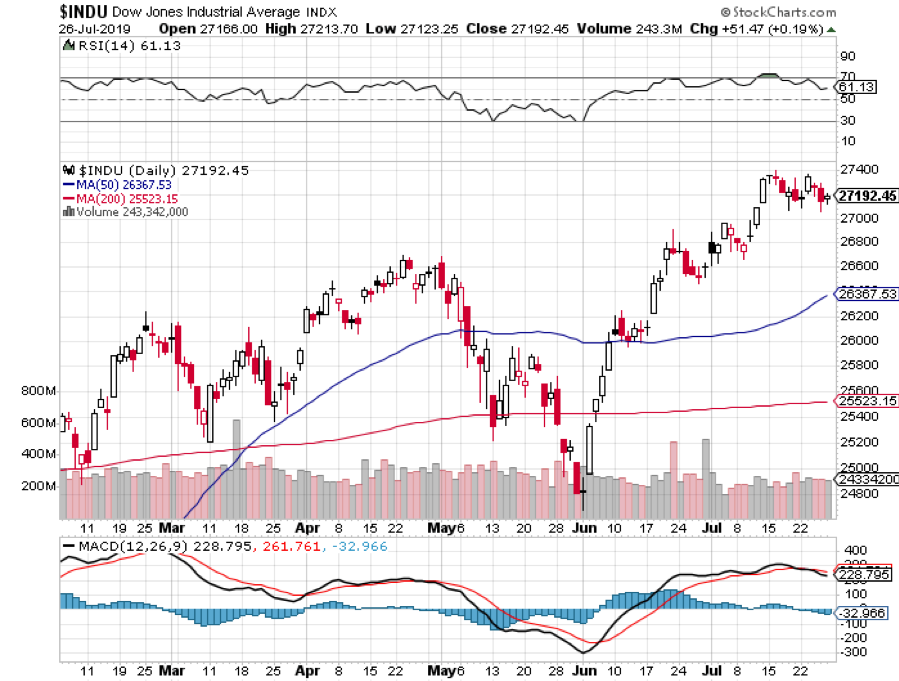
Yet the Dow Average was up only a meager 51.47 points when it should have gained 500. It is an old market nostrum that if markets can’t rally on good news, you get the hell out of Dodge. Zermatt too.
It is the slowest US growth in two years. The trade war gets the blame, with falling exports offsetting healthy consumer spending. With the $1.5 trillion tax cut now spent, nothing is left but the debt. 2020 recession fears are running rampant, so paying all-time highs for stock prices is not a great idea.
You might be celebrating last week’s budget deal which heads off a September government shutdown. But it boosts the national debt from $22 to $24 trillion, or $72,000 per American. As with everything else with this administration, a short-term gain is achieved at a very high long-term cost.
Boris Johnson, the pro-Brexit activist, was named UK prime minister. It virtually guarantees a recession there and will act as an additional drag on the US economy. Global businesses will accelerate their departure from London to Paris and Berlin.
The end result may be a disunited kingdom, with Scotland declaring independence in order to stay in the EC, and Northern Ireland splitting off to create a united emerald island. The stock market there will crater and the pound (FXB) will go to parity against the greenback.
The European economy is already in a downward spiral, with German economic data flat on its back. GDP growth has shrunk from 2.0% to 0.7%. It seems we are not buying enough Mercedes, BMWs, and Volkswagens.
Yields on ten-year German bunds hit close to an all-time low at -0.39%. The Euro (FXE) is looking at a breakdown through parity. The country’s largest financial institution, Deutsche Bank, is about to go under. No one here wants to touch equities there. It’s all about finding more bonds.
Soaring Chip Stocks took NASDAQ to new high. I have to admit I missed this one, not expecting a recovery until the China trade war ended. Chip prices are still falling, and volume is shrinking. We still love (AMD), (MU), and (NVDA) long term as obviously do current buyers.
Existing Home Sales fell off a cliff, down 1.7% in June to a seasonally adjusted 5.27 million units. Median Home Prices jumped 4.7% to $287,400. A shortage of entry-level units at decent prices get the blame. Ultra-low interest rates are having no impact.
JP Morgan (JPM) expects stocks to dive in Q3, driven by earnings downgrades for 2020. Who am I to argue with Jamie Diamond? Don’t lose what you made in H1 chasing rich stocks in H2. Everyone I know is bailing on the market and I am 100% cash going into this week’s Fed meeting up 18.33% year-to-date. I made 3.06% in July in only two weeks.
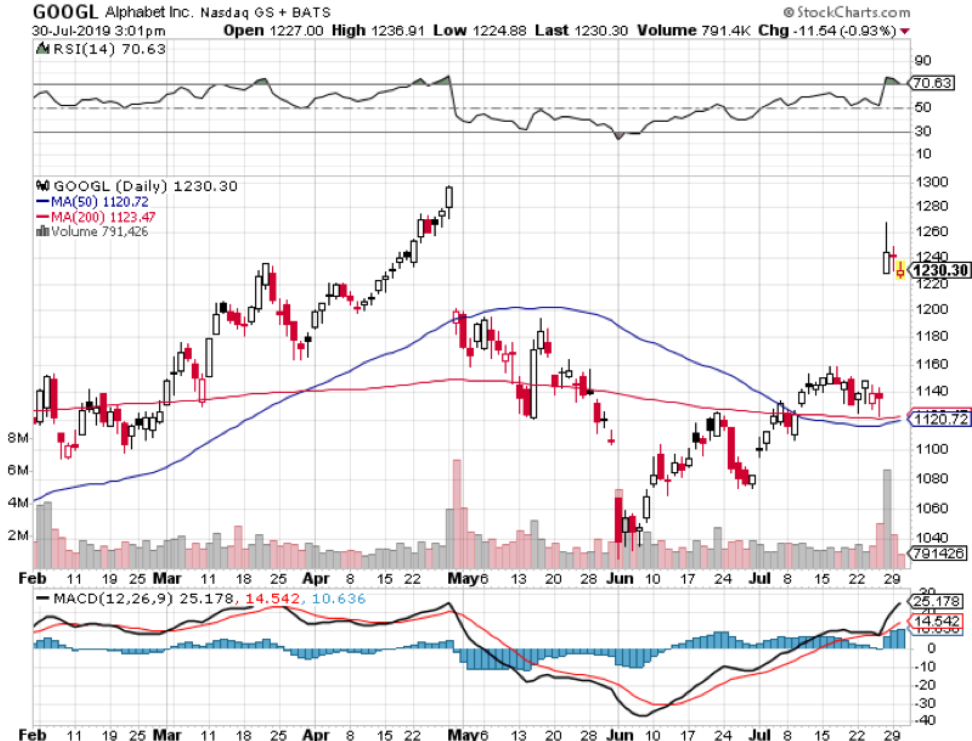
Alphabet (GOOGL) beat big time, sending the shares up 8% in aftermarket trading. Q2 revenues soared 19% YOY to an eye-popping $39.7 billion. It’s the biggest gain in the stock in four years, to $1,226. The laggard FANG finally catches up. The weak first quarter is now long forgotten.
Amazon (AMZN) delivered a rare miss, as heavy investment spending on more market share offset sales growth, taking the shares down 1%. Amazon Prime membership now tops 100 million. Q3 is also looking weak.
Intel (INTC) surged on chip stockpiling, taking the stock up 5% to $54.70. Customers in China stockpiled chips ahead of a worsening trade war. Q3 forecasts are looking even better. Sale of its 5G modem chip business to Apple is seen as a huge positive.
I've finally headed home, after a peripatetic six-week, 18-flight trip around the world meeting clients. I bailed on the continent just in time to escape a record heatwave, with Paris hitting 105 degrees and London 101, where it was so hot that people were passing out on the non-air conditioned underground.
Avoid energy stocks. The outcry over global warming is about to get very loud. I’ll write a more detailed report on the trip when I get a break in the market.
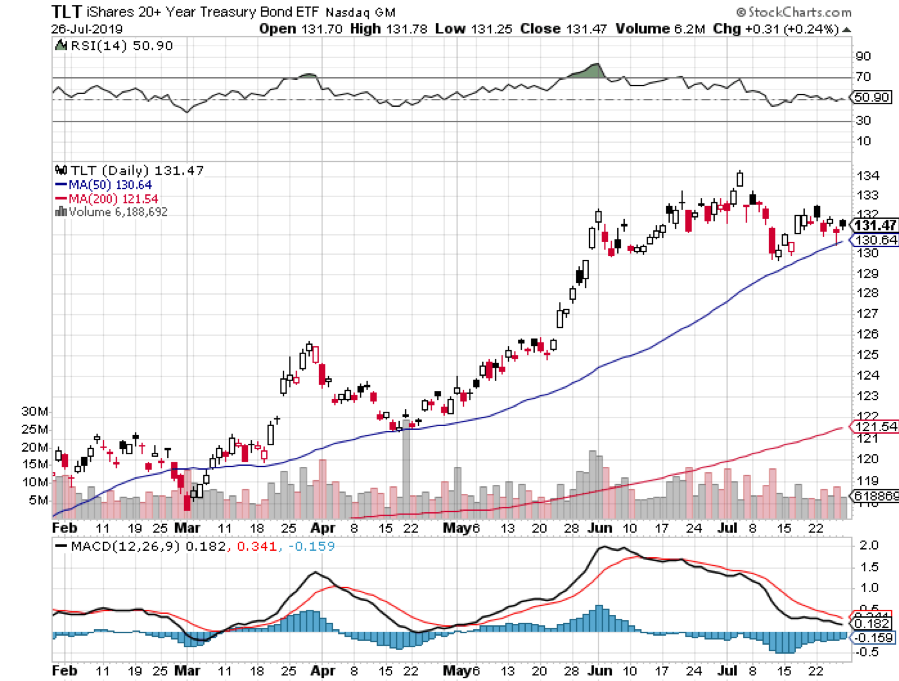
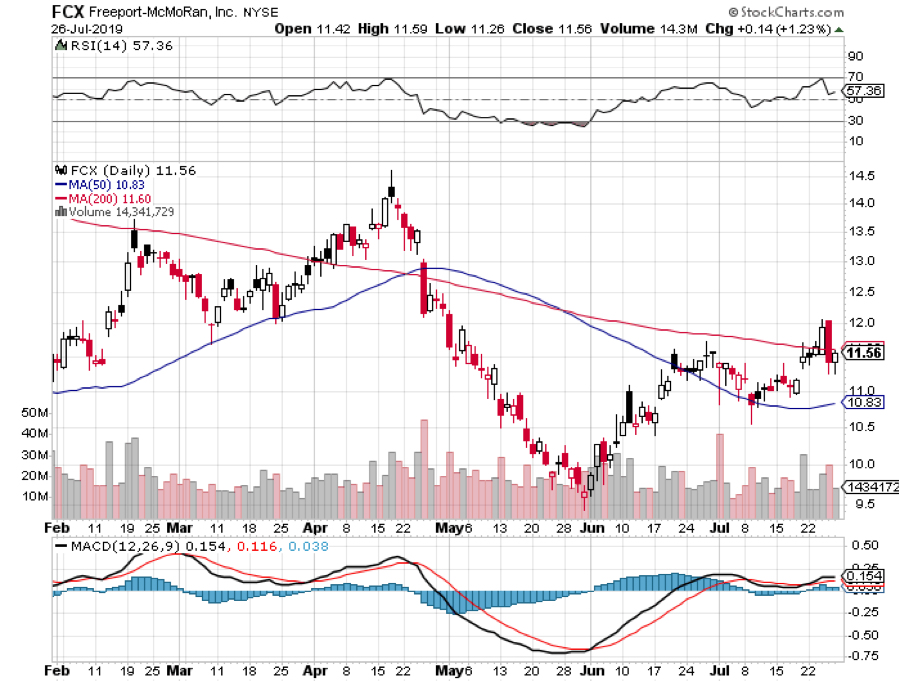
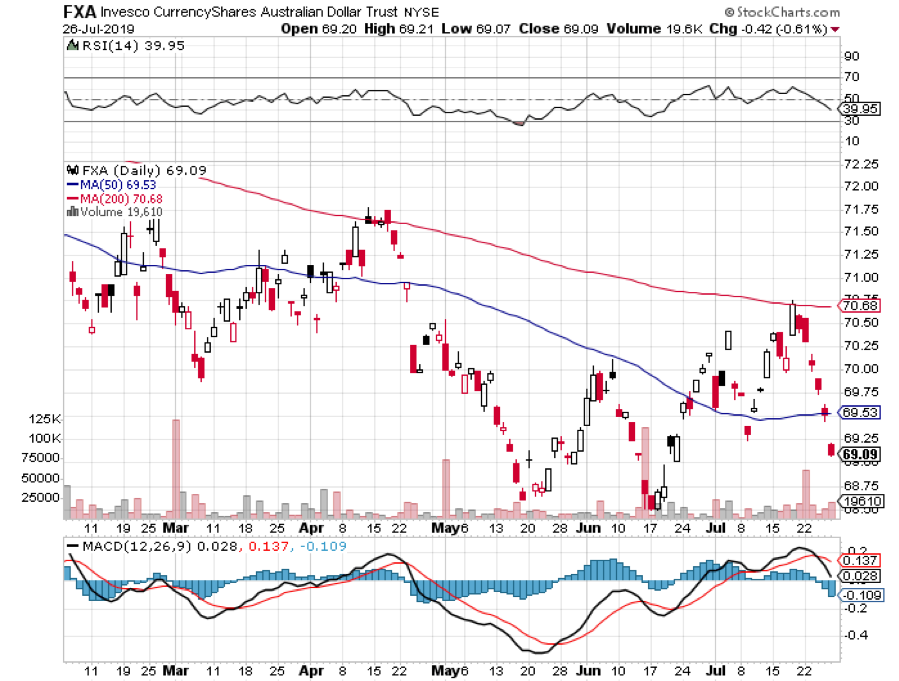
My strategy of avoiding stocks and only investing in weak dollar plays like bonds (TLT), foreign exchange (FXA), and copper (FCX) performed well. After spending a few weeks out of the market, it’s amazing how clear things become. The clouds lift and the fog disperses.
My Global Trading Dispatch has hit a new high for the year at +18.33% and has earned a robust 3.09% so far in July. Nothing like coming out of the blocks for an uncertain H2 on a hot streak. I’m inclined to stay in cash until the Fed interest rate decision on Wednesday.
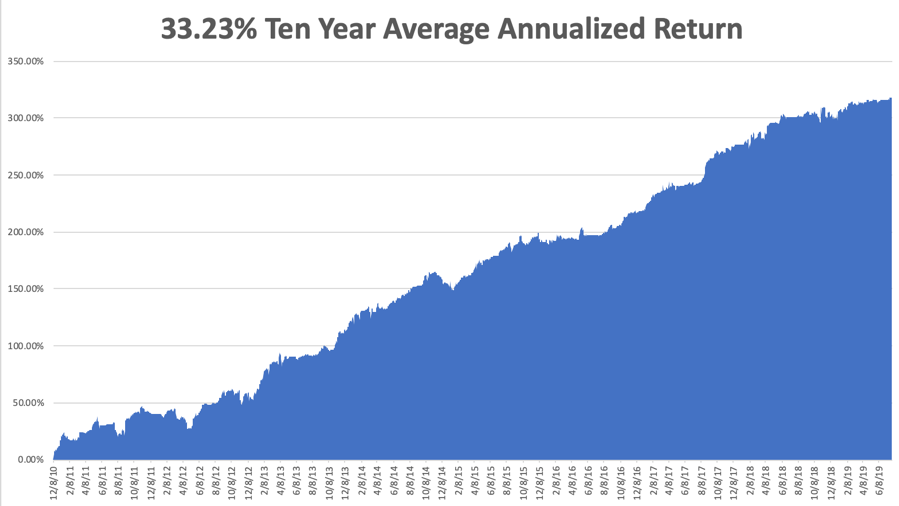
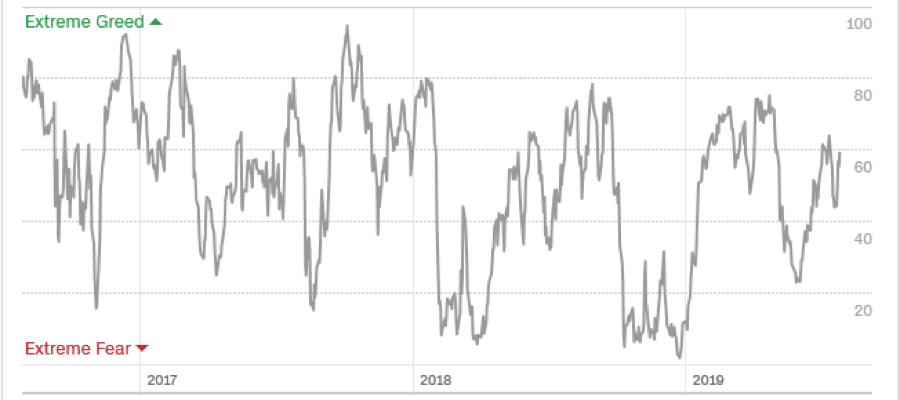
My ten-year average annualized profit bobbed up to +33.23%. With the markets now in the process of peaking out for the short term, I am now 100% in cash with Global Trading Dispatch and 100% cash in the Mad Hedge Tech Letter. If there is one thing supporting the market now, it is the fact that my Mad Hedge Market Timing Index has pulled back to a neutral 60. It’s a Goldilocks level, not too hot and not too cold.
The coming week will be a big one on the data front, with one big bombshell on Wednesday and the Payroll data on Friday.
On Monday, July 29, the Dallas Fed Manufacturing Index is out.
On Tuesday, July 30, we get June Pending Home Sales. A new Case Shiller S&P National Home Price Index is published. Look for YOY gains to shrink.
On Wednesday, July 31, at 8:30 AM, learn the ADP Private Employment Report. At 2:00 PM, the Fed interest rate decision is released and an extended press conference follows. If they don’t cut rates, there will be hell to pay.
On Thursday, August 1 at 8:30 AM, the Weekly Jobless Claims are printed.
On Friday, August 2 at 8:30 AM, we get the July Nonfarm Payroll Report. Recent numbers have been hot so that is likely to continue.
The Baker Hughes Rig Count follows at 2:00 PM.
As for me, by the time you read this, I will have walked the 25 minutes from my Alpine chalet down to the Zermatt Bahnhoff, ridden the picturesque cog railway down to Brig, and picked up an express train through the 12-mile long Simplon Tunnel to Milan, Italy.
Then I’ll spend the rest of the weekend winging my way home to San Francisco in cramped conditions on Air Italy. Yes, I had to get a few more cappuccinos and a good Italian dinner before coming home.
Now, on with the task of doubling my performance by yearend.
Good luck and good trading.
John Thomas
CEO & Publisher
The Diary of a Mad Hedge Fund Trader

Mad Hedge Technology Letter
July 24, 2019
Fiat Lux
Featured Trade:
(CIAO SILICON VALLEY),
(AAPL), (CRM), (MSFT), (FB), (AMZN), (GOOGL)

Bridgewater Associates Founder Ray Dalio carefully articulates an economic landscape in which the unrelenting chase for short-term tech profits finally catches up meaningfully with the gyrations of tech shares.
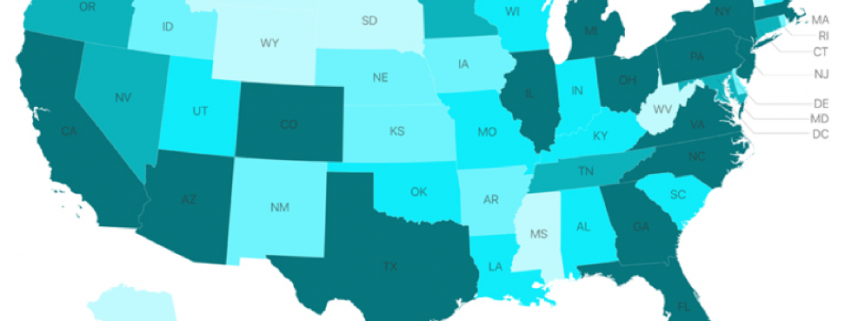
All of this could come home to roost and the early manifestations can be found in the housing migratory trends.
The robust housing demand, lack of housing supply, mixed with the avalanche of inquisitive tech money will propel these housing markets to new heights and this phenomenon is happening as we speak.
Salesforce Founder and CEO Marc Benioff has lamented that San Francisco, where ironically he is from, is a diabolical “train wreck” and urged fellow tech CEOs to “walk down the street” and see it with their own eyes to observe the numerous homeless encampments dotted around the city limits.
The leader of Salesforce doesn’t mince his words when he talks and beelines to the heart of the issues.
After relinquishing some of his CEO duties to newly anointed Co-CEO Keith Block, Benioff will have the operational time and a wealth of resources to get on top of the pulse of not only tech issues but bigger picture stuff and he now has a mouthpiece for it with Time Magazine which he and his wife recently bought.
In condemning large swaths of the beneficiaries of the Silicon Valley ethos, he has signaled that it won’t be smooth sailing forever.
In tech wonderland, and he urged companies to transform their business model if they are irresponsible with user data.
The tech lash could get messier this year because companies that go rogue with personal data will face a cringeworthy reckoning as the techlash fury seeps into government policy and the social stigma worsens.
I have walked around the streets of San Francisco myself.
Places around Powell Bart station close to the Tenderloin district are eyesores littered with used syringes that lay in the gutter.
South of Market Street isn’t a place I would want to barbecue on a terrace either.
Summing it up, the unlimited tech talent reservoir that Silicon Valley gorged on isn’t flowing anymore because people don’t want to live there now.
This tech talent, equipped with heart-tugging stories from siblings and anecdotes from classmates getting shafted by the San Francisco dream, has recently put the Bay Area in the rear-view mirror for many who would have stayed if it were 20 years ago.
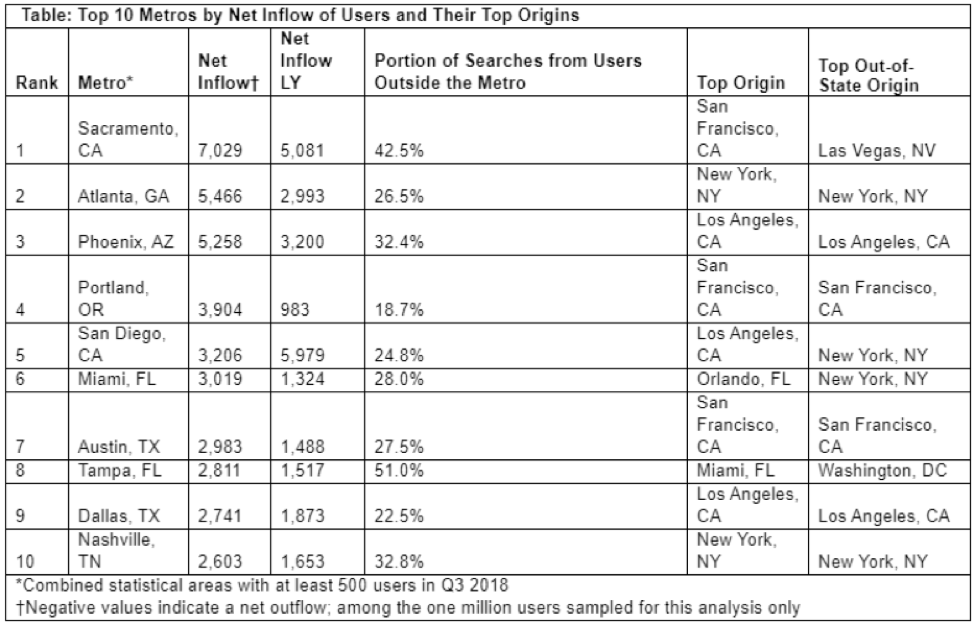
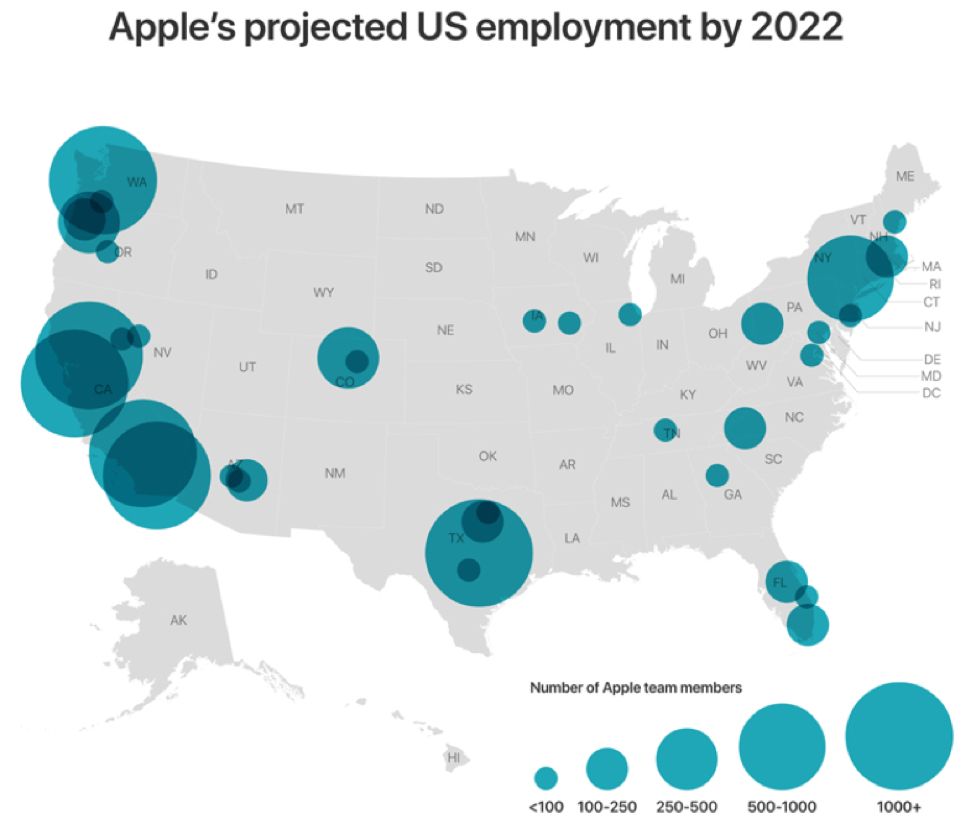
This is exactly what Apple’s $1 billion investment into a new tech campus in Austin, Texas and Amazon adding 500 employees in Nashville, Tennessee are all about.
Apple also added numbers in San Diego, Atlanta, Culver City, and Boulder just to name a few.
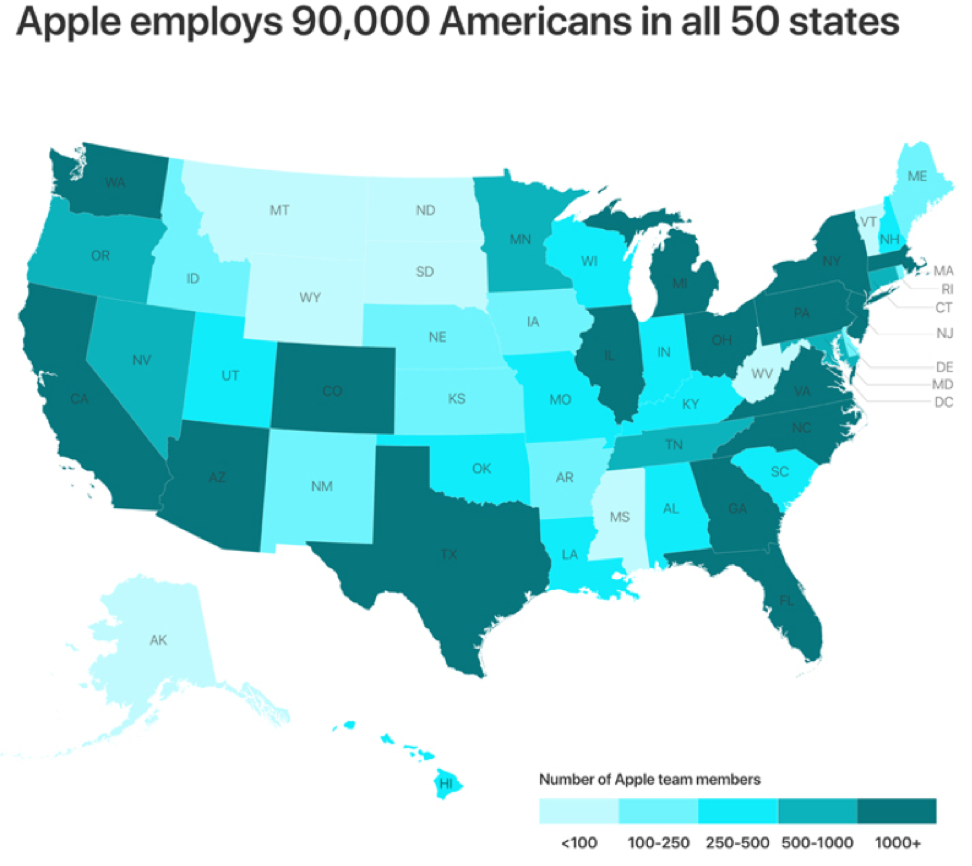
Apple currently employs 90,000 people in 50 states and is in the works to create 20,000 more jobs in the US by 2023.
Most of these new jobs won’t be in Silicon Valley.
Since the tech talent isn’t giddy-upping into Silicon Valley anymore, tech firms must get off their saddle and go find them.
The tables have turned but that is what happens when the heart of western tech becomes unlivable to the average tech worker earning $150,000 per year.
Driving out young people who envision a long-term future elsewhere than the San Francisco Bay Area forces Silicon Valley to adapt to the new patterns revealing themselves.
Sacramento has experienced a dizzying rise of newcomers from the Bay Area itself.
Some are even commuting, making that 60-mile jaunt past Davis, but that will give way to entire tech operations moving to the state capitol.
Millennials are reaching that age of family formation and they are fleeing to places that are affordable and possible to become a new home buyer.
These are some of the practical issues that tech has failed to embrace and to maintain the furious pace of growth that investors' capricious expectations harbor.
Silicon Valley will have to become more practical adding a dash of empathy as well instead of just going by the raw and heartless data.
We aren’t robots yet, and much of the world still augurs to emotional decisions and disregards the empirical data.
But, instead of physical offices being planted in the Bay Area, the tech industry will heed way to the “spirit” of Silicon Valley with offices in far-flung places.
And remember that all of these new tech talent strongholds will need housing, and housing that an IT worker making $150,000 per year desires.
No wonder why San Jose real estate has dropped in the past year, people and their paychecks are on the way out.
Mad Hedge Technology Letter
July 19, 2019
Fiat Lux
Featured Trade:
(CLOUD 101)
(AMZN), (MSFT), (GOOGL), (DOCU), (CRM), (ZS)

Global Market Comments
July 17, 2019
Fiat Lux
Featured Trade:
(THE LEADER OF THE PACK),
(GOOGL)
The future is coming a lot faster than anyone expected.
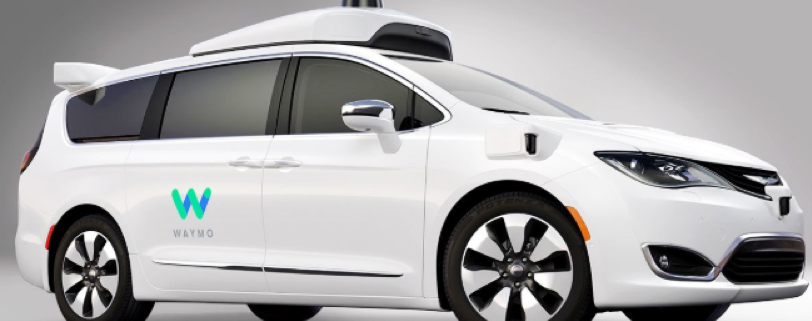
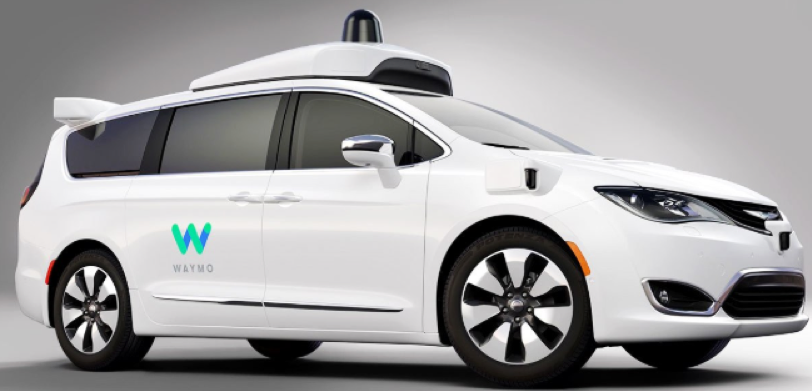
Waymo, once the top-secret Alphabet autonomous driving subsidiary, has beaten all comers to the punch.
The desert state of Arizona granted a permit for it to commence with their autonomous fleet as a commercial entity and the business has rolled out to select riders.
This permit means that Waymo’s futuristic robo-taxi can charge passengers for profit.
The vehicles started testing in 2017 and were monitored with a human safety engineer inside. This is a big deal from a regulatory point of view.
First mover advantage is pivotal in dictating an agenda and setting the rules of the road in the world of innovation.
The desperation of being first to market was epitomized by an email that former top engineer Chris Urmson sent Alphabet founders Larry Page and Sergey Brin, “We have a choice between being the headline or the footnote in history’s book on the next revolution in transportation. Let’s make the right choice.”
Waymo, a subsidiary of Alphabet (GOOG), is the preeminent force in the quest for mass market driver-less vehicles.
Before Waymo was coined, Google's self-driving-car research was an internal program referred to as Project Chauffeur. The project was created in 2009, hidden from the public eye to keep its technology safeguarded from intruders.
Alphabet invested at least $1.1 billion between 2009 and 2015 to grab the undisputed lead position of this newly created industry.
Most industry analysts estimate that commercialization of level 4 self-driving vehicles will occur sometime around 2020.
The time sensitivity is palpable as Waymo has a chance to flood American streets with its technology before GM (GM) or Uber can get off the starting blocks.
Waymo outmuscled its opponents reaching a Level 3 standard in 2012.
Level 4 is the grade that automakers wish to proceed with. Although not fully Level 5 automated, Level 4 technology can operate under controlled factors without a driver.
The Fiat Chrysler minivans tricked out with Waymo technology have been racking up test miles in Phoenix, Arizona to the tune of around 5 million on Level 4 technology.
Arizona has been a fertile breeding ground for driver-less car development since 2015 when Governor Doug Ducey signed an executive order giving authority to state agencies to “undertake any necessary steps to support the testing and operation of self-driving vehicles on public roads within Arizona.”
The success or failure in Arizona will go a long way to test the quality and sustainability of this new phenomenon.
It helps a lot that Phoenix streets are laid out in a simple grid that the current level of artificial intelligence finds easy to recognize and understand.
Waymo is essentially Uber with no driver.
Drivers cost money. Waymo hopes to remove the highest input in ride sharing transport - the driver itself.
Uber routinely shells out driver subsidies equating to around 72% of quarterly gross revenue.
Waymo plans to expand its coverage to other locations.
Google CFO Ruth Porat has gone on record saying “We do continue to explore a range of options beyond the program we’re piloting in Phoenix, including ride sharing and personal use vehicles, logistics, deliveries, and working with cities to help them address public transportation objectives.”
The first commercial operation has been groundbreakingly successful in Arizona and is crucial to enhance consumer sentiment for reliable driver-less vehicles.
The accumulated data will be vital to prove Waymo’s safety record.
If all goes smoothly, Waymo’s autonomous vehicles and technology will spread like wildfire to other locations.
The potential success will fundamentally change the way people live their lives.
Up to 10 million employed drivers are set to be on the chopping block in America.
That includes about 3.5 million professional truck drivers who earn between $30,000-$45,000 per year along with 2 million Uber/Lyft drivers participating in the gig economy at $7.25 an hour.
The mass adoption of autonomous vehicles will eliminate a huge chunk of the American workforce, while redrawing additional income streams to Alphabet (GOOG).
Insurance companies would take a direct hit with the future pipeline of drivers irrevocably thwarted from learning how to drive.
If the preliminary data comes up roses, parents will not allow their 16-year-old kid to learn how to drive and instead throw them into a Waymo to be chauffeured to school.
Also, the tragic 40,000 annual fatalities caused by motor vehicle crashes will drop off a cliff.
The pick up in productivity would be astounding as workers will no longer need to drive themselves anymore, cutting costs and allowing additional time to work while in transit.
The unintended consequences will change the world while making the leaders of the space richer. A deeper underlying effect is that it will strengthen (GOOG)’s credentials going forward to apply A.I. in other spheres.
Global Market Comments
July 16, 2019
Fiat Lux
Featured Trade:
(THE BIGGEST TELL IN THE MARKET RIGHT NOW),
(GOOGL), (FRC), (PINS), (WORK), (UBER),
(ADSK), (WDAY), (SNE), (NVDA), (MSFT),
(POPULATION BOMB ECHOES),
(CORN), (WEAT), (SOYB), (DBA), (MOS)