Before I took off for the current trip to Europe, I logged into my Amazon Prime account to buy some lightweight polyester T-shirts, size 4XL. Not only are these ideal for long-distance hiking but they can be washed in a hotel sink and dried quickly when I am traveling too fast to use the house laundry.
The next morning when I logged into my laptop, my email account was flooded with ads for every kind of T-shirt in the world, from heavy-duty sports types FOR $100 to bargain basement $5 ones from China (although the Chinese ones were a little light on the 4X sizes).
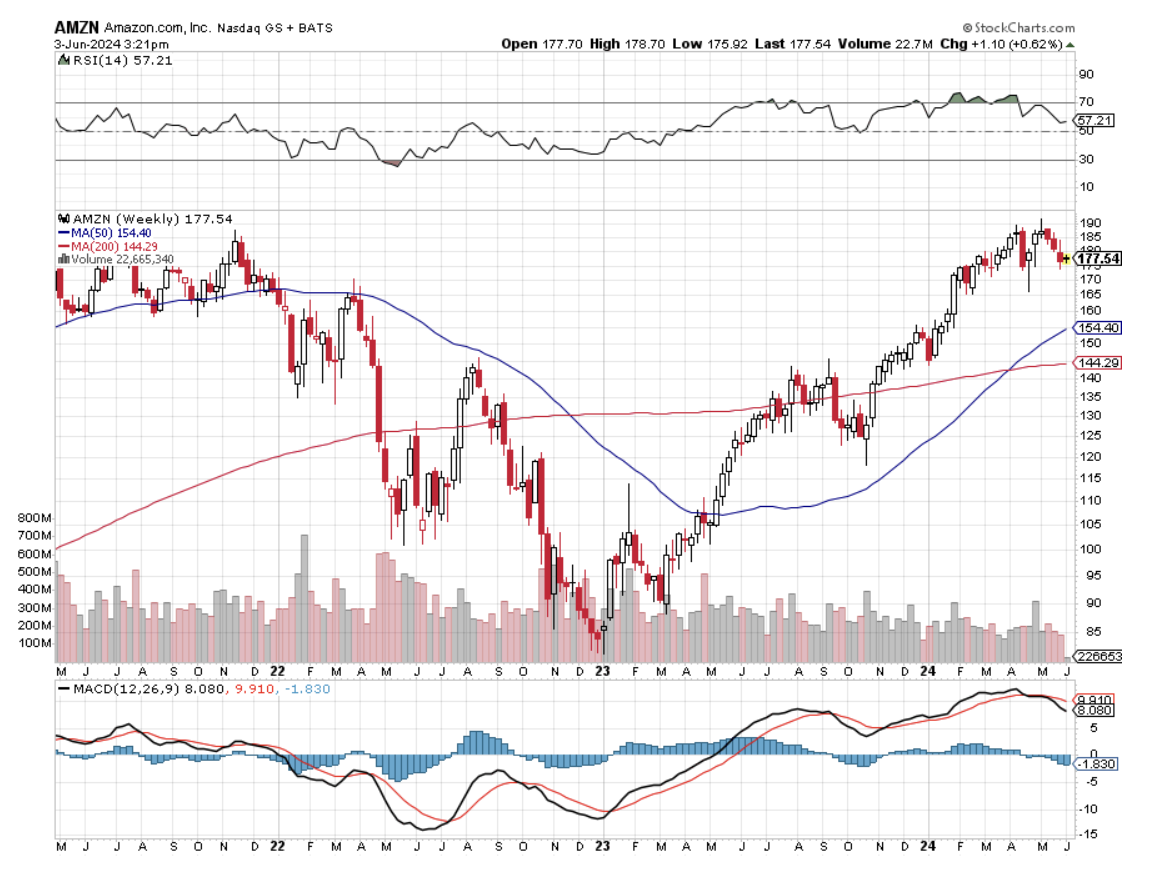
That is Amazon’s AI at work. And you know what? It is getting smarter. And while the big fear among investors is that the US government will break up this retail giant for antitrust reasons, Amazon is integrating faster than ever. The impact on profits will be enormous.
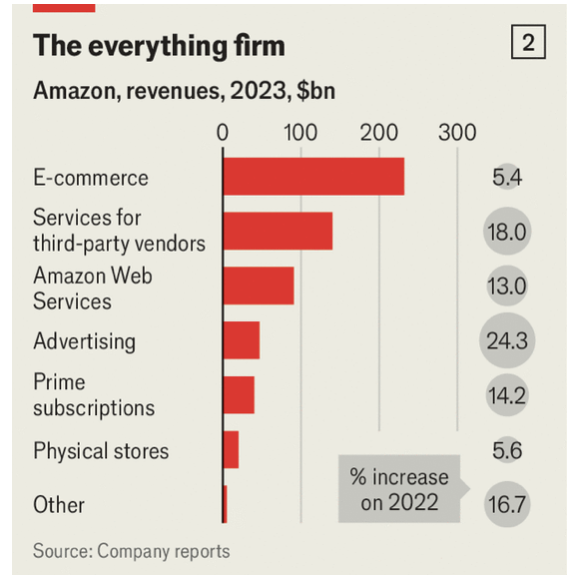
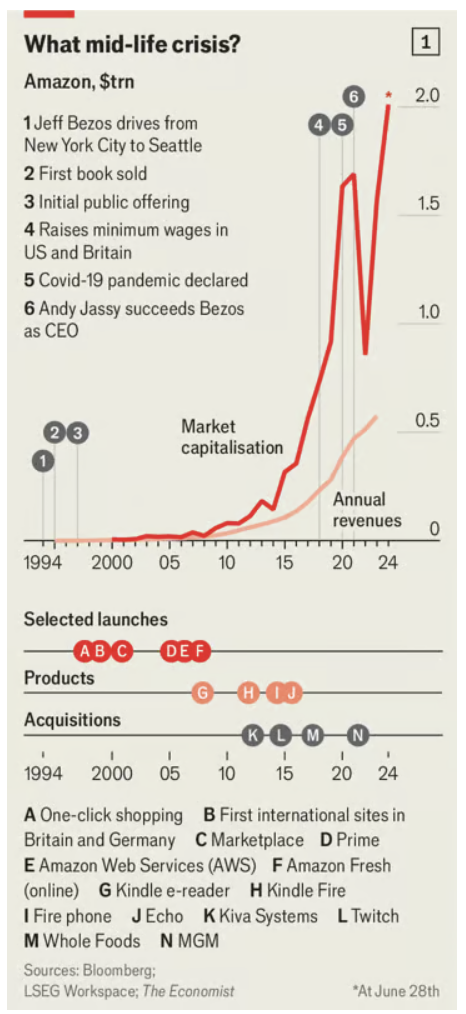
My friend Jeff Bezos’ creation has a lot to work with. Amazon not only pioneered online retail. It subsequently invented the Kindle, an e-reader (click here where the John Thomas autobiography is for sale) Alexa, a smart speaker and, more consequentially, cloud-computing—Amazon Web Services has a 31% share of that $300bn market (full disclosure: Mad Hedge uses their service).
It also runs Prime Video, America’s fourth-most-watched video-streaming service (full disclosure: Mad Hedge is a Prime member). Its newish, high-margin advertising business is already the third largest in the world behind Alphabet (GOOGL) (Google’s parent company) and Meta (META) (Facebook’s).
Amazon also has a few moonshot projects of its own. One subsidiary, Zoox, is building self-driving cars. Another, Kuiper, is developing a fleet of communications satellites in low-Earth orbit, in competition with SpaceX Starlink (full disclosure: Mad Hedge is a Starlink user).
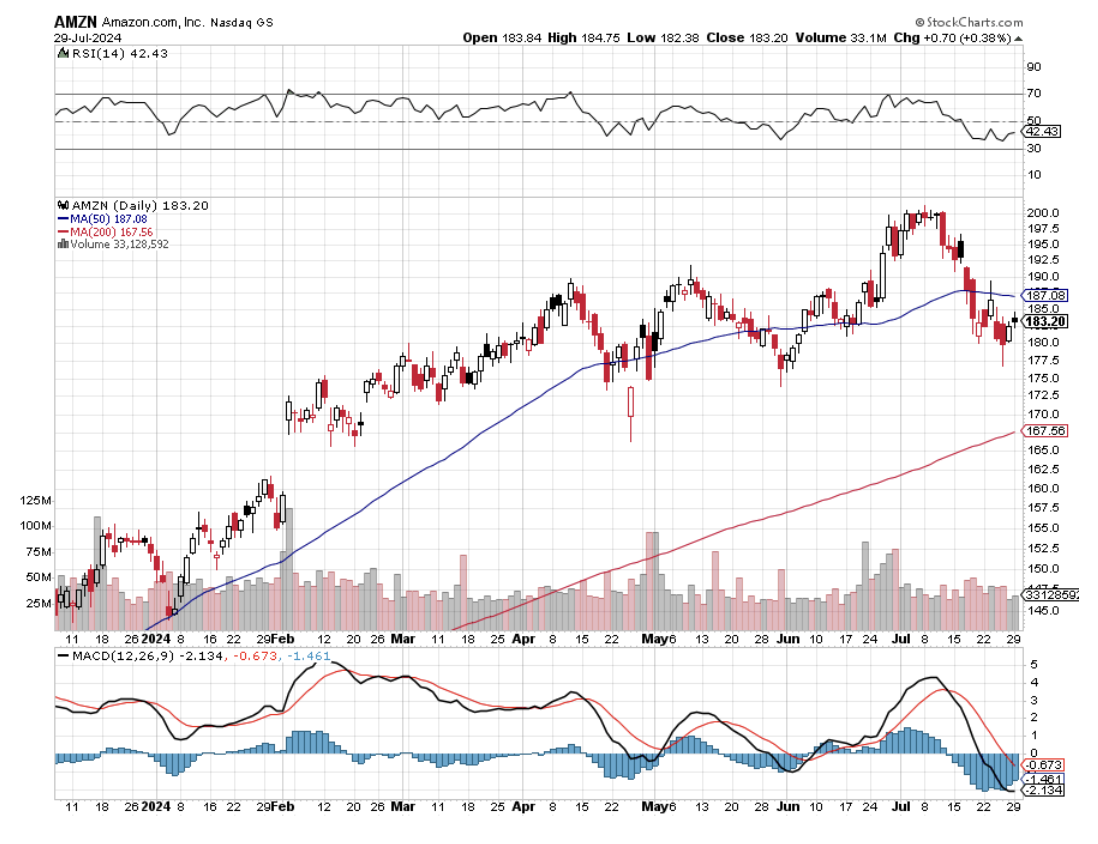
This year, Amazon’s websites will sell a staggering $554bn-worth of goods in America. That gives it a 42% share of American e-commerce, far beyond the 6% captured by Walmart (WMT), its nearest online competitor (and the country’s biggest retailer overall). The reward for all these efforts was a $2 trillion market capitalization in June and an all-time high share price of $203.
Amazon’s fourth decade looks poised to be an era of integration. The company has grown to the size that any needle-moving new investment is costly and high-risk. Andy Jassy, the former boss of AWS whom Bezos appointed as his successor as CEO in 2021, therefore appears keen to generate value by stitching the company’s existing businesses together more tightly.
Jeff, who I knew at Morgan Stanley, still retains a 9% stake after some hefty recent sales and a big say over strategy, seems to approve. This metamorphosis would make Amazon more similar to Apple (AAPL) and Microsoft (MSFT), two older big-tech rivals that have bundled and cross-sold their way to world domination in consumer devices and business software, respectively—and to $3trn valuations.
Retail and advertising appear to be the first to integrate. The thread running through the two businesses is Prime, Amazon’s $139 a-year subscription service, which has 300m-odd members around the world, providing shoppers with free delivery and access to Prime Video. Prime members like me spend twice as much on Amazon’s websites as non-members do and they tend to be logged in more often. Amazon also has intimate knowledge of their shopping behavior, which allows it to target ads more accurately.
Advertising is another great hope at Amazon. Advertisers are willing to pay handsomely for this service: analysts estimate that Amazon’s ads business enjoys operating margins of around a mind-blowing 40%, higher even than those of the cloud operation, not to mention the much less lucrative retail division.
Most of these ads, responsible for four-fifths of the company’s ad sales, are nestled among search results on its app or next to information about products, as with my above-mentioned T-shirts. But a growing share is coming from third-party websites and, most recently, from Prime Video. In January Amazon started showing commercials to viewers in America, Britain, Canada, and Germany.
Analysts reckon that video ads alone will boost Amazon’s ads sales by about 6% this year, adding $3bn to the top line. Given the ad operation’s fat margins, the impact on profit will be considerably larger.
To turn more Prime members into actual ad-watchers, Amazon is splurging on content. It recently signed a contract with Mr. Beast (??), a YouTube superstar, rumored to be worth $100m. It is trying to seal a deal in which it would pay $2bn a year for the rights to show National Basketball Association games on Prime Video. It is already reportedly spending $1bn annually to stream some National Football League (NFL) fixtures.
This hefty price tag is worth it, the company thinks, because popular sporting moments, such as “Thursday Night Football”, have turned out to be among the biggest sign-up days for Prime. Ads aired during sports events are some of the most lucrative in all of the ad business.
Analysts speculate that clever AWS software may also be assisting the retail operation’s 750,000 warehouse robots in sorting shoppers’ packages. And having a business as gigantic as Amazon’s retail arm as a captive customer gives AWS the confidence to scale up, helping spread costs.
The most important thread stitching Amazon’s two main businesses together is generative AI. Most rivals will struggle to match Amazon’s access to specialized AI hardware, which is in short supply but which it has in abundance thanks to long-standing commercial partnerships with companies like Nvidia (NVDA), which makes advanced AI semiconductors.
Amazon’s recent share-price rise was uninterrupted by a Fair Trade Commission lawsuit. But for every cloud customer that AWS loses to rivals such as Microsoft Azure or Google Cloud Platform, it could win one that is repelled by Microsoft’s and Google’s new businesses in their own increasingly tightly-knit empires.
It all looks like a giant, super-efficient machine to me which should justify at least a 50% gain in Amazon’s share price in the next year or two.
https://www.madhedgefundtrader.com/wp-content/uploads/2024/08/The-everything-firm.png580576april@madhedgefundtrader.comhttps://madhedgefundtrader.com/wp-content/uploads/2019/05/cropped-mad-hedge-logo-transparent-192x192_f9578834168ba24df3eb53916a12c882.pngapril@madhedgefundtrader.com2024-08-01 09:02:372024-08-01 10:14:35Why Amazon is the Most Undervalued AI Play Out There
(The Mad June traders & Investors Summit is ON!)
(THE BIGGEST “TELL” IN THE MARKET RIGHT NOW),
(GOOGL), (FRC), (PINS), (WORK), (UBER),
(ADSK), (WDAY), (SNE), (NVDA), (MSFT)
I am constantly looking for “tells” in the market, little nuggets of information that no one else notices, but give me a huge trading advantage.
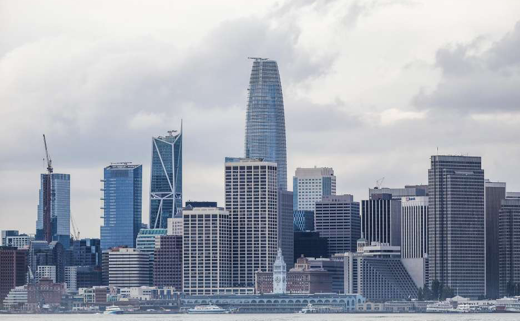
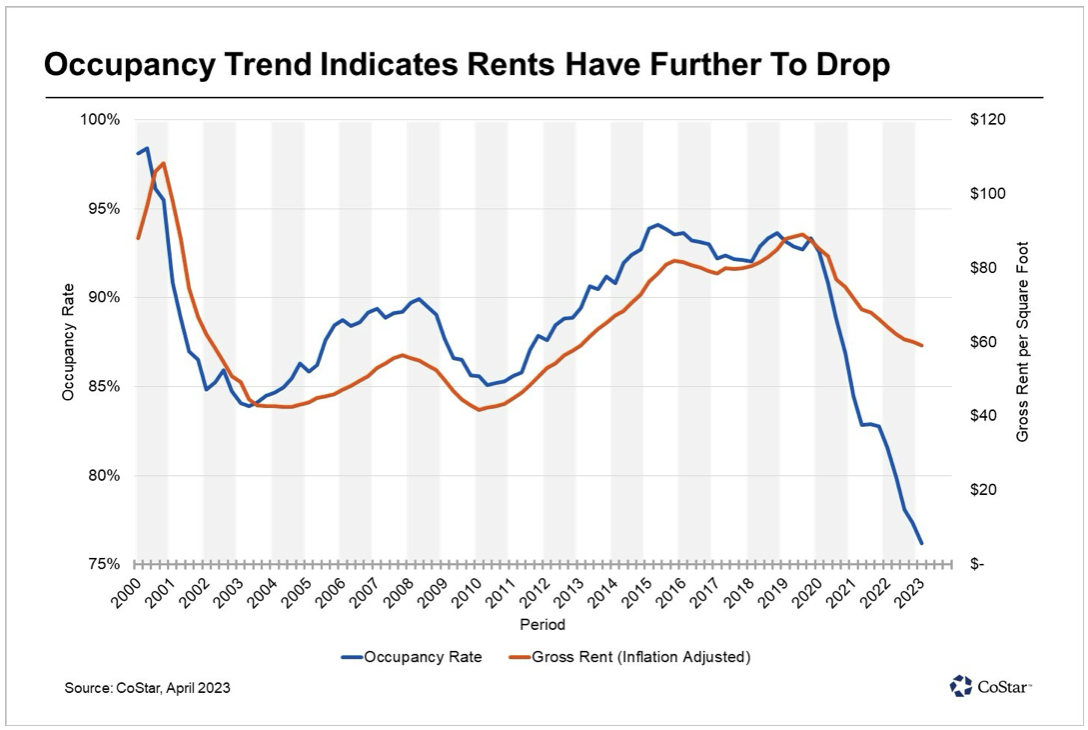
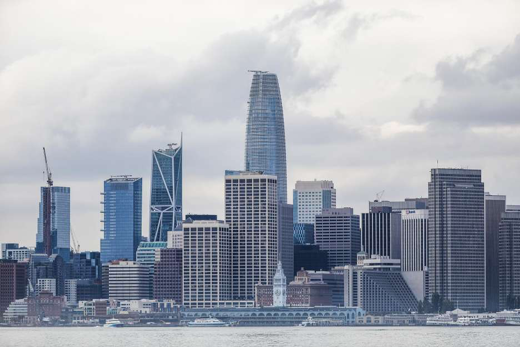
Well, there is a big one out there right now. The bottom feeders are pouring into San Francisco commercial real estate, taking advantage of valuations that sometimes reach negative numbers. Owners are walking away from buildings, mailing in the keys, and going into default rather than keeping up mortgage payments. What’s worse is refinancing at today’s lofty rates. That’s what you would expect with a 36% vacancy rate.
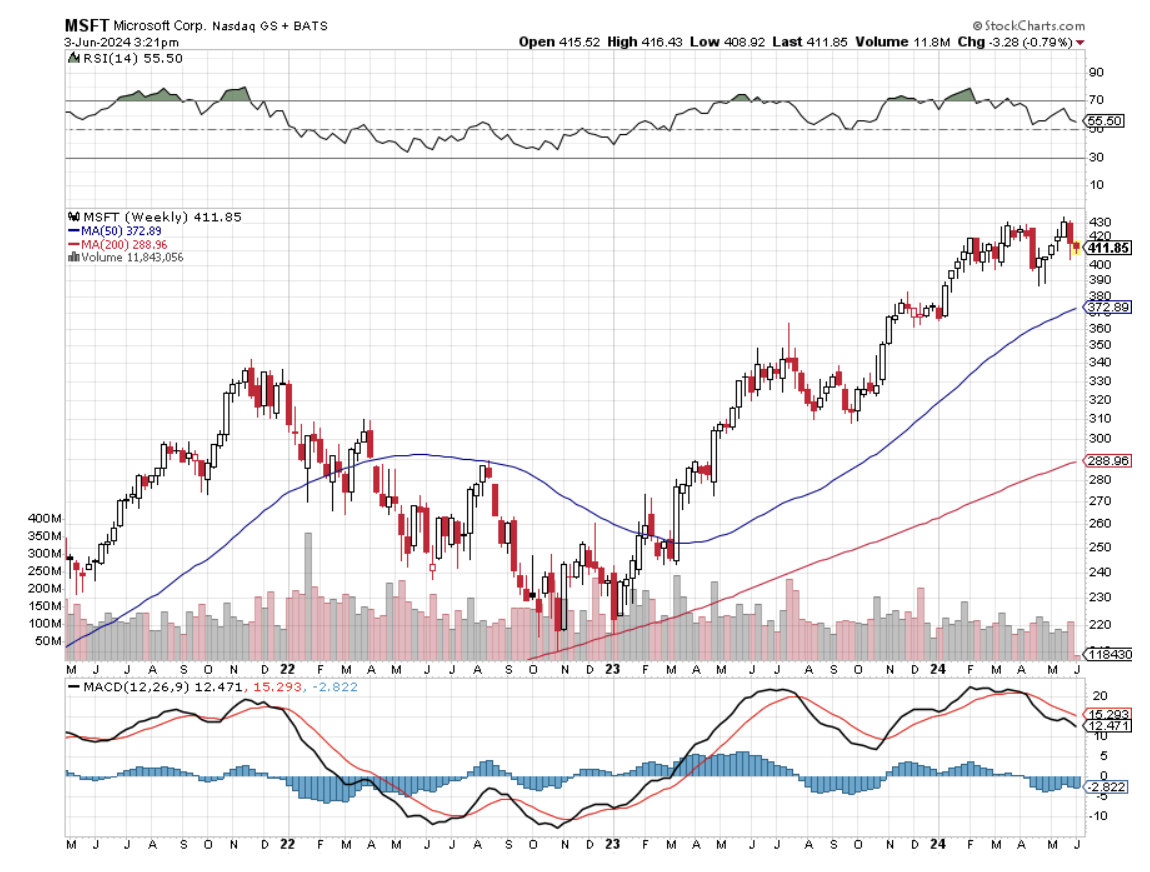
The message for you traders is loud and clear. You should be picking up the highest quality technology growth stocks on every substantial dip, such as Microsoft (MSFT), Amazon (AMZN), Alphabet (GOOGL), Meta (META), and NVIDIA (NVDA). For they all know some things that you don’t. Their businesses are about to triple, if not quadruple over the coming decade thanks to AI. For every abandoned building out there are 200 new AI start-ups taking advantage of today’s bargain basement rates, and ALL of them use the services of the five companies above.
Technology stocks, which now account for an eye-popping 30% of stock market capitalization, will make up more than half of the market within ten years, much of that through stock price appreciation. And they are all racing to lock up the office space with which to do that….now.
San Francisco office rents reached a record pre-pandemic as the continued growth of tech — now turbocharged by nearly $100 billion in new capital raised in a series of initial public offerings — met a severe space crunch.
Asking rents rose to a staggering $84.16 per square foot annually for the newest and highest quality offices in the central business district, and citywide asking rents for such spaces, known as Class A, were up over 9% from the prior year. The citywide office vacancy rate was 5.5% in June, down from 7.4% a year ago.
In addition, local Bay Area home prices could get a turbocharger by the fall, when interest rates are expected to start falling.
San Francisco companies that have gone public continue to grow by leaps and bounds. Pinterest (PINS), Slack (WORK), and Uber (UBER) also signed office leases this year, with room for thousands of new employees.
Tech companies Autodesk (ADSK) and Glassdoor also signed deals at 50 Beale St. in the spring. In a sign of the city’s rapidly changing economy, old-line construction firm Bechtel and Blue Shield, the legacy health insurer, are both moving out of 50 Beale St. Sensor maker Samsara, software firm Workday (WDAY), and Sony’s (SNE) PlayStation video game division also expanded.
Globally, San Francisco has the seventh-highest rents in prime buildings. It’s still behind financial powerhouses Hong Kong, London, New York, Beijing, Tokyo, and New Delhi (San Francisco’s average office rents beat out New York.)
Only a handful of new office projects are being built, and future supply is further constrained by San Francisco’s Proposition M, which limits the amount of office space that can be approved each year. That is creating a steadily worsening structural shortage. Only two large office projects are under construction without tenant commitments.
Suddenly, it’s Not Crowded in San Francisco
https://www.madhedgefundtrader.com/wp-content/uploads/2019/07/san-francisco-skyline.png347520Mad Hedge Fund Traderhttps://madhedgefundtrader.com/wp-content/uploads/2019/05/cropped-mad-hedge-logo-transparent-192x192_f9578834168ba24df3eb53916a12c882.pngMad Hedge Fund Trader2024-06-04 09:02:562024-06-04 10:22:33The Biggest “Tell” in the Market Right Now
(The Mad June traders & Investors Summit is ON!)
(MARKET OUTLOOK FOR THE WEEK AHEAD, or WELCOME TO THE MALLARD MARKET and ME AND 23 AND ME),
(AAPL), (GOOGL), (AMZN), (TSLA), (MSFT), (META), (AVGO), (LRCX), (SMCI), (NVR), (BKNG), (LLY), (NFLX), (VIX), (COPX), (T), (NVDA), (LEN), (KBH)
There’s nothing like the comfort and self-satisfaction of having a 100% cash position in a falling market. While everyone else is bleeding red ink, I am happily plotting my next trades.
Of course, the rest of the market isn’t really bleeding red ink, just giving up windfall profits. Still, it’s better to trade from a position of strength than weakness. It makes identifying the next winners easier.
Think of this as the “Mallard Market”. On the surface, it seems calm and peaceful, while underwater, it is paddling along like crazy. The damage has been unmistakable. Dell, the faux AI stock (DELL) crashed by 28%, Salesforce (CRM) got creamed for 34%, and ServiceNow (NOW) got taken to the woodshed for 22%.
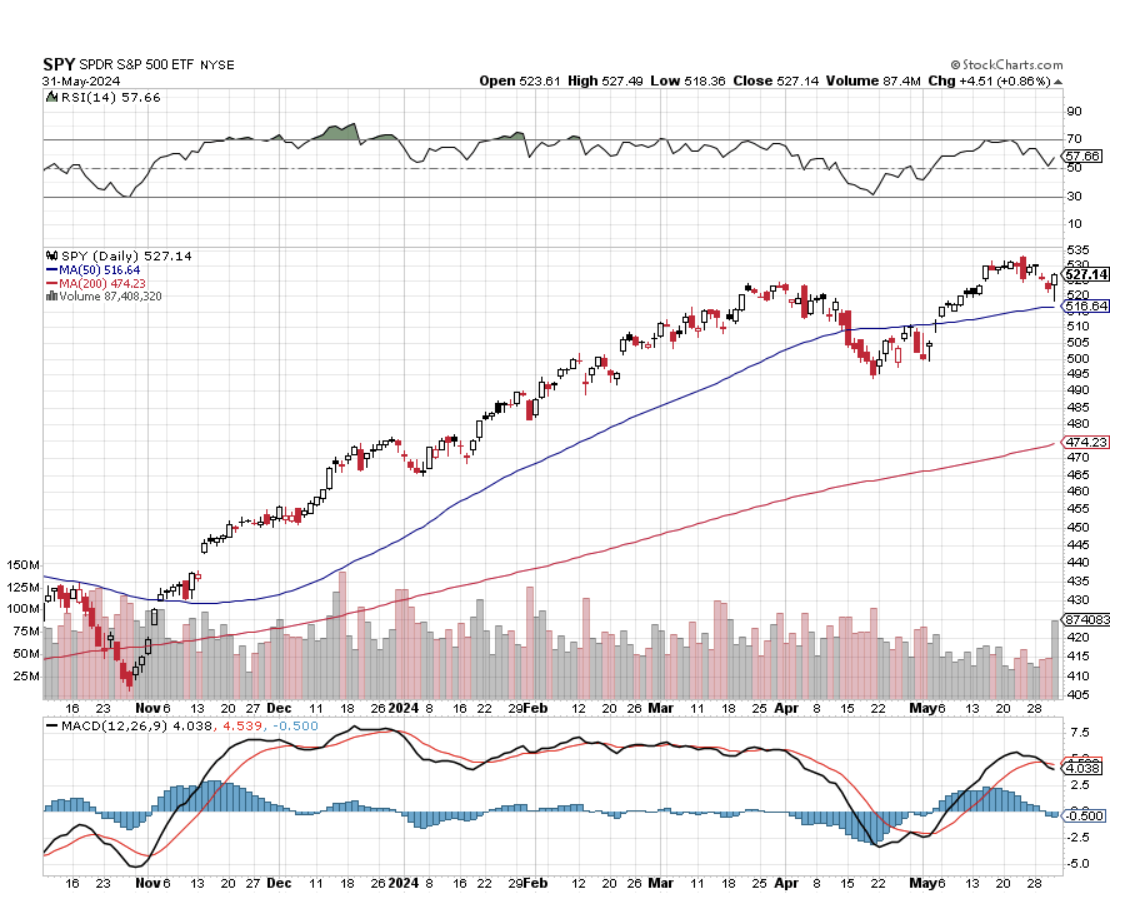
It all belies a market that is incredibly nervous and fast on the trigger. The tolerance for any bad news is zero. Yet there has been no market crash as I expected. The 5,300 level for the (SPX) seems to possess a gravitational field, powered by $250 earnings per share and a multiple of 51X.
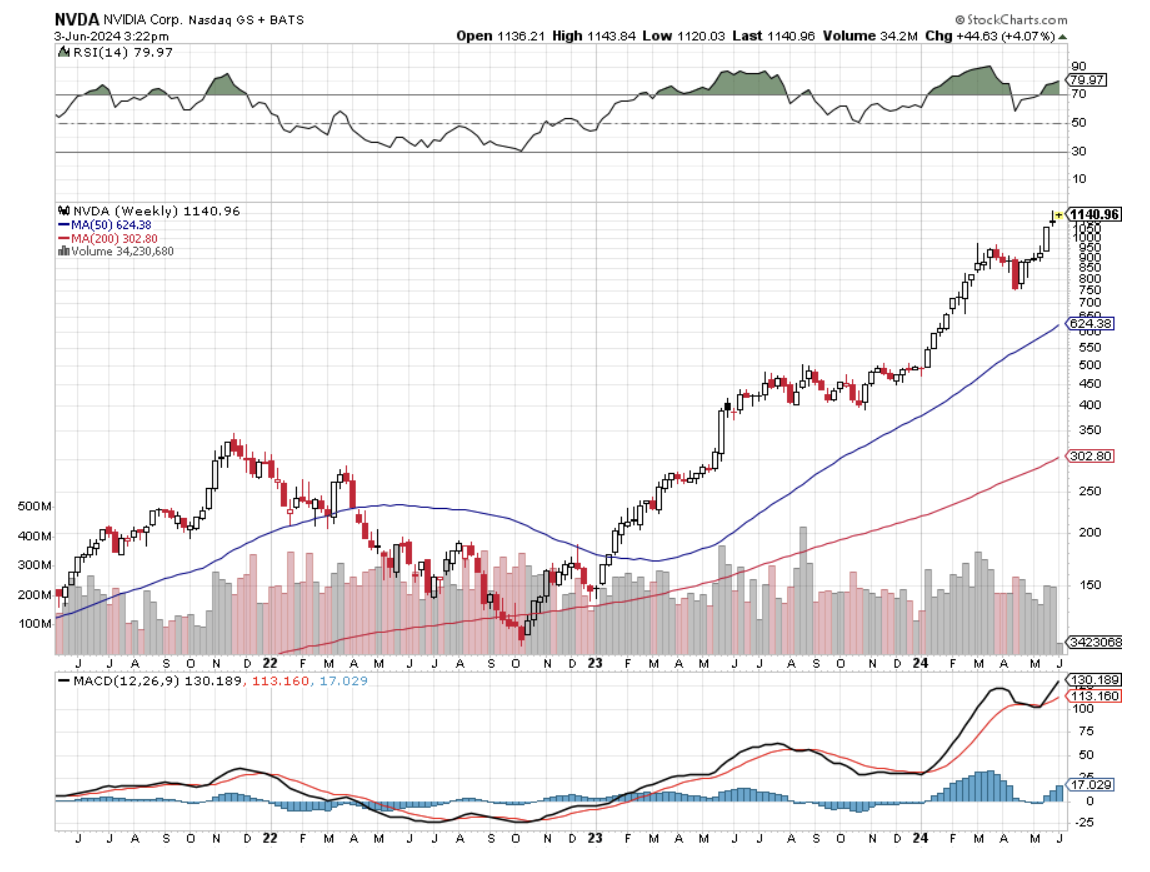
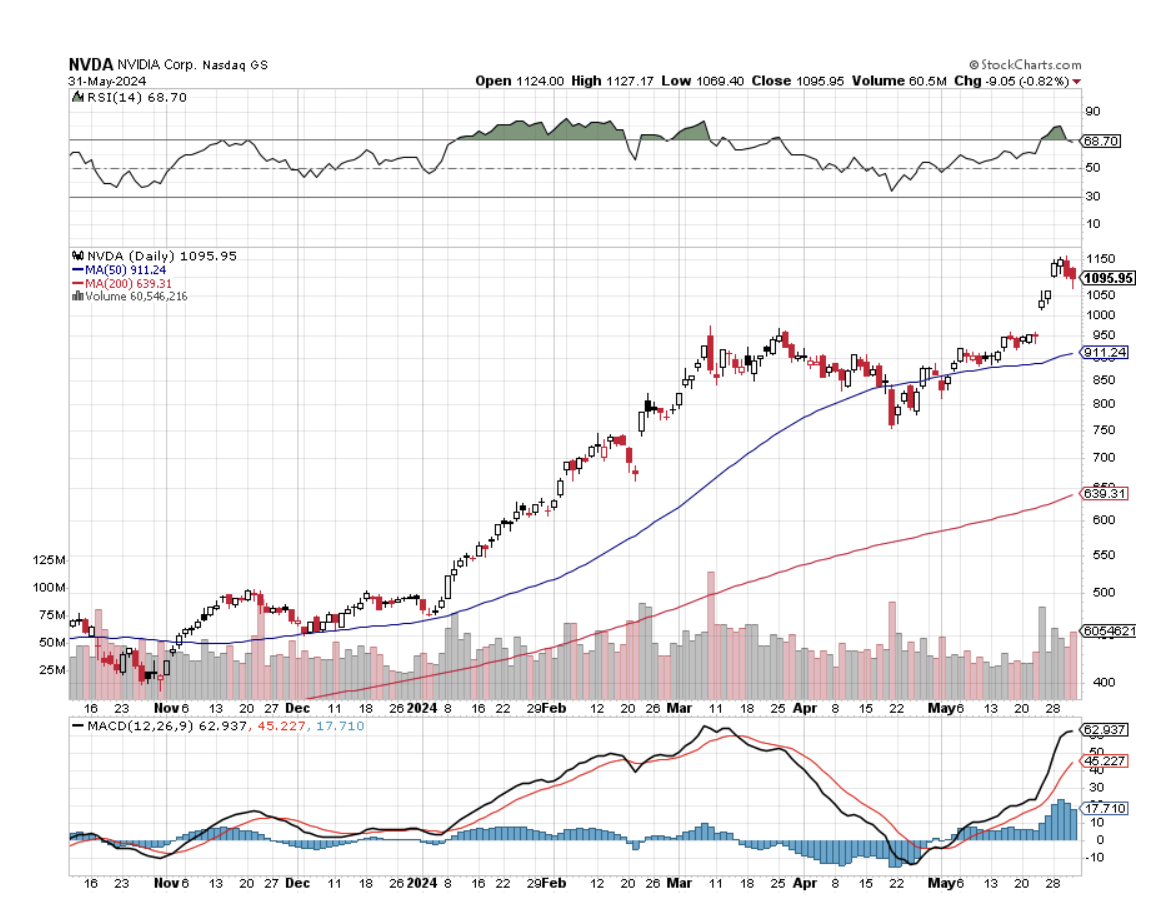
It was NVIDIA that put the writing on the wall by announcing a 10:1 split that has opened the floodgates for similar prosperous and high-priced companies.
There are now 36 stocks with share prices of $500 or more ripe for splits with $7 trillion in market cap, or 16% of the total market. While splits don’t change the value of a company, perceptions are everything, as they prove shareholder-friendly policies. While individual investors are confused by an onslaught of contradictory research recommendations, splits are a great “tell” on what to buy next.
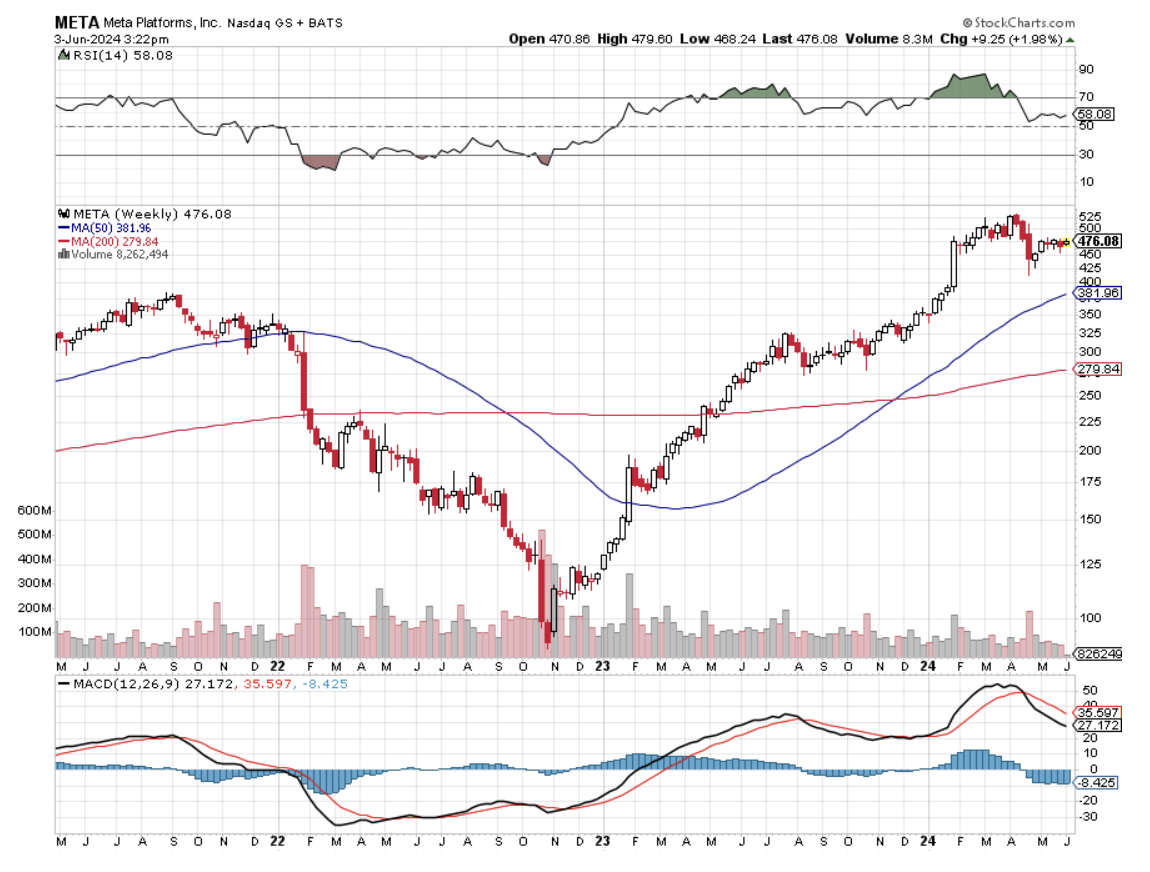
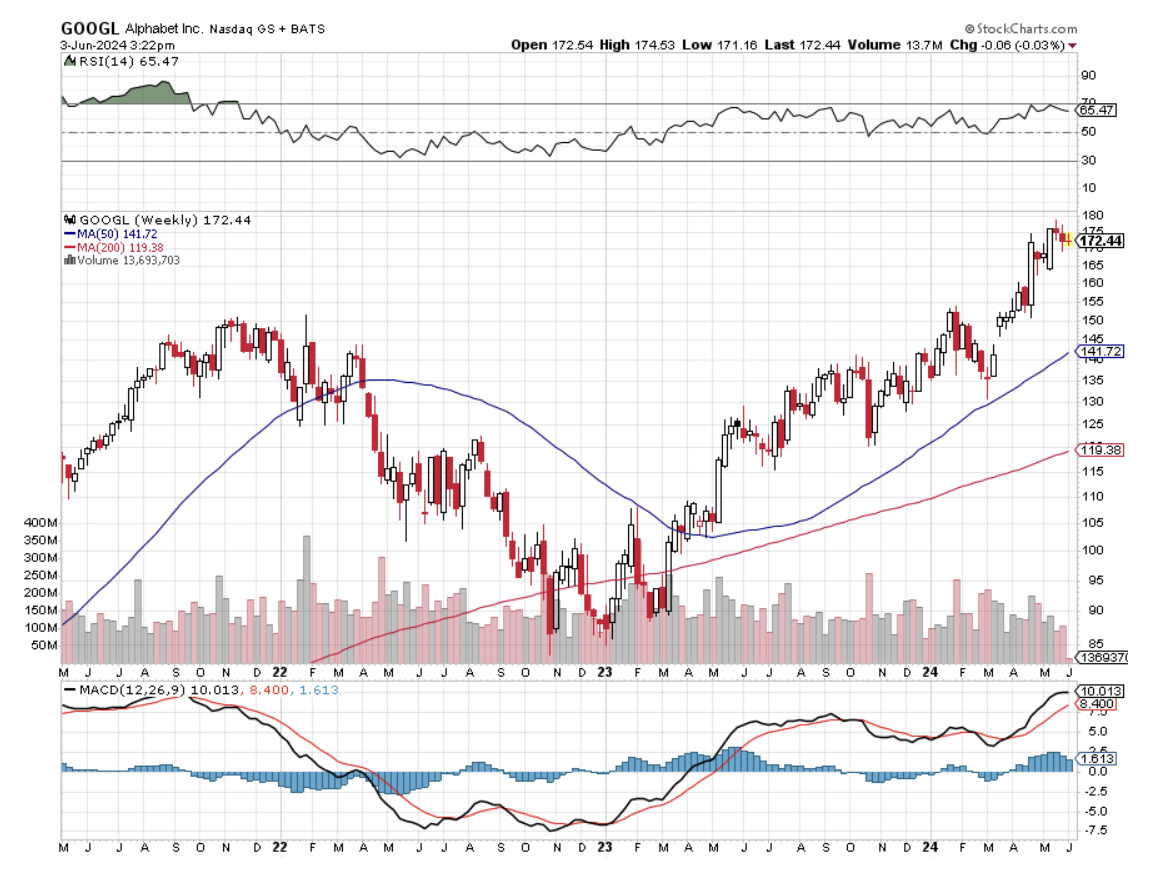
Apple (AAPL), Alphabet (GOOGL), Amazon (AMZN), and Tesla (TSLA) have already carried out splits, some multiple times, to great success. Of the Magnificent Seven, only Microsoft (MSFT) and Meta (META) have yet to split.
In the tech area Broadcom (AVGO), Lam Research (LRCX), Super Micro Computer (SMCI), and Service Now (NOW) have yet to split. In the non-tech area, there are NVR Inc. (NVR), Booking Holdings (BKNG), Eli Lilly (LLY), and Netflix (NFLX). Many of these are well-known Mad Hedge recommended stocks.
History has shown that stocks rise 25% one year after a split compared to 12% for the market as a whole. A stock’s addition to the Dow Average or the S&P 500 (SPY) provides a boost. If both occur, stocks will absolutely explode. Stock splits are also much more attractive than buybacks at these high prices.
So, I’ll be trolling the market for split-happy candidates.
You should too.
Since it may be some time before we capitulate and take a worthwhile run at new highs, I thought I’d update you on the global demographic outlook, which is always a long-term driver of economies and markets.
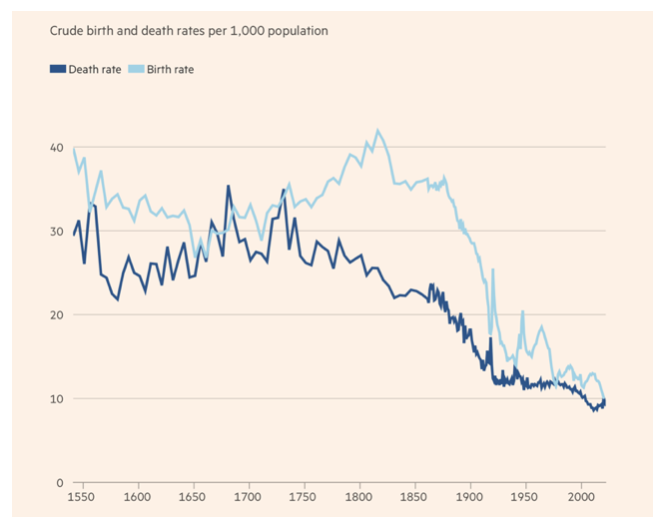
People are now living longer than ever before. But postponing death is only a part of the demographic story. The other is the decline in births. The combination of the two is creating huge changes in the global economy.
The notion of a “demographic transition” is almost a century old. Human societies used to have roughly stable populations, with high mortality matched by high fertility. Families had eight kids and 3-5 usually died in childhood, barely maintaining population growth.
In England and Wales in the 18th and 19th centuries, death rates suddenly plummeted. But fertility did not. The result was a population explosion. As the benefits of economic growth and advances in medicine and public health spread, most of the world has followed a similar transition, but far faster. As a result, human numbers rose fourfold over the last hundred years, from 2 billion to 8 billion.
In time, fertility followed mortality on a downward path across most of the world. As a result, fertility rates in more than half of all countries and territories in 2021 fell below the replacement level. For the world as a whole, the fertility rate was 2.3 in 2021, barely above the replacement of 2.1, down from 4.7 in 1960.
For high-income countries, the fertility rate was a mere 1.6, down from 3.0 in 1960. In general, poor countries still have higher fertility rates than richer ones, but they have been falling there, too.
What explains this collapse in fertility rates? An important part of the answer is the wonderful surprise that more children survived than expected. So, people started to practice various forms of birth control.
But the desire to have many children also shrank sharply. When husbands realized that smaller families meant high standards of living for themselves, family sizes dropped sharply. Even in ultra-conservative Iran, the fertility rate has collapsed from 6.6 in 1980 to only 1.7 in 2021.
A big reason for this shift was that, for their parents, children have moved from being a valuable productive asset in the 19th century to an expensive luxury today. That was back when 50% of our population worked on farms. Today it’s only 2%.
In the meantime, female participation in the economy rose dramatically in the 20th century, including in highly skilled careers. That raised the “opportunity cost” of producing children, especially for mothers. So, they have children later, or even not at all.
Where public childcare is more generous women are encouraged to combine careers with having children. The absence of such help helps explain the exceptionally low fertility rates in much of East Asia and Southern Europe, where parental support is limited.
This global shift towards very low fertility, with the exception (so far) of sub-Saharan Africa, is among the most important events driving the global economy. One implication is that the population of Africa is forecast to be larger than that of all today’s high-income countries, plus China by 2060, thanks to the elimination of many diseases there.
Why is all this important?
Because rising populations create larger markets, more profits for corporations, and rising share prices. Shrinking populations have the opposite effect, as China is learning about its distress now. One reason the US is growing faster than the rest of the world is that a continuous stream of new immigrants since its foundation has created endless numbers of new workers and customers. Dow 240,000 here we come!
Just thought you’d like to know.
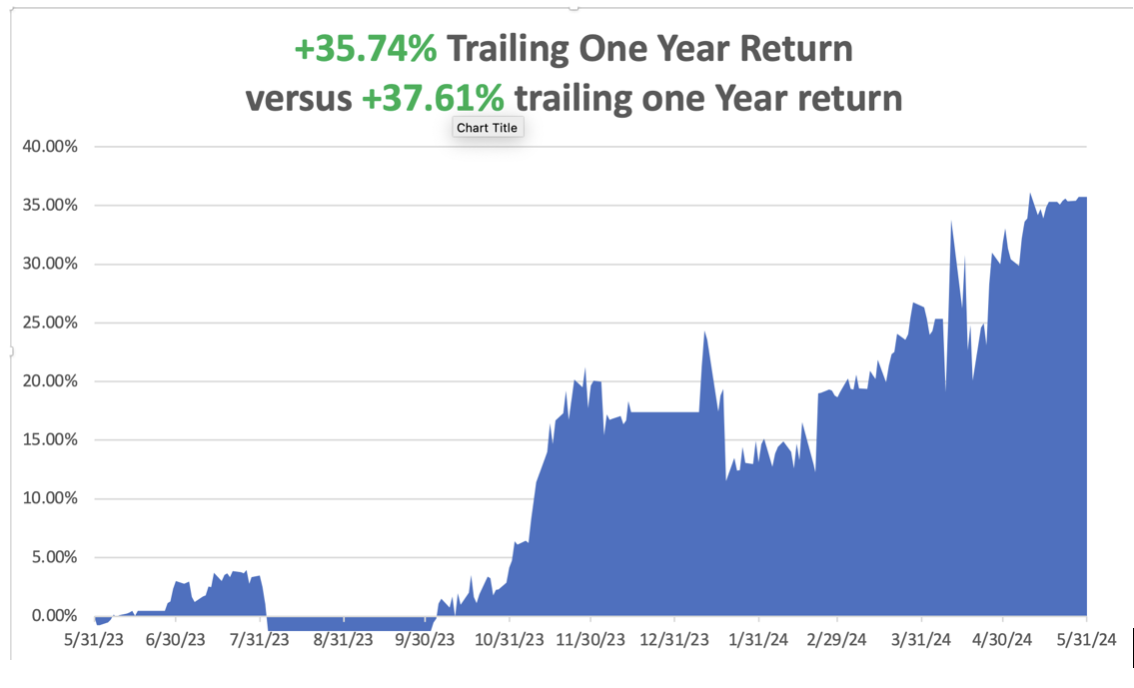
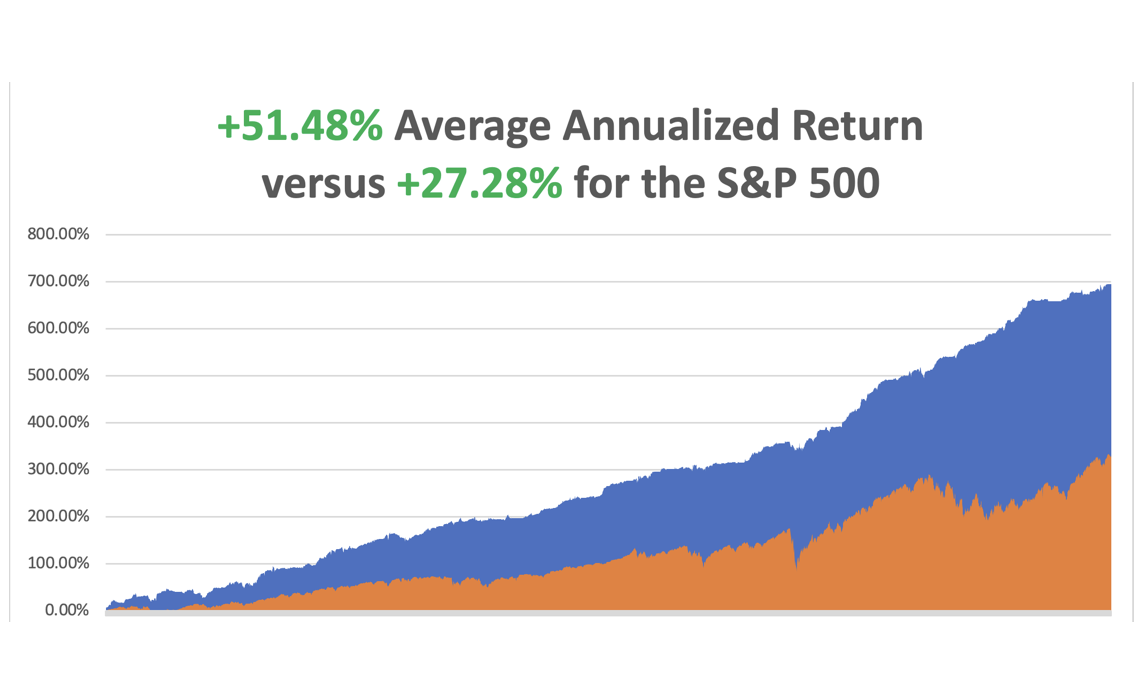
So far in May, we are up +3.74%. My 2024 year-to-date performance is at +18.35%.The S&P 500 (SPY) is up +10.48%so far in 2024. My trailing one-year return reached +35.74%. That brings my 16-year total return to +694.78%.My average annualized return has recovered to +51.48%.
As the market reaches higher and higher, I continue to pare back risk in my portfolio. I bailed on my last position early in the week, covering a short in Apple for a profit.
Some 63 of my 70 round trips were profitable in 2023. Some 27 of 37 trades have been profitable so far in 2024.
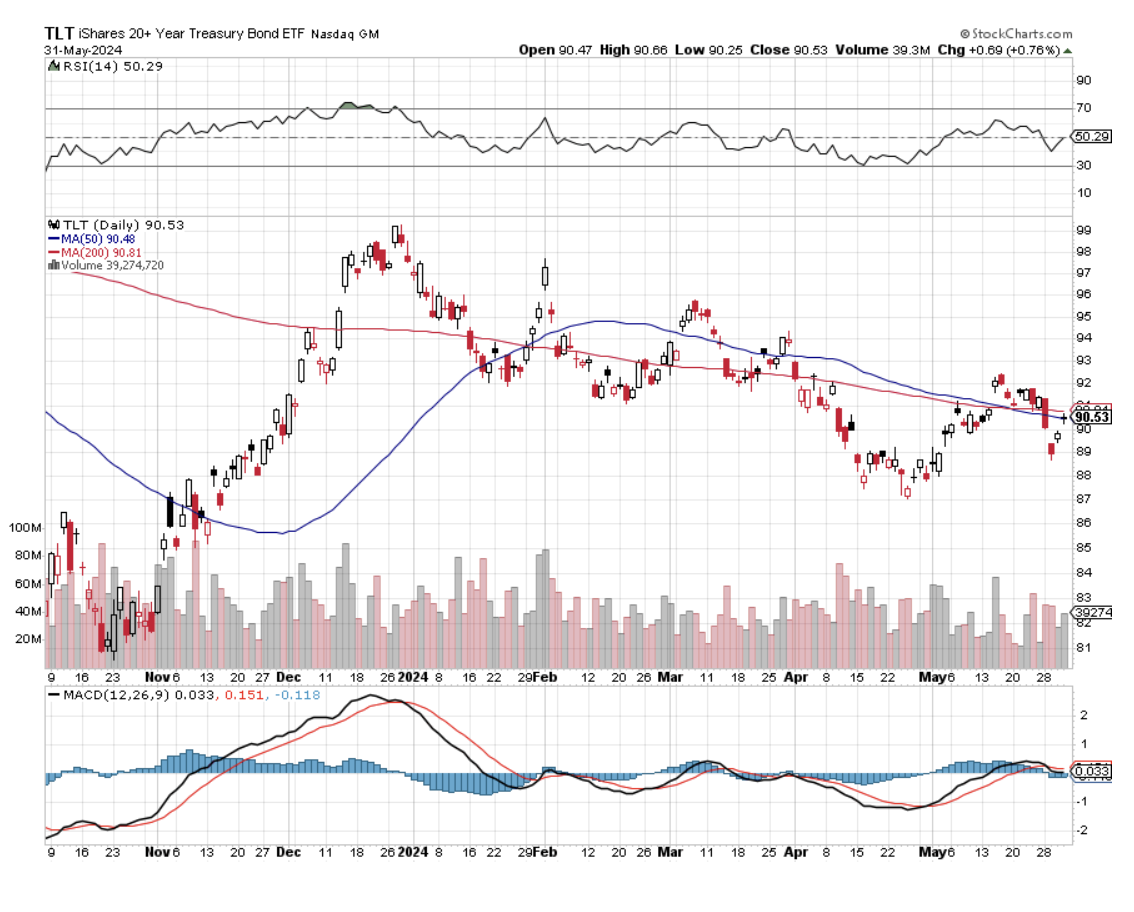
The Fed’s Favorite Inflation Gauge Cools by 0.2% in April, with the PCE, or the Personal Consumer Inflation Expectations Price Index. This one strips out the volatile food and energy components. It gives more credibility to a September rate cut and gave bonds a good day. NVIDIA Shares Continues to Go Ballistic, creating another $800 billion in market capitalization in three trading days. That is the most in history. That took NASDAQ to a new all-time high at 17,000. At $2.8 trillion (NVDA) could become the largest publicly traded company in the world in another day. Today’s tailwind came from an Elon Musk comment that his new xAI start-up would buy the company's high-end H100 graphics cards. Buy (NVDA) on the next 20% dip.
Pending Home Sales Dive, down 7.7% in April, the worst since the Covid market three years ago. The impact of escalating interest rates throughout April dampened home buying, even with more inventory in the market. But the anticipated rate cuts later this year should lead to better conditions, with improved affordability and more supply. Buy (LEN) and (KBH) on dips.
Money Supply Rises for the First Time in More than a Year. Remember money supply? As measured by M2, it sums up the currency, coins, and savings deposits held by banks, balances in retail money-market funds, and more. Data for April released on Tuesday afternoon showed an increase of 0.6% from a year ago. The Fed balance sheet has shrunk by $1.5 trillion in two years, the fastest decline in history, slowing the economy.
AT&T’s (T) Copper is Worth More Than the Company, and with plans to convert half its copper network to fiber by 2025 could free up billions of tons of the red metal to sell on the market. Copper prices have doubled over the past two years, and they could double again by next year. Worldwide there are 7 trillion tons of copper wire in place. Fiber is cheaper and exponentially more efficient than copper, which is facing huge demands from AI, EVs, and the electrification of the grid. Buy copper (COPX) on dips.
Markets are Underpricing Low Volatility (VIX), not a good thing at all-time highs. Volatility across equity and currency markets is low. The Volatility Index (VIX) at $12.46 compares with an average over five years of $21.5 and over the longer term of $19.9. Markets are heavily discounting good news and a disinflationary environment. It is not only stocks. There is also low volatility across currency markets. The DB index of foreign exchange volatility is at $6.3 versus an average of $7.6 over five years and $9.3 over the longer term. This will end in tears.
S&P Case Shiller Jumps to New All-Time High, with its National Home Price Index. The index rose by 1.29%, the fastest growth since April 2023. All 20 major metro cities were up last month and gained 6.5% YOY. Four cities are currently at all-time highs: San Diego, Los Angeles, Washington, D.C., and New York. Prices in San Diego saw the biggest gain, up 11.4% from February of 2023. Both Chicago and Detroit reported 8.9% annual increases. Portland, Oregon, saw the smallest gain in the index of just 2.2%. Unaffordability is the big story in the market right now. The sunbelt is seeing the most weakness, thanks to a post-pandemic construction boom.
Space X’s Starlink Tops 3 million Subscribers, and is rapidly moving towards a global WiFi network. I set up a dozen of these in Ukraine last October and even the Russians couldn’t hack them. It sets a global 200 Mb standard usable in most countries, even the remote Galapagos Islands in the Pacific. It’s only a VC investment now but could become Elon Musk’s next trillion-dollar company.
My Ten-Year View
When we come out the other side of the recession, we will be perfectly poised to launch into my new American Golden Age or the next Roaring Twenties. The economy decarbonizing and technology hyper accelerating, creating enormous investment opportunities. The Dow Average will rise by 800% to 240,000 or more in the coming decade. The new America will be far more efficient and profitable than the old.
Dow 240,000 here we come!
On Monday, June 3, the ISM Manufacturing PMI is released.
On Tuesday, June 4 at 7:00 AM, the JOLTS Job Openings Report will be published.
On Wednesday, June 5 at 7:00 AM, the ISM Services PMI is published.
On Thursday, June 6 at 8:30 AM, the Weekly Jobless Claims are announced. We also get the Challenger Job Cuts Report.
On Friday, June 7 at 8:30 AM, the Nonfarm Payroll and headline Unemployment Rate are announced. At 2:00 PM the Baker Hughes Rig Count is printed.
As for me, when Anne Wojcicki founded 23andMe in 2007, I was not surprised. As a DNA sequencing pioneer at UCLA, I had been expecting it for 35 years. It just came 70 years sooner than I expected.
For a mere $99 back then they could analyze your DNA, learn your family history, and be apprised of your genetic medical risks. But there were also risks. Some early customers learned that their father wasn’t their real father, learned of unknown brothers and sisters, that they had over 100 brothers and sisters (gotta love that Berkeley water polo team!), and other dark family secrets.
So, when someone finally gave me a kit as a birthday present, I proceeded with some foreboding. My mother spent 40 years tracing our family back 1,000 years all the way back to the 1086 English Domesday Book (click here)
I thought it would be interesting to learn how much was actually fact and how much fiction. Suffice it to say that while many questions were answered, alarming new ones were raised.
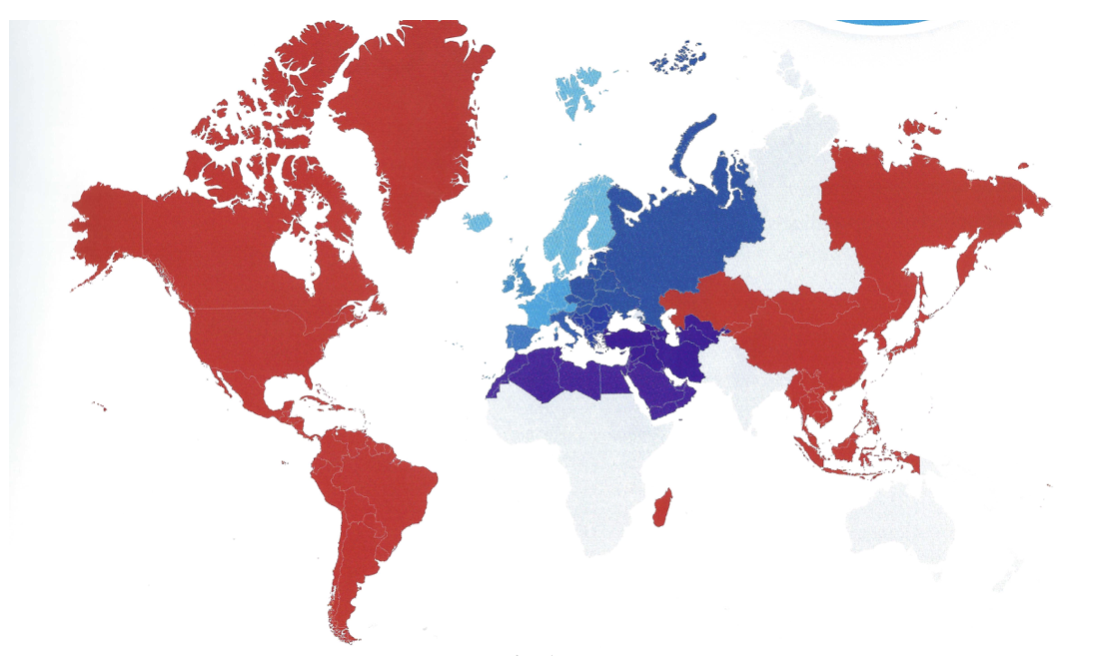
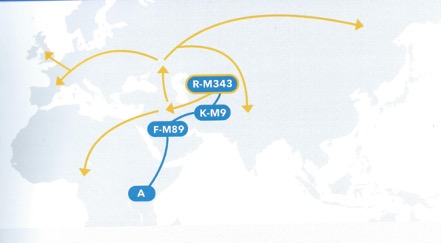
It turns out that I am descended from a man who lived in Africa 275,000 years ago. I have 311 genes that came from a Neanderthal. I am descended from a woman who lived in the Caucuses 30,000 years ago, which became the foundation of the European race.
I am 13.7% French and German, 13.4% British and Irish, and 1.4% North African (the Moors occupied Sicily for 200 years). Oh, and I am 50% less likely to be a vegetarian (I grew up on a cattle ranch).
I am related to King Louis XVI of France, who was beheaded during the French Revolution, thus explaining my love of Bordeaux wines, women wearing vintage Channel dresses, and pate foie gras.
Although both my grandparents were Italian, making me 50% Italian, I learned there is no such thing as pure Italian. I come out only 40.7% Italian. That’s because a DNA test captures not only my Italian roots, plus everyone who has invaded Italy over the past 250,000 years, which is pretty much everyone.
The real question arose over my native American roots. I am one-sixteenth Cherokee Indian according to family lore, so my DNA reading should have come in at 6.25%. Instead, it showed only 3.25% and that launched a prolonged and determined search.
I discovered that my French ancestors in Carondelet, MO, now a suburb of Saint Louis, learned of rich farmland and easy pickings of gold in California and joined a wagon train headed there in 1866. The train was massacred in Kansas. The adults were all killed, and the young children were adopted into the tribe, including my great X 5 Grandfather Alf Carlat and his brother, then aged four and five.
When the Indian Wars ended in the 1880s, all captives were returned. Alf was taken in by a missionary and sent to an eastern seminary to become a minister. He then returned to the Cherokees to convert them to Christianity.By then, Alf was in his late twenties so he married a Cherokee woman, baptized her, and gave her the name of Minto, as was the practice of the day.
After a great effort, my mother found a picture of Alf & Minto Carlat taken shortly after. You can see that Alf is wearing a tie pin with the letter “C” for his last name Carlat. We puzzled over the picture for decades. Was Minto French or Cherokee? You can decide for yourself.
Then 23andMe delivered the answer. Aha! She was both French and Cherokee, descended from a mountain man who roamed the western wilderness in the 1840s. That is what diluted my own Cherokee DNA from 6.50% to 3.25%. And thus, the mystery was solved.
The story has a happy ending. During the 1904 World’s Fair in St. Louis (of Meet Me in St. Louis fame), Alf, then 46, placed an ad in the newspaper looking for anyone missing a brother from the 1866 Kansas massacre. He ran the ad for three months and on the very last day, his brother answered and the two were reunited, both families in tow.
Today, getting your DNA analyzed starts from $119, but with a much larger database, it is far more thorough. To do so, click here.
My DNA Has Gotten Around
It All Started in East Africa
1880 Alf & Minto Carlat, Great X 5 Grandparents
The Long-Lost Brother
Good Luck and Good Trading,
John Thomas
CEO & Publisher
The Diary of a Mad Hedge Fund Trader
https://www.madhedgefundtrader.com/wp-content/uploads/2023/01/alf-minto.jpg252293april@madhedgefundtrader.comhttps://madhedgefundtrader.com/wp-content/uploads/2019/05/cropped-mad-hedge-logo-transparent-192x192_f9578834168ba24df3eb53916a12c882.pngapril@madhedgefundtrader.com2024-06-03 09:02:142024-06-03 11:56:52The Market Outlook for the Week Ahead, or Welcome to the Mallard Market
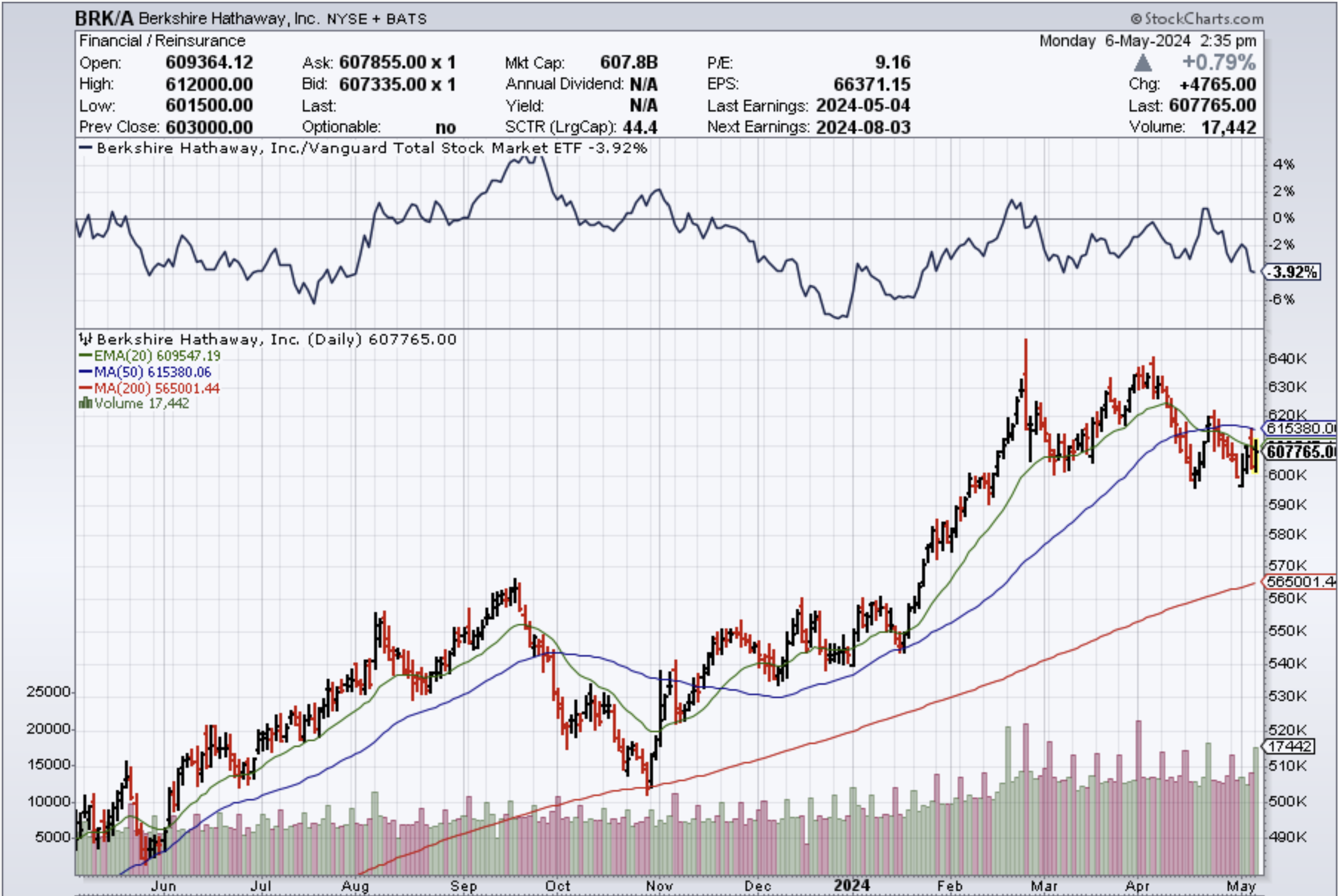
At the once-per-year shareholder meeting for Berkshire Hathaway (BRK/A) in Omaha, Nebraska, the shindig has become a caricature of itself.
A company that does so well, but the leader has self-proclaimed to understand nothing about technology.
It was fascinating to see the Oracle of Omaha Warren Buffett dabble in the cooler talk that is talk about artificial intelligence.
Ironically enough, his pep talk about AI was littered with negatives about the consequences of AI.
Warren Buffett's warning about AI’s potential harm has everything to do with his conservative risk tolerance to not beeline straight to the front of the most modern developments in the tech industry.
He’s late on most stocks but he’s right on them in the end.
It wasn’t too far back when Buffett only would invest in a company as complicated as Coca-Cola, because he famously stated that he doesn’t invest in companies that he doesn’t understand.
Insurance also made Buffett a killing pouring capital into companies like Aflac.
He finally came around to Apple which for better or worse is known as the iPhone company.
His risk tolerance of tech increasing to the almighty smartphone was quite a jump for Buffett that took many years, so don’t expect another leap of faith anytime soon.
In fact, Buffett claiming he doesn’t understand AI too well means there is a lot of capital sitting on the sidelines waiting to enter once they finally do “understand.”
I should also just note the general stockpile of money that has been waiting on the sideline since the Covid-era is enormous.
Any meaningful dip in any meaningful tech company will be met by a torrent of new buying demand.
That’s exactly what happens when the number of great tech companies can be counted on 2 hands.
Almost like what is happening with American restaurants – it’s not that American restaurants are going through a generational renaissance, no, they are packed because so many small restaurants closed after COVID.
Tech is experiencing the same playbook with investor money.
The past 7-12 years have seen the spurring on competition squelched, and the tech industry has never been closer to a full-blown monopoly in some sub-sectors.
Once the bulls get back in control, we are off to the races again, because a few companies move markets now.
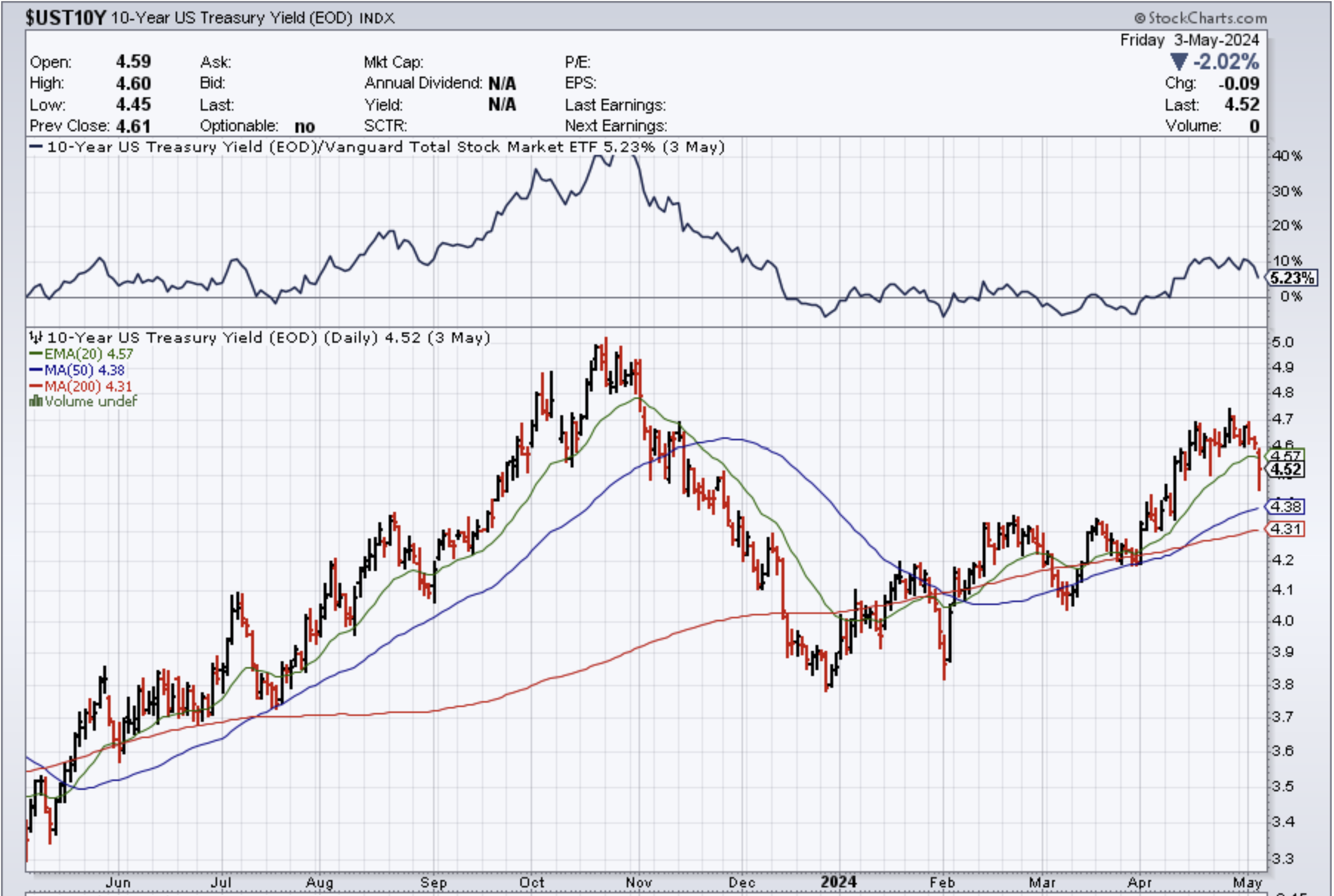
That’s what I believe we are seeing in the short-term with the US 10-year inching up only for Central Bank Fed Chair Jerome Powell to deliver us a monumental dovish speech to the sticky inflation we are seeing in numbers now.
Buffett chose to talk about the darker side of AI and the potential for scamming people.
He said that scamming using AI will become a “growth industry of all time.”
Buffett pointed to the technology’s ability to reproduce realistic and misleading content in an effort to send money to bad actors.
Just because we don’t like it, we cannot write it off or afford it as investors.
Readers must deal with AI and the manifestations of it.
One of the big side effects is that it accelerates the winner-takes-all dynamics of tech.
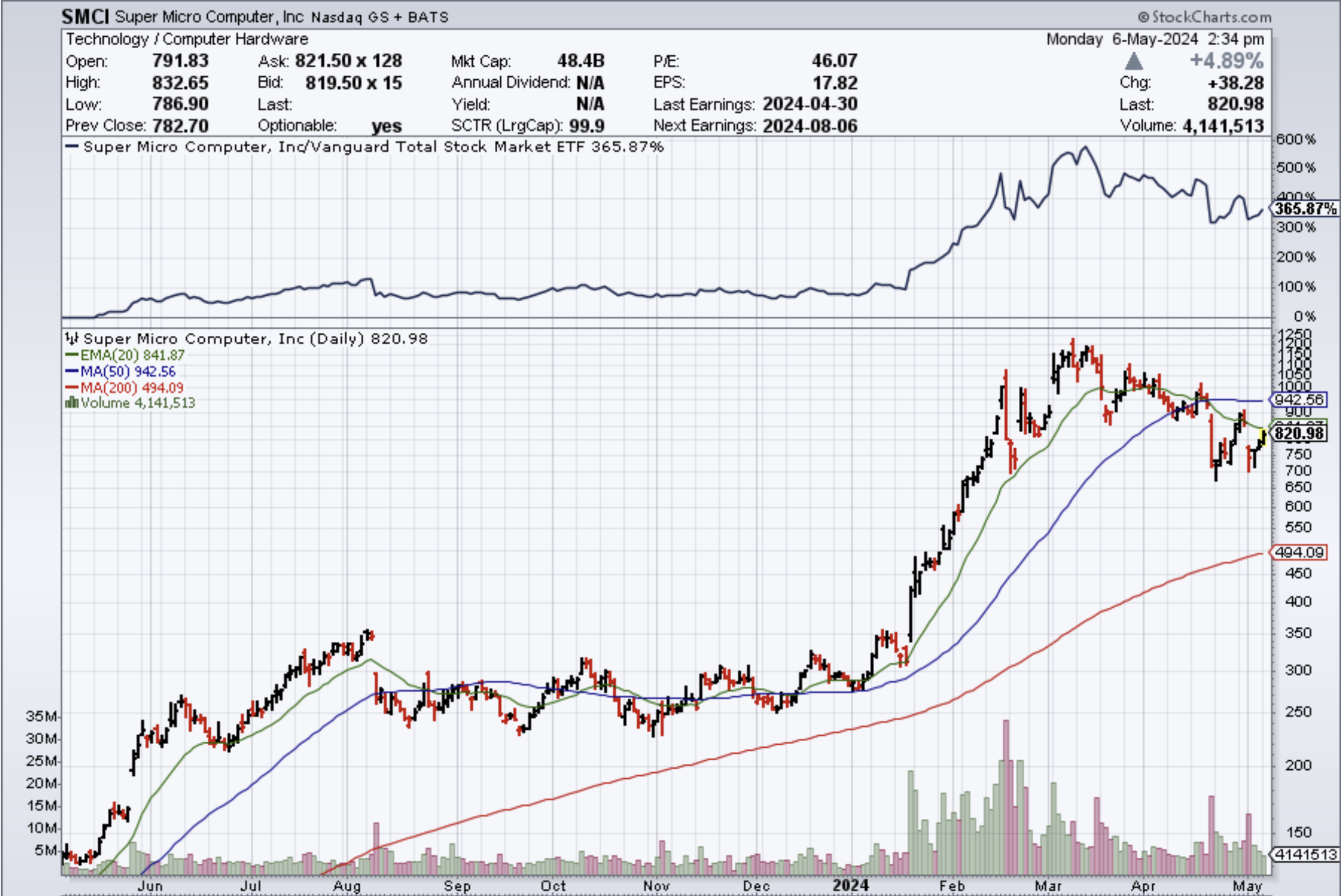
If I were a newbie investor, Super Micro Computers (SMCI) would be on the radar as a powerful growth stock with bountiful potential and exposure to AI.
More tech companies will fail, and they will fail faster, without a trace of even existing sometimes.
It also puts extreme pressure on tech management to implement AI, lose funding, or lose the momentum the business model.
It almost makes tech management over-reliant on AI to fix any and every mess.
The reality is that there will be a lot of losers from AI and punishes companies that never figure out AI.
It is best to identify them before the stock goes to 0.
I don’t necessarily share the same dark outlook as Buffett and I commend him for doing so well on his performance, but when it comes to technology stocks, he shows up late, but it is better than never showing up.
https://madhedgefundtrader.com/wp-content/uploads/2019/05/cropped-mad-hedge-logo-transparent-192x192_f9578834168ba24df3eb53916a12c882.png00Mad Hedge Fund Traderhttps://madhedgefundtrader.com/wp-content/uploads/2019/05/cropped-mad-hedge-logo-transparent-192x192_f9578834168ba24df3eb53916a12c882.pngMad Hedge Fund Trader2024-05-06 14:02:012024-05-06 20:43:12Buffett Chimes In On AI
There is a very high degree of risk involved in trading. Past results are not indicative of future returns. MadHedgeFundTrader.com and all individuals affiliated with this site assume no responsibilities for your trading and investment results. The indicators, strategies, columns, articles and all other features are for educational purposes only and should not be construed as investment advice. Information for futures trading observations are obtained from sources believed to be reliable, but we do not warrant its completeness or accuracy, or warrant any results from the use of the information. Your use of the trading observations is entirely at your own risk and it is your sole responsibility to evaluate the accuracy, completeness and usefulness of the information. You must assess the risk of any trade with your broker and make your own independent decisions regarding any securities mentioned herein. Affiliates of MadHedgeFundTrader.com may have a position or effect transactions in the securities described herein (or options thereon) and/or otherwise employ trading strategies that may be consistent or inconsistent with the provided strategies.