Mad Hedge Technology Letter
November 13, 2018
Fiat Lux
Featured Trade:
(NO BIWEEKLY STRATEGY WEBINAR FOR WEDNESDAY NOVEMBER 14)
(WHY I HATE CHIP STOCKS)
(AAPL), (CY), (TXN), (LRCX), (KLAC), (LITE), (QCOM), (MU), (SWKS), (LSCC)


Mad Hedge Technology Letter
November 13, 2018
Fiat Lux
Featured Trade:
(NO BIWEEKLY STRATEGY WEBINAR FOR WEDNESDAY NOVEMBER 14)
(WHY I HATE CHIP STOCKS)
(AAPL), (CY), (TXN), (LRCX), (KLAC), (LITE), (QCOM), (MU), (SWKS), (LSCC)
Now that the midterm elections are behind us, Congress will be gridlocked for the next two years portending well for tech stocks as a whole.
However, the gridlock will exacerbate negative sentiment in one small group of technology – the semiconductor chip sector.
I have been staunchly bearish on this cohort since the outset of the trade logjam with China and I recommend readers to avoid these stocks like the plague.
The split Congress could fuel an even more rigid stance towards the complicated tech situation, further clamping down on foreign IP theft and technological forced transfers.
Either way, there is no end in sight and as this administration is concretely in place for the next two years, doubling down on foreign policy wins could be the Republican party’s path to victory heading into the 2020 election.
This could mean the rhetoric towards China could ratchet up a few levels.
Soon enough, the tariffs levied on Chinese imports is set to increase to 25% in January.
Even before January, a planned meeting between Trump and Chairman Xi in Buenos Aires on Nov. 29 will take place and is creating a swirling tornado of uncertainty around chip sentiment that is on tenterhooks.
Any chance to resuscitate the sentiment in the industry could come and go with another gut-churning leg down in chip shares.
Unfortunately, the sword of Damocles hanging over the chip sector could drop in 2019 slashing profit margins, revenue, and damaging the all-important guidance.
Even if individual chip companies determine that the trade friction is too much to stomach, it would be expensive and lengthy to transfer an entire supply chain to Vietnam or Indonesia, hitting current R&D budgets and damaging future innovation affecting the pipeline of fresh products.
Time is not a friend to the chip sector.
If the China leveraged chip companies were to wait out this trade war, they risk further being enveloped into the eye of the trade storm if no quick agreements can be made.
They might have to wait a while as Beijing views waiting out Trump and dealing with the next administration in charge as the ideal option.
Chairman Xi conveniently removed term limits in the last congress, meaning he is in his job until death which could be another 40 years or so.
That is the time horizon the Chinese are playing with.
The timing couldn’t have been worse for the chip sector after a slew of weak guidance from upper management painted a downbeat picture for the sector as we inch towards 2019.
Texas Instruments (TXN) Chief Executive Rich Templeton started off his earnings report admitting, “demand for our products slowed across most markets.”
He later admitted that the semiconductor market is grappling with an imminent “softer” market.
Following up a growing chorus of chip executives flashing dangerous warnings signs, Lattice Semiconductors (LSCC) lamented that it was seeing slowness in the industrial and consumer markets in Asia as a result of macroeconomic conditions and tariffs.
Cypress Semiconductor (CY) also chimed in saying it was coping with “softness across the board.”
Making matters worse, Beijing has been showering capital on the local chip sector aimed at nurturing and developing Chinese chip companies poised to compete on the global stage.
Recently, Chinese state-backed semiconductor maker Fujian Jinhua Integrated Circuit was indicted by the U.S. Justice Department for industrial espionage.
The company allegedly stole trade secrets from Boise-based Micron (MU).
Micron could now become the first piece of collateral damage to the snarky trade war threatening huge swaths of American chip company's revenue.
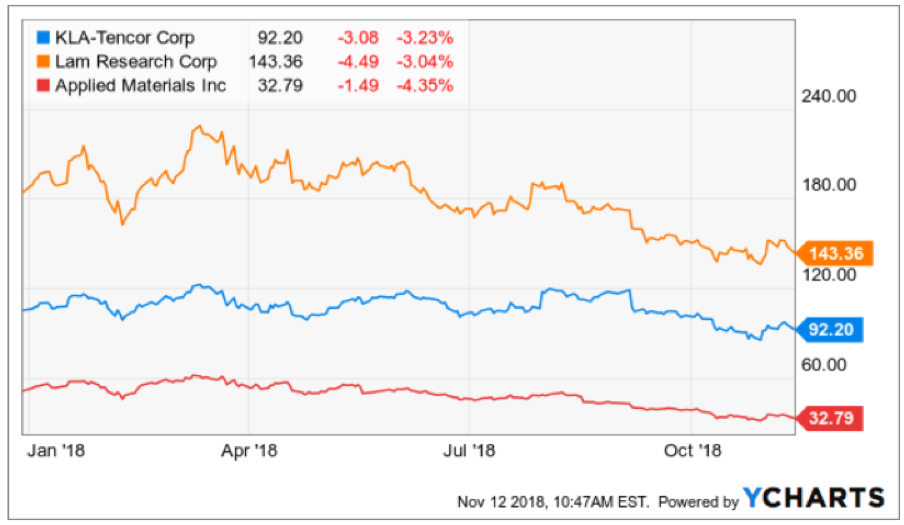
And with the affected American chip companies waded in a quagmire, and chip market softness on the near horizon, semiconductor equipment firms have borne a good amount of the damage this year with Applied Materials Inc (AMAT), KLA-Tencor Corp (KLAC), and Lam Research Corp (LRCX) getting hammered.
Chips tied to Apple’s (AAPL) iPhone are also in for a drubbing with Apple suddenly announcing in their most recent report they would stop offering the unit sales of iPhones, creating more uncertainty around units sold for a massive end-market for global chip companies, adding to the swirling uncertainties overall Chinese chip revenue face.
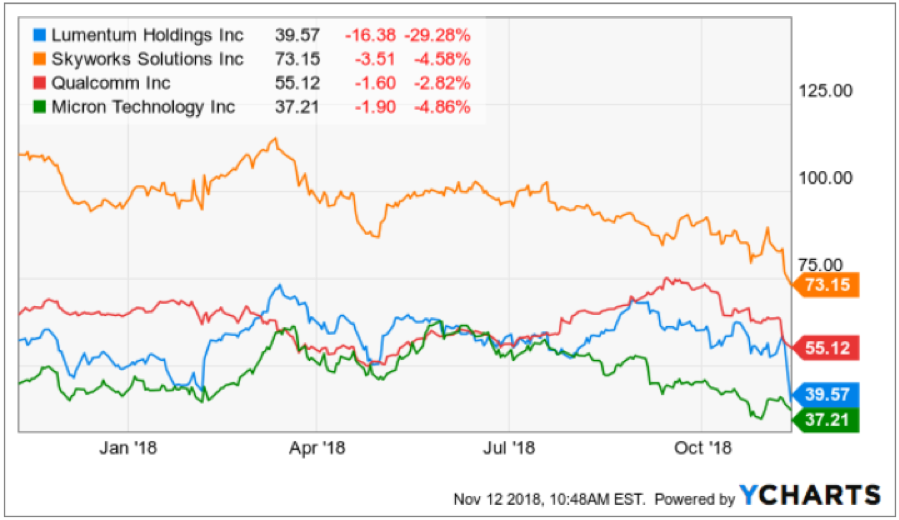
Apple proxy chip stocks who lean on Apple for a big chunk of revenue such as Skyworks Solutions (SWKS) are getting crushed.
Skyworks was downgraded last week by Citigroup based on underperforming iPhone XR sales.
The rapid rush of chip downgrades has been fast and furious.
Skyworks will have pockets of strength when 5G is fully rolled out because they will supply critical components installed in this new technology for the new era of internet speed and performance.
But that pocket of strength is not now and will not happen tomorrow.
It’s time to duck out of Skyworks and I have been convincingly downbeat on this particular name since the inception of the trade war.
Today crawled in the next batch up negative chip news from Lumentum Holdings (LITE) who supplies 3D chips for Apple iPhone's facial recognition system.
Management reported that sales would be $20 million lower than originally forecasted because of a sudden reduction in shipments from an unnamed customer.
Another ongoing headache is the Qualcomm (QCOM) versus Apple marriage or divorce, depending on how you look at it.
They have been mired in a prolonged court case against each other, and Qualcomm’s share price has been dismal as of late.
Qualcomm recorded zero licensing revenue in the quarter from Apple who is withholding royalty payments from Qualcomm in a dispute over the company's licensing practices.
The move damaged quarterly licensing sales sliding 6% to $1.14 billion.
Qualcomm has lashed back at Apple pointing the finger at Apple for transferring its intellectual property to Intel (INTC) who is supplying chips for new-model iPhones which is possibly part of the reason they lost this contract.
Losing the iPhone contract to Intel is the main factor in Qualcomm expecting modem chip shipments to decline 22% to about 185 million units.
The fight has no end in sight but like Skyworks Solution, Qualcomm is on the forefront of the 5G revolution and provides a silver lining to embattled revenue growth that has been dragged down with the China mess.
At the end of the day, companies have less resistance when they aren’t belligerently brawling with their biggest purchasers.
Biting the hand that feeds you is a poor strategy that cuts across any industry.
Avoid chip companies for the short term and wait for sentiment to reverse course.
Global Market Comments
November 1, 2018
Fiat Lux
Featured Trade:
(THE TERRIFYING CHART FORMATION THAT IS SETTING UP),
(SPY), (AMD), (MU), (AMZN), (NFLX),
(THE TECHNOLOGY NIGHTMARE COMING TO YOUR CITY)

The Mad Hedge Fund Trader is seeing its biggest one-day gains since the inception of our Trade Alert Service 11 years ago. By the time you read this, we will have picked up an astounding 11% profit for the entire portfolio in 24 hours.
However, this being Halloween, I don’t want to sound like I’m whistling by the graveyard. But what I am about to say will scare the daylights out of you.
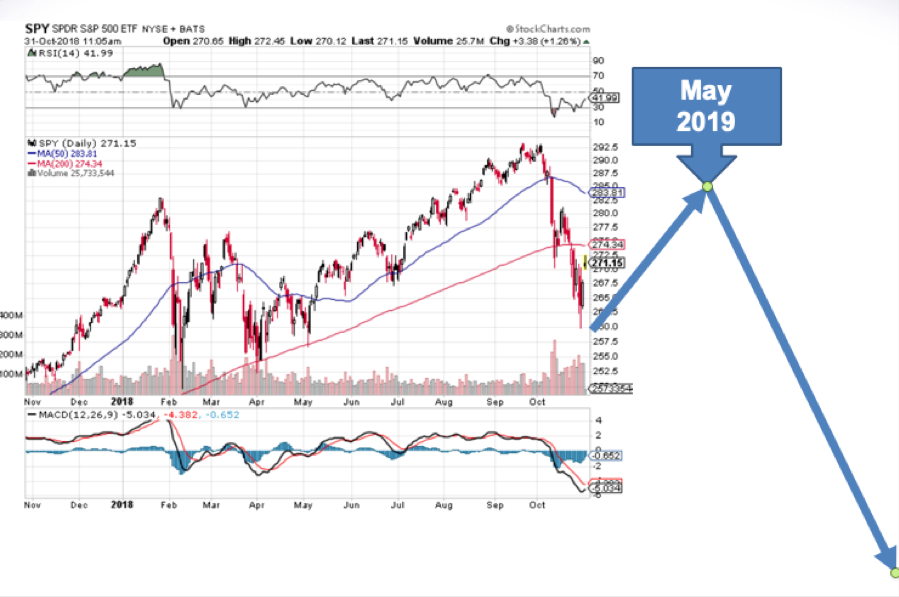
I hate to say I told you so but my prediction a year ago that the bull market would end on May 10, 2019 at 4:00 PM is starting to look pretty good.
If I am right, the charts for the S&P 500 (SPY) are setting up a classic head and shoulders top. The left shoulder was created by the January 2018 rally to $282.
We just saw the head created at the beginning of October at $293. All that remains is to build the right shoulder back up to $282 by the spring. What will then follow is the crying.
This is not a matter of throwing a dart at a calendar or reciting a chant taught to me by a long-dead Yaqui Indian. It is a simple matter of math. Here’s how it goes:
*The Fed Raises funds rate 25 basis points per quarter for the next four quarters to 3.25%
*The Yields Curve Inverts, taking short rates higher than long rates now at 3.15%
*Bond yield spread trades increase massively going into the inversion as traders ramp up the size to make up for shrinking spreads.
*When the spread turns negative, they dump everything, creating an interest rate spike to 4% or 5%.
*Inverted yield curves last an average of 14 months or until February 2020 in this cycle when a recession begins.
*Stock markets peak on average seven months before recessions, and you arrive at Friday, May 10, 2019 at 4:00 PM EST as the date for the demise of the bull market. At that point, it will be ten years and two months old, the longest such move in history.
A lot of people asked why I sent out so few trade alerts during the summer and going into the fall.
In fact, the list of negatives has reached laughable proportions:
*Longest bull market in history
*In the face of rising interest rates
*In the face of rising oil prices
*Rising inflation
*Nothing else to buy
*Only bull market in the world
*Valuations approaching two-decade highs
*Overwhelmingly concentration in big cap tech
*Double top in the market on an Equal Weight S&P 500 chart
*Record retail inflows into ETFs
*Recession has already started in the auto industry
*Recession has already started in the housing industry
*Rotation to value defensive stocks underway
*Massive unicorn IPOs planned in 2019- $215 billion
*Slowing GDP Growth 4.2% to 3.5%
*Large amount of economic growth sucked forward from 2019 as businesses accelerate Chinese imports to beat the tariffs
*The same is going on in China to buy our exports
Should you throw up your hands, dump all your stocks, and hide out in cash?
Absolute not! In fact, the last six months of a bull market are often the most profitable. Many tech stocks like Micron Technology (MU) and Advanced Micro Devices (AMD) have dropped by half in recent months. That means they have to double to get back to their old highs.
Other big quality stocks such as Amazon (AMZN) and Netflix (NFLX) have plunged by 30% and only have to appreciate by 43% to hit highs. It is, in fact, the best entry point for large-cap tech stocks since 2015 with valuations at a three-year low.
If I am wrong, the trade war with China plunges us into recession and ends the bull market sooner. Almost all the “worry” items on the list above are getting worse by the day.



Global Market Comments
October 5, 2018
Fiat Lux
Featured Trade:
(WEDNESDAY OCTOBER 17 HOUSTON STRATEGY LUNCHEON INVITATION),
(OCTOBER 3 BIWEEKLY STRATEGY WEBINAR Q&A)
(SPY), (VIX), (VXX), (MU), (LRCX), (NVDA), (AAPL), (GOOG), (XLV), (USO), (TLT), (AMD), (LMT), (ACB), (TLRY), (WEED)


Below please find subscribers’ Q&A for the Mad Hedge Fund Trader October 3 Global Strategy Webinar with my guest and co-host Bill Davis of the Mad Day Trader.
As usual, every asset class long and short was covered. You are certainly an inquisitive lot, and keep those questions coming!
Q: Will the market keep increasing for the rest of the year?
A: We haven’t had the pullback yet, so the short answer is yes. My yearend target of and S&P 500 (SPY) for the end of 2018 still stands. You can’t argue with the immediate price action. That said, the market is wildly overbought for the medium term and is approaching valuation levels we haven’t seen since the Dotcom peak in 2000. That why I am running a 70% cash trading book now.
Q: Should I be buying the Volatility Index (VIX) here?
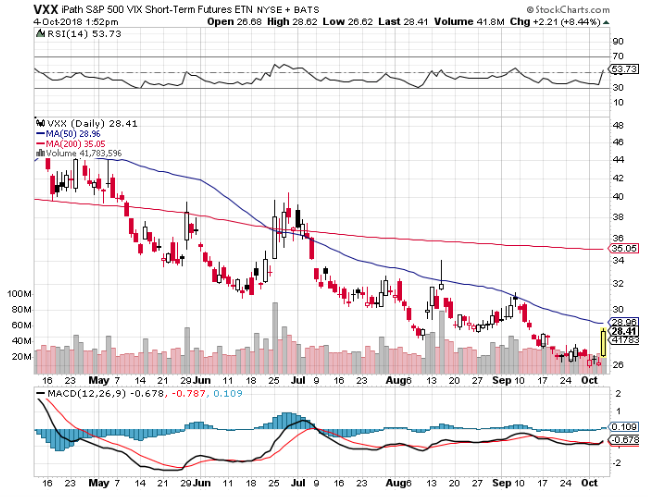
A: Look at the bottom where we broke back in August, if we go down there and sit for a couple of days, then go out and buy the March 2019 $40 iPath S&P 500 VIX Short-Term Futures ETN (VXX) calls—way out of the money, way far in the future—and that way if you get any bounce in the (VIX) in the next 6 months, you’ll make a ton of money on that. You can buy them today for 50 cents. Plus, we could get one of these situations where there’s a major selloff once we’re into the new year, so a 6-month (VXX) call option would hedge that.
Q: Given the choice of Apple (AAPL) or Google (GOOG), which would you buy?
A: If you’re a conservative, old lady, widow and orphan type, you’d probably want to buy Apple— it’s almost turned into a utility, it’s so reliably safe, going up and has a nice dividend. If you want to be aggressive, swinging for the fences young stud and are looking for a double, I would go with Google—much higher growth pattern, pays no dividend and has had a 3-month consolidation going sideways. The only thing that could hurt this company would be government regulation, but with the Democrats possibly taking control of Congress in November, the prospect of government regulation of the entire technology sector could rapidly fade away.
Q: When should I get into Health Care (XLV)?
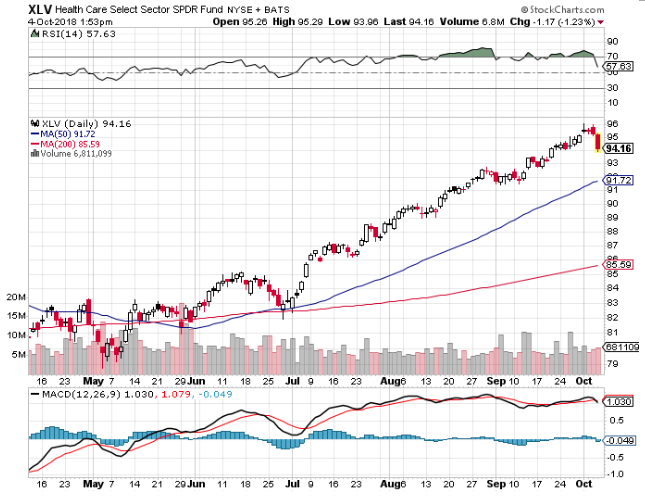
A: I think you have to wait at this point. To me, it’s tremendously overbought at the moment, but is still enjoying a long-term bull move. This is one of my two favorite sectors in the entire market. It has been rising for four months now, even though the Trump threat of price cuts are constantly overhanging the market.
Q: Is oil (USO) going to 100?
A: Because of the disruptions caused by the Iran sanctions and the tearing up of the Iran Nuclear Treaty, Trump has created a short squeeze in oil prices. He is threatening to boycott any country that buys oil from Iran, so Iran is shipping their oil through China, which is already under sanctions itself. However, that is easier said than done. The oil business is much more complicated than people realize. For China to take Iranian oil, they literally have to build new refineries from scratch to process the crude from Iran; no two crudes are alike. When you build a major supply, you have to build refineries to match that, and you have to get it there. This market will eventually stabilize, but in the meantime, there is a big short squeeze going on in Europe.
Q: Do you see the economy going strong into the end of the year?
A: Yes, I do—we still have the tax cuts, global liquidity, and deregulation kicking in, and those things will all work until the end of the year. I think we close at the highs of the year, and after that we’re going to have to start to work hard for our money once again in 2019. The US economy is like a supertanker; it takes a long time to turn it around.
Q: Will the interest rate spike kill the market?
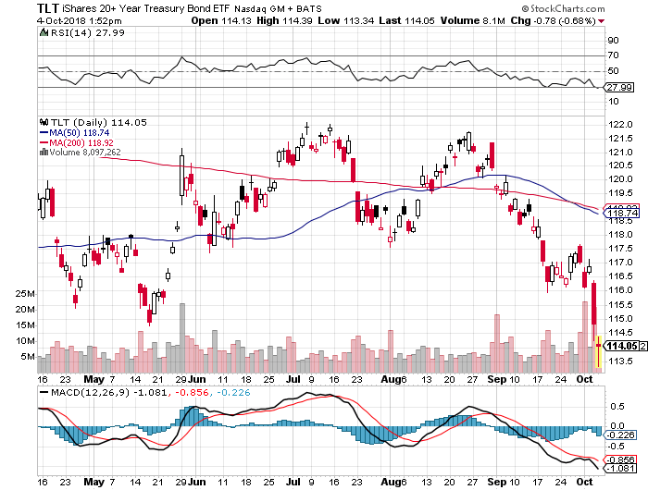
You think? Investors are so used to ultra-low interest rates that a transition to normal rates will be traumatic. Next Friday, we get Core CPI, and if that comes in hot we could see another spike to 3.35% in the ten-year US Treasury bond (TLT). There are now a ton of people desperate to get out of their bond holdings at last week’s prices. This is why I have been selling short the bond market for the past three years and selling as recently as Monday. The next leg down in a 30-year bear market has begun.
Q: Advanced Micro Devices (AMD) has shot over $30—would you sell it?
A: We love the company long term but short term it is just way overdone; take the double and run, and then buy back on the next dip.
Q: Are you still bearish on the chip company?
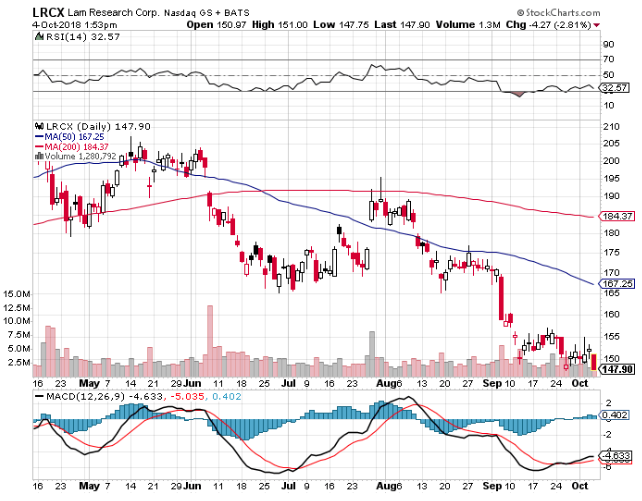
A: Short term yes, long term no. This sector is now totally driven by the trade war with China. This includes NVIDIA (NVDA), Micron Technology (MU) and LAM Research (LRCX). Lam is particularly exposed because they had ordered to sell ten entire chip factories to China which is now on hold. That said, the day the trade way ends these stocks will all start a 50% run up. If China gets the same free pass and symbolic treaty that Canada did, that could happen sooner than later. If you can’t sleep at night until then, cut your position in half. If you still can’t sleep, cut it again.
Q: Do you think Lockheed Martin (LMT) is a buy Here at $350?
A: No, there is a double top risk for the stock right here. And if the Democrats get control of congress, the whole Trump trade could unwind. That would give the opposition the purse strings and the first thing they’ll do is cut defense spending, which Trump bumped up by $50 billion.
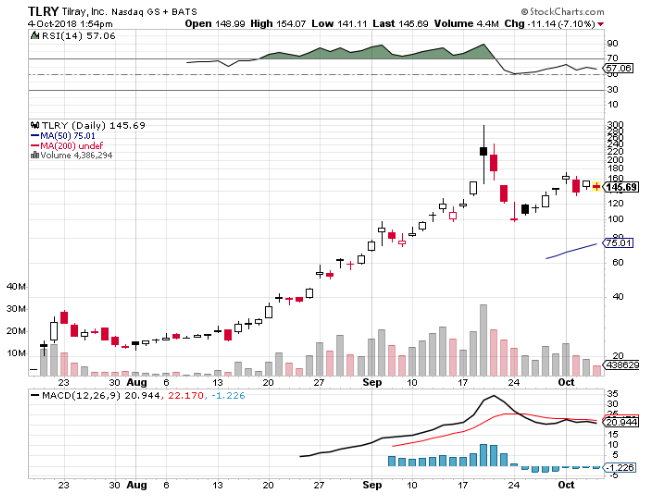
Q: Do you have any views on pot stocks like Aurora Cannabis (ACB), Tilray (TLRY) and (WEED)?
Stay away in droves. They’re this year’s bitcoin stocks. It’s still illegal. That’s why these companies are all based in Canada. And after all it’s a weed. How hard is it to grow? The barriers to entry are zero.

Mad Hedge Technology Letter
September 24, 2018
Fiat Lux
Featured Trade:
(BAD NEWS FROM MICRON TECHNOLOGY (MU),
(MU), (BABA), (KLAC), (LRCX), (INTC), (AMD), (NVDA), (HPQ)

If your stomach was on edge before, then you must feel quite queasy now.
That’s only if you didn’t get rid of your chip stocks when I told you to.
The chip sector has been rife with issues for quite some time now, and I’ve been firing off bearish chip stories the past few months.
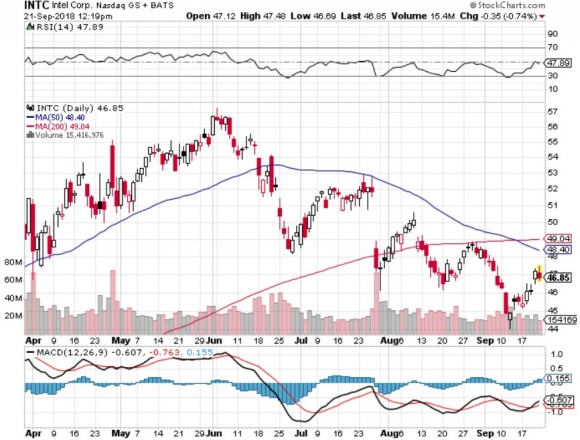
Intel (INTC) was one of the last chip companies I told you to avoid like the plague, please click here to review that story.
The contagion has spread wider.
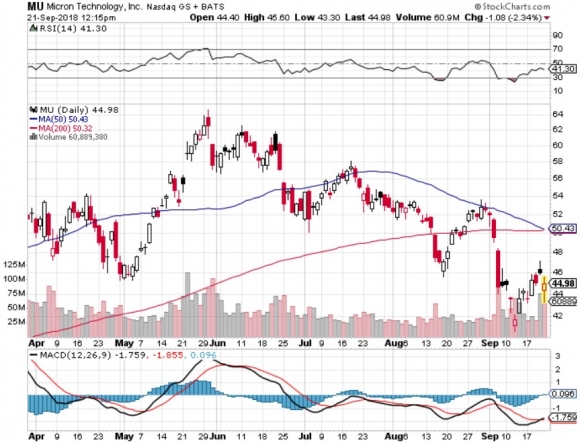
Micron (MU), the Boise, Idaho-based chip giant, delivered poor guidance from its latest earnings report, adding more carnage to this trouble sector.
It’s been rough sailing for many American-based chip companies lately that are not named Advanced Micro Devices (AMD) and Nvidia (NVDA).
The protracted ongoing trade war between America and China that sees no end in sight is the fundamental reason to stay away from these chip companies that are the meat and potatoes inside of all electronic devices.
Cofounder of Alibaba (BABA) Jack Ma, who recently stepped down from his position as chairman, told news outlets that this trade war could last “20 years” and is “going to be a mess.”
Micron is affected by this trade war more than any other American company, with half of its annual revenue derived from the Middle Kingdom.
Out of the $20.32 billion in annual revenue last year, more than $10 billion was from China alone.
Micron is a leader in selling DRAM chips, which are placed in most portable electronic devices such as smartphones, video game consoles, and laptop computers.
The commentary coming out from chip executives has been overly negative and spells doom and gloom - supporting my view to be cautious on chips through the end of the year.
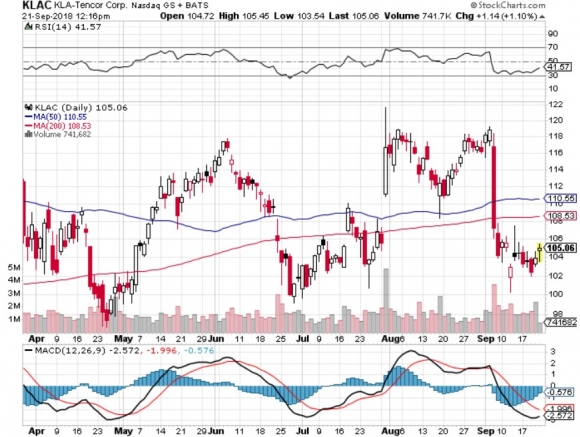
At the Citi 2018 Global Technology Conference in New York, KLA-Tencor (KLAC) chief financial officer Bren Higgins characterized the winter season DRAM market as “little less than what we thought,” describing margins as “modestly weaker.”
Lam Research (LRCX), once one of my favorite chip plays, offered bearish rhetoric about the state of chip investments, saying on its earnings call that is expected “lower spending on new equipment by some of its memory customers.”
It doesn’t take a rocket scientist to know that “memory customer” is Intel, which is in the throes of a CPU chip shortage rocking the overall personal computer market.
Personal computers face a steep 7% drop in sales volume for the rest of the year, and the knock-on effect is rippling throughout the industry.
The lower volume of produced computers means less memory needed, adding up to less sales for Micron.
This rationale forced Micron to guide down its revenue growth from 22% to 16% for the last quarter of 2018.
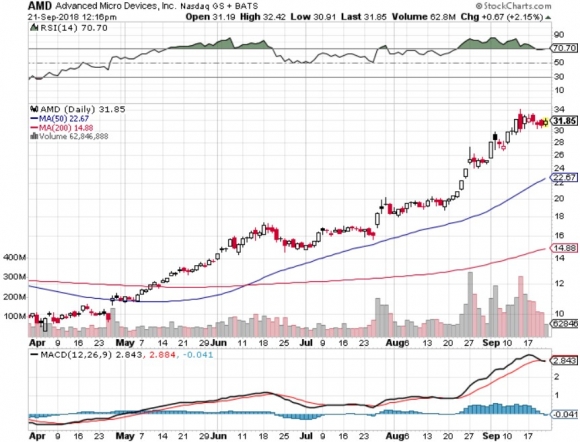
Intel’s monumental lapse has offered a golden opportunity for competitor Advanced Micro Devices (AMD) to steal market share from Intel in broad daylight.
This was the exact thesis that provoked me to urge readers to pile into AMD shares like a Tokyo rush-hour subway car.
Shares have gone ballistic to say the least.
(AMD) is poised to seize and reposition itself in the global CPU market with a 70/30 market share, up from the paltry 90/10 market share before Intel’s debacle.
To make matters worse for Intel, widespread reports indicate its shortage problems are “worsening.”
Such is a dog-eat-dog world out there when a company can triple market share in a blink of an eye.
The rotation is real with HP (HPQ) planning to integrate AMD chips into 30% of its consumer PCs, and Dell already mentioning it will use AMD chips to make up for the shortages.
The resilience in chip demand remains the silver lining for this industry as price weakness and production shortages will be finite.
Server demand remains particularly robust.
Google, Amazon, Facebook, and Microsoft coughed up $34.7 billion on data centers to serve cloud-based operation in the first half of the year in 2018, a sharp increase of 59% YOY.
Investors have been paranoid of the boom-bust nature of the chip industry for decades.
Each cycle sees spending and chip pricing rocket, only for inventories to build up and demand to evaporate in an instant.
The beginning of the end always starts with lower guidance, followed up with missed earnings the next quarter.
This playbook has repeated itself over and over.
Micron guided first quarter revenue of 2019 in a range between $7.9 billion to $8.3 billion, lower than the consensus of $8.45 billion.
And, if all of this horrid chip news wasn’t reason to rip your hair out - here is the bombshell.
To wean itself off the reliance of American chips, Alibaba has created a subsidiary to produce its own chips called Pingtouge Semiconductor Company.
Pingtouge refers to honey badger in the Chinese language, symbolic for its tenacity in the face of adversity – perhaps a thinly-veiled dig at the American political system.
Former Chairman Ma pocketed this chip company Hangzhou C-SKY Microsystems last year. It will will be given ample leeway and resources to team up with Alibaba to roll out its first commercial chip next year.
Alibaba has rapidly grown into the third-largest cloud player in the world, and require an abundant source of chips moving forward.
Chips tricked out with artificial intelligence will be adopted by not only its data centers, but integrated with its autonomous driving technology and IoT products, which are markets that Alibaba is proud to be part.
You can find Alibaba’s cloud products present in more than 20 countries. And the company that Jack Ma built forecasts to generate more than 50% of its revenue from overseas markets soon.
It could be Jack Ma laughing all the way to the bank.
Ultimately, Micron produced fair results last quarter, but like Facebook found out, if investors believe the company is about to fall off a cliff, it offers little resistance to the share price on a short-term basis.
Could the cyclicality demons start to awake to drag this company down?
Partially, yes, but there are still many positives to take away from this leading chip company.
China will need years to remedy its addiction of American chips.
It will not be able to produce the scope of quality or quantity to just stop buying from American companies for the foreseeable future.
The authorized $10 billion share buyback gave Micron shares a nice lift earlier this year, but the industry dynamics are now deteriorating rapidly.
Chip sentiment is at its lowest ebb for some time, and I reaffirm my call to avoid this sector completely unless it’s the two cornerstone chip companies showing systematic resiliency - (AMD) or Nvidia (NVDA).
The administration initially slapped on a tariff rate of 10% on $200 billion worth of goods with intentions to scale it up.
If nothing is solved, the increase to 25% will cause another 5% to 10% drop in Micron and Intel.
Then if the administration plans to go after the rest of the $250 billion of Chinese imports, expect another dive in chip shares.
Either way, each jawboning tweet as we head deeper into this trade conflict will damage Micron’s shares.
This sector is getting squeezed from many sides now, and if you don’t go outright short chip companies, then stay away until the storm clouds pass over and you can reassess the situation.
Global Market Comments
September 21, 2018
Fiat Lux
Featured Trade:
(SEPTEMBER 19 BIWEEKLY STRATEGY WEBINAR Q&A),
(SPY), (VIX), (VXX), (GS), (BABA), (BIDU), (TLT), (TBT),
(TSLA), (NVDA), (MU), (XLP), (AAPL), (EEM),
(MONDAY, OCTOBER 15, 2018, ATLANTA, GA,
GLOBAL STRATEGY LUNCHEON)

Below please find subscribers’ Q&A for the Mad Hedge Fund Trader September 19 Global Strategy Webinar with my guest and co-host Bill Davis of the Mad Day Trader.
As usual, every asset class long and short was covered. You are certainly an inquisitive lot, and keep those questions coming!
Q: Do you expect a correction in the near term?
A: Yes. In fact, we may even see it in October. Markets (SPY) have been in extreme, overbought territory for a month now, the macro background is terrible, trade wars are accelerating, and interest rates are rising sharply. The only thing holding the market up is the prospect of one more quarter of good earnings, which companies start reporting next month. So once that’s out of the way, be careful, because people are just hanging on to the last final quarter before they sell.
Q: I just got out of my cannabis stock, what should I do now?
A: Thank your lucky stars you got away with that—it was an awful trade and you made money on it anyway. Stay away in droves. After all, the cannabis industry is all about growing a weed and how hard is that? This means the barriers to entry are zero. In fact, I’m thinking of growing some in my own backyard. My tomatoes do well, so why not Mary Jane?
Q: The Volatility Index (VIX) is now at $11.79—should I buy?
A: No, the rule of thumb for the (VIX) is to wait for it to sit on a bottom for one to two weeks and let some time decay work itself out. You’ll see that in the ETF, the iPath S&P 500 VIX Short-Term Futures ETN (VXX). When it stops breaking to new lows, that means it’s ready for another bounce. I would wait.
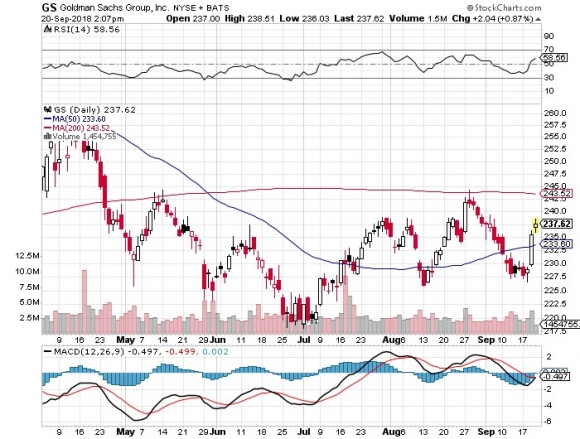
Q: What do you think about banks here? Is it time to get in?
A: No, these are not promising charts. If anything, I’d say Goldman Sachs (GS) is getting ready to do a head and shoulders and go to new lows. I would stay away from financials unless I see more positive evidence. The industry is ripe for disruption from fintech, which has already started. That’s said, they are way overdue for a dead cat bounce. That’s a trade, not an investment.
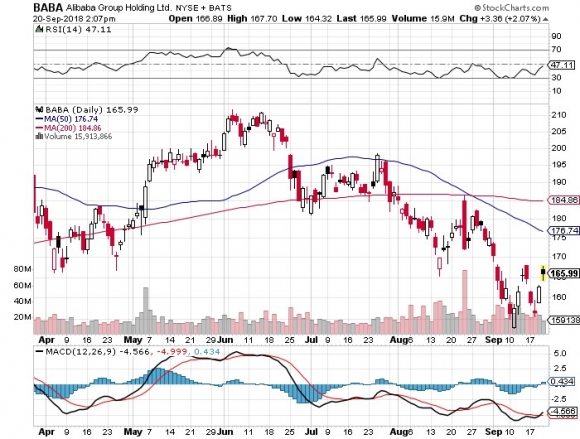
Q: Would you short Alibaba (BABA) and Baidu (BIDU) here?
A: No. Shorting is what I would have done six months ago; now it’s far too late. If anything, I would be a buyer of those stocks here, based on the possibility that we will see progress or an end to the trade war in the next couple of months. If the trade wars continue, they will put the U.S. in recession next year, and then you don’t want to own stocks anywhere.
Q: Is Apple (AAPL) going to get hit by the trade wars?
A: So far, this has not been the case, but they are whistling past the graveyard right now—an obvious target in the trade wars from both sides. For instance, the U.S. could suddenly start applying a 25% import duty to iPhones from China, which would make your $1,000 phone a $1,250 phone. Similarly, the Chinese could hit it in China, restricting their manufacturing in one way or another. I’m being very cautious of Apple for this reason. The stock already has one $10 drop just because of this worry.
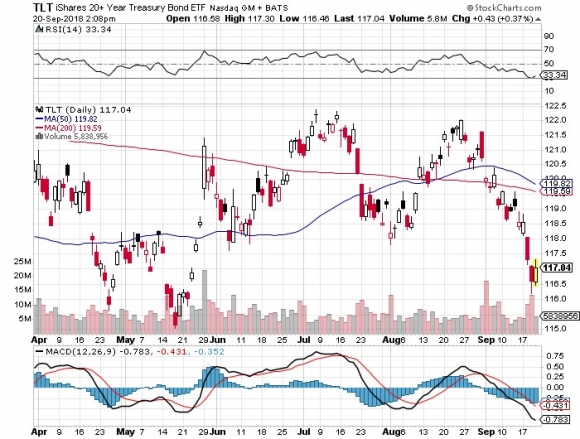
Q: Can the U.S. ban China from selling bonds?
A: No, they can’t. The global U.S. Treasury bond market (TLT) is international by nature—there is no way to stop the selling. It would take a state of war to reach the point where the Fed actually seizes China’s U.S. Treasury bond holdings. The last time that happened was when Iran seized the U.S. embassy in Tehran in 1979. Iran didn’t get its money back until the Iran Nuclear Deal in 2015. Before that you have to go back to WWII, when the U.S. seized all German and Japanese assets. They never got those back.
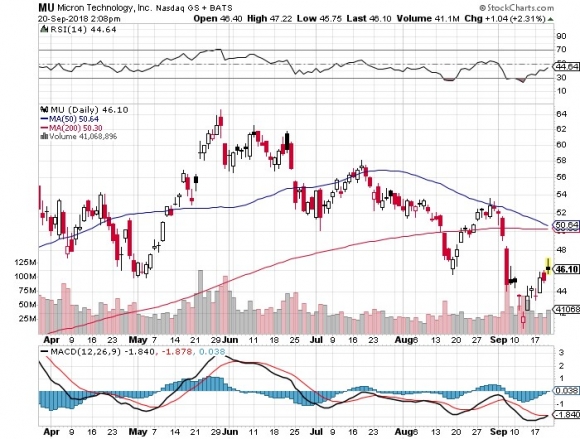
Q: What are your thoughts on the chip sector?
A: Stay away short-term because of the China trade war, but it’s a great buy on the long term. These stocks, like NVIDIA (NVDA) and Micron Technology (MU) have another double in them. The fundamentals are outrageously good.
Q: Is the market crazy, or what?
A: Yes, it is crazy, which is why I’m keeping 90% cash and 10% on the short side. But “Markets can remain irrational longer than you can stay liquid,” as my friend John Maynard Keynes used to say.
Q: What’s your take on the Consumer Staples sector (XLP)?
A: It will likely go up for the rest of the year, into the Christmas period; it’s a fairly safe sector. The uptrend will remain until it doesn’t.
Q: Should we buy TBT now?
A: No, the time to buy the ProShares Ultra Short 20+ Year Treasury ETF (TBT) was two months ago. Now is the time to sell and take profits. I don’t think 10-year U.S. Treasury yields (TLT) are going above 3.11% in this cycle, and we are now at 3.07%. Buy low and sell high, that’s how you make the money, not the opposite.
Q: Does this webinar get posted on the website?
A: Yes, but you have to log in to access it. Then hover your cursor over My Account and a drop-down menu magically appears. Click on Global Trading Dispatch, then the Webinars button, and the last nine years of webinars appear. Pick the webinar you want and click on the “PLAY” arrow. Just give us a couple of hours to get it up.
Q: Can Chinese companies use Southeast Asia as a conduit to export to the U.S.?
A: Yes. This is an old trick to bypass trade restrictions. For example, most of the Chinese steel coming into the U.S. is through third countries, like Singapore. Eventually they do get found out, at which point companies or imports from Vietnam will be identified as Chinese origin and get hit with the import duties anyway, but it could take a year or two for those illegal imports to get discovered. This has been going on ever since trade started.
Q: Will the currency crisis in Argentina and Turkey spread to a global contagion?
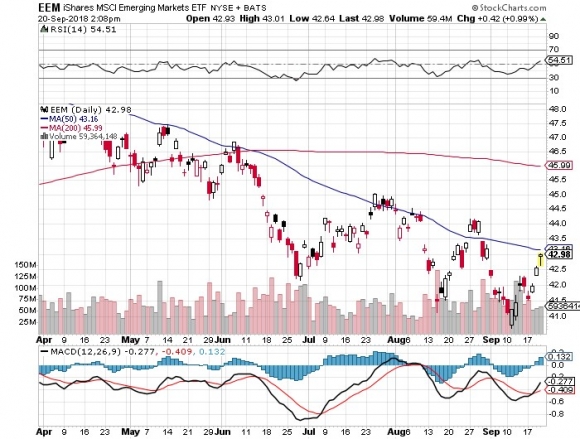
A: Yes, and this could be another cause of a global recession late next year. The canaries in the coal live there (EEM).
Q: Would you use the DOJ probe to buy into Tesla (TSLA)?
A: No, buy the car, not the stock as it is untradeable. This is in fact the third DOJ investigation Tesla has undergone since Trump came into office. The last one was over how they handled the $400 million they have in deposits for their 400,000 orders. It turns out it was all held in an escrow account. There are easier ways to make money. It’s a black swan a day with Tesla. This is what happens when you disrupt about half of the U.S. GDP all at once, including autos, the national dealer network, big oil, and advertising. All of these are among the largest campaign donors in the U.S.