
Global Market Comments
September 12, 2018
Fiat Lux
THE FUTURE OF AI ISSUE
Featured Trade:
(THE NEW AI BOOK THAT INVESTORS ARE SCRAMBLING FOR),
(GOOG), (FB), (AMZN), MSFT), (BABA), (BIDU),
(TENCENT), (TSLA), (NVDA), (AMD), (MU), (LRCX)


Global Market Comments
September 12, 2018
Fiat Lux
THE FUTURE OF AI ISSUE
Featured Trade:
(THE NEW AI BOOK THAT INVESTORS ARE SCRAMBLING FOR),
(GOOG), (FB), (AMZN), MSFT), (BABA), (BIDU),
(TENCENT), (TSLA), (NVDA), (AMD), (MU), (LRCX)
Global Market Comments
September 7, 2018
Fiat Lux
Featured Trade:
(MONDAY, OCTOBER 15, 2018, ATLANTA, GA,
GLOBAL STRATEGY LUNCHEON),
(SEPTEMBER 5 BIWEEKLY STRATEGY WEBINAR Q&A),
(AMZN), (MU), (MSFT), (LRCX), (GOOGL), (TSLA),
(TBT), (EEM), (PIN), (VXX), (VIX), (JNK), (HYG), (AAPL)


Below please find subscribers’ Q&A for the Mad Hedge Fund Trader September 5 Global Strategy Webinar with my guest and co-host Bill Davis of the Mad Day Trader.
As usual, every asset class long and short was covered. You are certainly an inquisitive lot, and keep those questions coming!
Q: Do you think the collapse of commodity prices in the U.S. will affect the U.S. election?
A: Absolutely, it will if you count agricultural products as commodities, which they are. We have thousands of subscribers in the Midwest and many are farmers up to their eyeballs in corn, wheat, and soybeans. It won’t swing the entire farm vote to the Democratic party because a lot of farmers are simply lifetime Republicans, but it will chip away at the edges. So, instead of winning some of these states by 15 points, they may win by 5 or 3 or 1, or not at all. That’s what all of the by-elections have told us so far.
Q: What will be the first company to go to 2 trillion?
A: Amazon, for sure (AMZN). They have so many major business lines that are now growing gangbusters; I think they will be the first to double again from here. After having doubled twice within the last three years, it would really just be a continuation of the existing trend, except now we can see the business lines that will actually take Amazon to a much bigger company.
Q: Is this a good entry point for Micron Technology (MU)?
A: No, the good entry point was in the middle of August. We are at an absolute double bottom here. Wait for the tech washout to burn out before considering a re-entry. Also, you want to buy Micron the day before the trade war with China ends, since it is far and away its largest customer.
Q: Is Micron Technology a value trap?
A: Absolutely not, this is a high growth stock. A value trap is a term that typically applies to low price, low book to value, low earning or money losing companies in the hope of a turnaround.
Q: I didn’t get the Microsoft (MSFT) call spread when the alert went out — should I add it on here?
A: No, I am generally risk-averse this month; let’s wait for that 4% correction in the main market before we consider putting any kind of longs on, especially in technology stocks which have had great runs.
Q: How do you see Lam Research (LRCX)?
A: Long term it’s another double. The demand from China to build out their own semiconductor industry is exponential. Short term, it’s a victim of the China trade war. So, I would hold back for now, or take short-term profits.
Q: Is this a good entry point for Google (GOOGL)?
A: No, wait for a better sell-off. Again, it’s the main market influencing my risk aversion, not the activity of individual stocks. It also may not be a bad idea to wait for talk of a government investigation over censorship to die down.
Q: Would you buy Tesla (TSLA)?
A: No, buy the car, not the stock. There are just too many black swans out there circling around Tesla. It seems to be a disaster a week, but then every time you sell off it runs right back up again. Eventually, on a 10-year view I would be buying Tesla here as I believe they will eventually become the world’s largest car company. That is the view of the big long-term value players, like T. Rowe Price and Fidelity, who are sticking with it. But regarding short term, it’s almost untradable because of the constant titanic battle between the shorts and the longs. At 26% Tesla has the largest short interest in the market.
Q: I’m long Microsoft; is it time to buy more?
A: No, I would wait for a bit more of a sell-off unless you’re a very short-term trader.
Q: What would you do with the TBT (TBT) calls?
A: I would buy more, actually; preferably at the next revisit by the ProShares Ultra Short 20 Year Plus Treasury ETF (TBT) to $33. If we don’t get there, I would just wait.
Q: What’s your suggestion on our existing (TLT) 9/$123-$126 vertical bear put spread?
A: It expires in 12 days, so I would run it into expiration. That way the spread you bought at $2.60 will expire worth $3.00. We’re 80% cash now, so there is no opportunity cost of missing out with other positions.
Q: Do you like emerging markets (EEM)?
A: Only for the very long term; it’s too early to get in there now. (EEM) really needs a weak dollar and strong commodities to really get going, and right now we have the opposite. However, once they turn there will be a screaming “BUY” because historically emerging nations have double the growth rate of developed ones.
Q: Do you like the Invesco India ETF (PIN)?
A: Yes, I do; India is the leading emerging market ETF right now and I would stick with it. India is the next China. It has the next major infrastructure build-out to do, once they get politics, regulation, and corruption out of the way.
Q: Do you trade junk bonds (JNK), (HYG)?
A: Only at market tops and market bottoms, and we are at neither point. When the markets top out, a great short-selling opportunity will present itself. But I am hiding my research on this for now because I don’t want subscribers to sell short too early.
Q: With the (VXX), I bought the ETF outright instead of the options, what should I do here?
A: Sell for the short term. The iPath S&P 500 VIX Short-Term Futures ETN (VXX) has a huge contango that runs against it, which makes long-term holds a terrible idea. In this respect it is similar to oil and natural gas ETFs. Contango is when long-term futures sell at a big premium to short-term ones.
Q: How much higher for Apple (AAPL)?
A: It’s already unbelievably high, we hit $228 yesterday. Today it’s $228.73, a new all-time high. When it was at $150, my 2018 target was initially $200. Then I raised it to $220. I think it is now overbought territory, and you would be crazy to initiate a new entry here. We could be setting up for another situation where the day they bring out all their new phones in September, the stock peaks for the year and sells off shortly after.

Mad Hedge Technology Letter
August 27, 2018
Fiat Lux
Featured Trade:
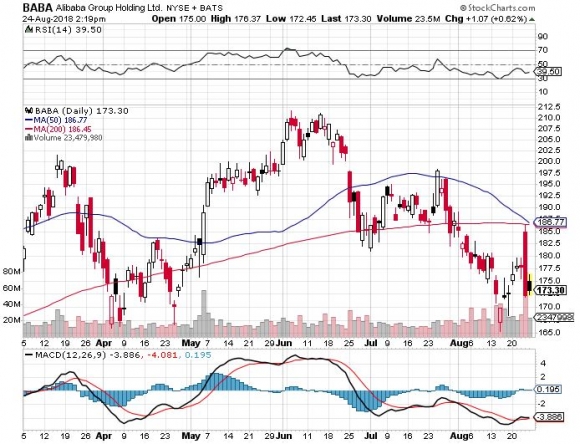
(WHY ALIBABA IS THE FIRST STOCK TO BUY WITH THE OUTBREAK OF TRADE PEACE),
(BABA), (GOOGL), (AMZN), (YELP), (MSFT), (MU), (ZTE), (HUAWEI)

According to the government agency, China Internet Network Information Center, the Chinese Internet community has surpassed 802 million, which only represents a 57.7% penetration rate, miles behind the 89% penetration rate in America.
The gargantuan scale of the Chinese Internet world means China has three times as many Internet users than America, and this is a big deal.
The additional 30 million added to the Chinese Internet ecosphere in the first half of 2018 shows the scale in which local Chinese tech companies are playing with and use to their clear-cut advantage.
Ostensibly, most business strategies in China revolve around scaled tactics as the backbone to operations.
There is even more room to expand in the Middle Kingdom and one clear victor sits atop the parapet looking at the riffraff below and that is Chinese Internet conglomerate Alibaba (BABA).
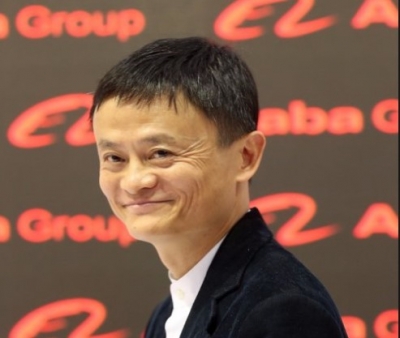
Alibaba, led by Chinese Internet pioneer Jack Ma, posted its highest-performing growth quarter in the past four years.
Total quarterly revenue ballooned an incredible 61% YOY to $11.8 billion, highlighting the dominant position Alibaba possesses in the Chinese e-commerce landscape.
If you want to know what Amazon (AMZN) is going to do next watch Alibaba.
Profit margins were somewhat sacrificed in the process because of M&A activity that saw Alibaba move into the physical supermarket business snapping up 35 Hema supermarket locations then reinvesting into the business. Echoes of Whole Foods?
Alibaba did not stop there, funneling another $3 billion into food delivery app ele.me, which plans to merge its operations with Yelp (YELP) lookalike app Koubei.
If you thought Silicon Valley moves at a rapid pace, the Chinese Internet space moves faster than lighting.
Alibaba last year dipped into the retail segment as well pocketing a department store chain with 29 stores along with 17 shopping malls.
Alibaba is the closest replica the world has to Amazon and thus is an ideal barometer of the health of the overall Chinese consumer and a peek under the complicated hood that is the Chinese economy.
Alibaba also provides onlookers at how China and its Internet behemoths are coping with the global trading war that has invaded the news headlines from its outset.
The short answer to all this is that China is coping quite well and by no means is ready to back down.
Indeed, there will be peripheral pressures exerted from the fringes, but the core engines remain intact and Chairman Xi can fall asleep in his Beijing abode more than peacefully.
A reason for the stalemate between the two governments is that both are quietly confident they have the levers in place to absorb whatever Molotov cocktails the other has to throw at them.
Investors would be mad to dismiss China’s capabilities after experiencing a mesmerizing economic rise enriching hundreds of millions of Chinese nationals that can be found comfortably living in western megacities in luxury real estate often with a real estate portfolio dotted around the world.
Alibaba’s management made it known on the earnings report that it is not worried much about the trade war because it is largely focused on the domestic Chinese consumer, which has been one of the best economic stories of the past decade.
The overseas expansion unfolding under Alibaba’s tutelage is away from the western world and predominantly focused on Southeast Asia and Eastern Europe where cheap, value-for-money hardware and software allows citizens at these income levels to participate in the e-commerce game.
These individuals can’t afford iPhones on a salary of peanuts. And Alibaba has targeted the undeveloped world as a potential lever of substantial growth.
The regulatory harshness of the west has shut out Huawei and ZTE from its shores. Australia followed suit as well, banning the two telecom companies even though it enjoys a better relationship with Beijing than Europe or North America.
China has already planned a workaround because the engines driving the Chinese tech miracle are semiconductor companies such as Micron (MU), which sells boatloads of DRAM memory chips to Chinese tech companies that flood the world with smartphones and other gadgets.
Beijing has already formulated a plan to circumvent American chips by tapping Korean, European, and Japanese chips to replace the current American supply that could vanish at any time.
Shenzhen-based chip company HiSilicon fully owned by Huawei is responsible for supplying Huawei with chips and is the biggest local designer of integrated circuits in China.
This is what the future of China looks like when China can finally build up the adequate supply necessary to achieve its plans to dominate global technology, America, and the world.
But the plan is still in the process of playing out. The awkwardness was highly visible when the administration’s ban of selling U.S. manufactured components to telecommunications company ZTE resulted in the company almost shutting down until a last-second change of heart by the administration.
The near-death experience will invigorate ZTE to muster its own local supply of chips to avoid the unreliable foreign supply and a deja vu feeling.
American chip companies won’t be able to enjoy the Chinese market for long as all these negative experiences for Chinese companies has forced Chinese tech companies to search and secure a guaranteed chip supply.
At the same time, Chinese local smartphone players have gone from 0 to 60 in no time with companies that barely existed a few years ago, such as Oppo, Vivo coming into the fore along with Huawei picking up 43% of the global smartphone market.
This is bad news for Apple as local competitors are learning fast and furious how to build premium smartphones via re-engineering the current technology or through forced technology transfers.
These companies subsequently offer these phones at the lowest possible price point. And at some point in the near future Apple could be expendable if Chinese smartphones start to display the type of quality the best phones show.
Chinese domestic consumption and investment comprise 90% of the GDP growth in China and are propped up by three robust trends including real wage growth boosting the middle-class population, high savings rate that of which Americans would be jealous, and easy access to credit vehicles.
When I was recently in the Middle Kingdom, it was highly evident that as the generations became younger, their quality of life was higher than their parents.
The opposite is happening in America with millennials earning demonstrably less than their parents’ generation while the American middle class is shrinking at an accelerated pace.
Beijing knows this and hopes to wait things out as it feels time is a positive variable for China and not America.
It is true that if this trade war took place in 20 years in the future, China would be in a stronger strategic position to extract whatever concessions it desires because even though Chinese growth is slowing, it is still growing at 6.5%.
And if you don’t believe what I just said then just look at Alibaba’s cloud division, which grew 93% YOY opening artificial intelligence-based data centers around Europe to battle Amazon (AMZN) and Microsoft (MSFT).
Europe was once Elysian Fields for American tech companies, but with European regulators going after American tech and China encroaching on European turf, the future looks a lot less certain for the FANGs there than ever before.
Alibaba’s operating margins dipped 10% YOY but the slide will be returned to shareholders in the future in the form of high-quality revenue and is worth the investment into the most innovative ideas of tomorrow.
I did not even mention the large stake Alibaba has in Ant Financial, which operates the ubiquitous digital payment app Alipay.
It would be analogous to Amazon if it owned Visa.
Alibaba is one of the best tech companies in the world headed by a former Chinese English language teacher in Hangzhou.
If America becomes too difficult or expensive with which to do business, Alibaba and Chinese tech will just recalibrate their strategy to deeper infiltrate the confines of Southeast Asia and the rest of the undeveloped world.
Any price war on undeveloped soil favors the Chinese as they have mastered scale better than anyone on the planet.
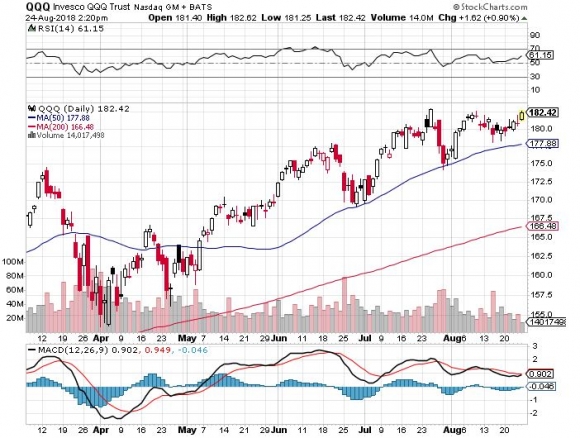
The stellar Alibaba numbers also mean the trade war has no end in sight as each player thinks they have the upper hand. But it also means the tech giants from both countries will come out unscathed and will lead their country’s respective equity markets higher for the foreseeable future.
________________________________________________________________________________________________
Quote of the Day
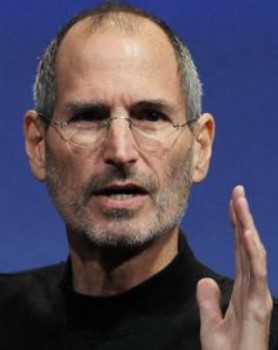
“Technology is nothing. What's important is that you have a faith in people, that they're basically good and smart, and if you give them tools, they'll do wonderful things with them,” – said Apple cofounder and former CEO Steve Jobs.
Mad Hedge Technology Letter
August 22, 2018
Fiat Lux
Featured Trade:
(WHAT’S IN STORE FOR TECH IN THE SECOND HALF OF 2018?),
(GOOGL), (AMZN), (FB), (UTX), (UBER), (LYFT), (MSFT), (MU), (NVDA), (AAPL), (SMH)

Tech margins could be under pressure the second half of the year as headwinds from a multitude of sides could crimp profitability.
It has truly been a year to remember for the tech sector with companies enjoying all-time high probability and revenue.
The tech industries’ best of breed are surpassing and approaching the trillion-dollar valuation mark highlighting the potency of these unstoppable businesses.
Sadly, it can’t go on forever and periods of rest are needed to consolidate before shares relaunch to higher highs.
This could shift the narrative from the global trade war, which is perceived as the biggest risk to the current tech market to a domestic growth issue.
Healthy revenue beats and margin growth have been essential pillars in an era of easy money, non-existent tech regulation, and insatiable demand for everything tech.
Tech has enjoyed this nine-year bull market dominating other industries and taking over the S&P on a relative basis.
The lion’s share of growth in the overall market, by and large, has been derived from the tech sector, namely the most powerful names in Silicon Valley.
Late-stage bull markets are fraught with canaries in the coal mine offering clues for the short-term future.
Therefore, it is a good time to reassess the market risks going forward as we stampede into the tail end of the financial year.
The shortage of Silicon Valley workers is not a new phenomenon, but the dearth of talent is going from bad to worse.
Proof can be found in the controversial H-1B visa program used to hire foreign tech workers mainly to Silicon Valley.
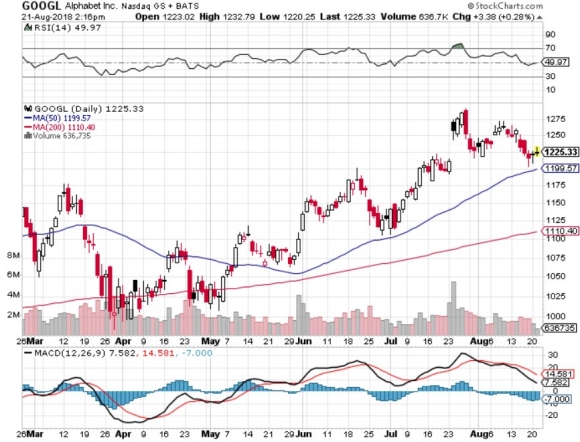
A few examples are Alphabet (GOOGL), which was granted 1,213 H-1B approvals in 2017, a 31% YOY rise.
Alphabet’s competitor Facebook (FB) based in Menlo Park, Calif., was granted 720 H-1B approvals in 2017, a 53% YOY jump from 2016.
This lottery-based visa for highly skilled foreign workers underscores the difficulty in finding local American talent suitable for a role at one of these tech stalwarts.
Amazon (AMZN) made one of the biggest jumps in H-1B approvals with 2,515 in 2017, a 78% YOY surge.
The vote of non-confidence in hiring Americans shines an ugly light on American youth who are not applying themselves to the domestic higher education system as are foreigners.
For the lucky ones that do make it into the hallways of Silicon Valley, a great salary is waiting for them as they walk through the front door.
Reportedly, the average salary at Facebook is about $250,000 and Alphabet workers take home around $200,000 now.
Pay packages will continue to rise in Silicon Valley as tech companies vie for the same talent pool and have boatloads of capital to wield to hire them.
This is terrible for margins as wages are the costliest input to operate tech companies.
United Technologies Corp. (UTX) chief executive Gregory Hayes chimed in citing a horrid “labor shortage in the U.S. and in Europe.”
He followed that up by saying the company will have to grapple with this additional cost pressure.
Certain commodity prices are spiraling out of control and will dampen profits for some tech companies.
Uber and Lyft, ridesharing app companies, are sensitive to the price of oil, and a spike could hurt the attractiveness to recruit potential drivers.
The perpetually volatile oil market has been trending higher since January, from $47 per barrel and another spike could damage Uber’s path to its IPO next year.
Will Uber be able to lure drivers into its ecosystem if $100 per barrel becomes the new normal?
Probably not unless every potential driver rolls around in a Toyota Prius.
If oil slides because of a global recession instigated by the current administration aim to rein in trade partners, then Uber will be hard hit abroad because it boasts major operations in many foreign megacities.
A recession means less spending on Uber.
Either result will be negative for Uber and ridesharing companies won’t be the only companies to be hit.
Other victims will be tech companies incorporating transport as part of their business model, such as Amazon which will have to pass on more delivery costs to the customer or absorb the blows themselves.
Logistics is a massive expense for them transporting goods to and from fulfillment centers. And they have a freshly integrated Whole Foods business offering two-hour free delivery.
Higher transport costs will bite into the bottom line, which is always a contentious issue for Amazon shareholders.
Another red flag is the deceleration of the global smartphone market evident in the lackluster Samsung earnings reflecting a massive loss of market share to Chinese foes who will tear apart profit margins.
Even though Samsung has a stranglehold on the chip market, mobile shipments have fell off a cliff.
Damaging market share loss to Chinese smartphone makers Xiaomi and Huawei are undercutting Samsung products. Chinese companies offer better value for money and are scoring big in the emerging world where incomes are lower making Chinese phones more viable.
The same trend is happening to Samsung’s screen business and there could be no way back competing against cheaper, lower quality but good enough Chinese imitations.
Pouring gasoline on the fire is the Chinese investigation charging Micron (MU), SK Hynix, and Samsung for colluding together to prop up chip prices.
These three companies control more than 90% of the global DRAM chip market and China is its biggest customer.
The golden days are over for smartphone growth as customers are not flooding into stores to buy incremental improvements on new models.
Customers are staying away.
The smartphone market is turning into the American used car market with people holding on to their models longer and only upgrading if it makes practical sense.
Chinese smartphone makers will continue to grab global smartphone market share with their cheaper premium versions that western companies rather avoid.
Battling against Chinese companies almost always means slashing margins to the bone and highlights the importance of companies such as Apple (AAPL), which are great innovators and produce the best of the best justifying lofty pricing.
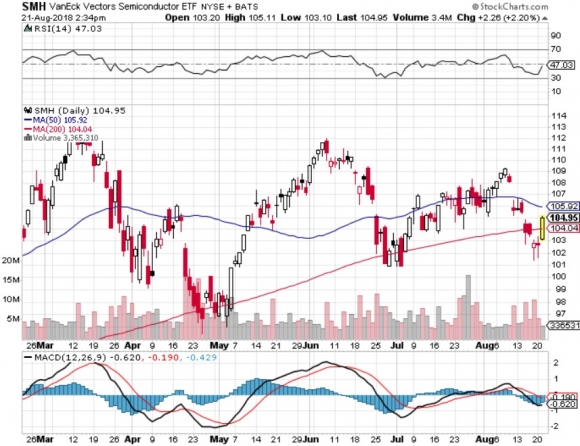
The stagnating smartphone market will hurt chip and component company revenues that have already been hit by the protectionist measures from the trade war.
They could turn into political bargaining chips and short-term pressures will slam these stocks.
This quarter’s earnings season has seen a slew of weak guidance from Facebook, Nvidia (NVDA) mixed in with great numbers from Alphabet and Amazon.
Beating these soaring estimates is not a guarantee anymore as we move into the latter part of the year.
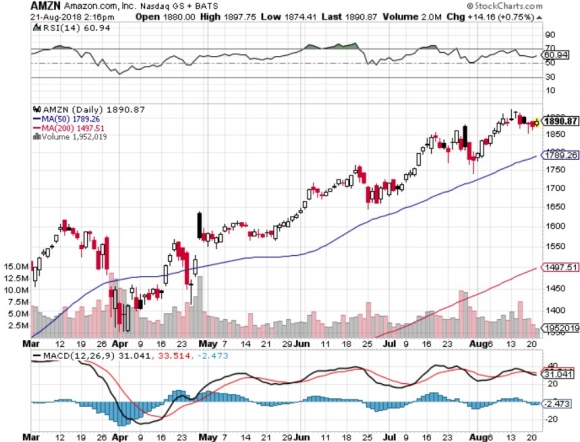
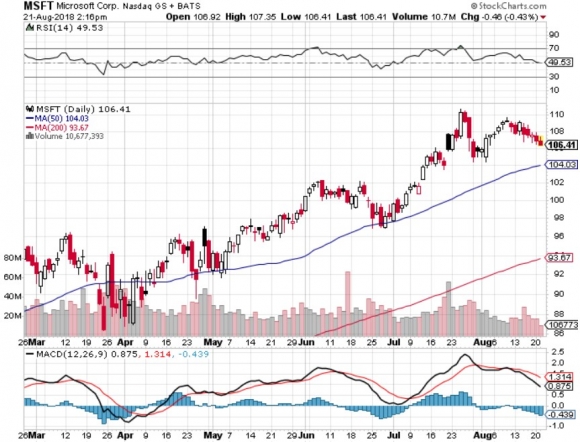
Migrating into the highest quality names such as Amazon and Microsoft (MSFT) with bulletproof revenue drivers would be the sensible strategy if tech’s lofty valuations do not scare you off.
Tech has had its own cake and ate it too for years. But on the near horizon, overdelivering on earnings results will be an arduous chore if outside pressures do not relent.
It’s been fashionable in the past for market insiders to call the top of the tech market, but precisely calling the top is impossible.
The long-term tech story is still intact but be prepared for short-term turbulence.
________________________________________________________________________________________________
Quote of the Day
“By giving people the power to share, we're making the world more transparent,” – said cofounder and CEO of Facebook Mark Zuckerberg.

Global Market Comments
August 16, 2018
Fiat Lux
SPECIAL ARTIFICIAL INTELLIGENCE ISSUE
Featured Trade:
(NEW PLAYS IN ARTIFICIAL INTELLIGENCE),
(NVDA), (AMD), (ADI), (AMAT), (AVGO), (CRUS),
(CY), (INTC), (LRCX), (MU), (TSM)

Mad Hedge Technology Letter
August 13, 2018
Fiat Lux
Featured Trade:
(GOOGLE'S NEW CHINESE PLAY),
(GOOGL), (BABA), (AAPL), (JD), (BIDU), (MU), (INTC)
As a bolt from the blue, Google search is headed back to China.
The project coined Dragonfly commenced in early 2017 as Google sought a way back into the lucrative Chinese market to sell its products.
The retracement to China then later sped up after Google CEO Sundar Pichai secretly met with a top Chinese official in December 2017.
The censored Google search application could be launched in the next six months to a year upon approval from the communist party.
Why China?
There are three times more smartphones in China than in the U.S. This market represents celestial scale unfounded in any other country.
The Chinese Internet population has roughly 772 million people with Internet penetration levels at about 55%.
The U.S. has maxed out its penetration level at 89% and there is little room to snatch up a new group of mass users. This is not the case in China, which has ample amounts of room to run.
In addition, Google hopes to roll out a news aggregation app mirrored on Chinese newsfeed app Jinri Toutiao that implements personalized artificial intelligence to cater toward each unique user's needs.
As of December 2017, users spent an average of 73 minutes per day on this app.
Jinri Toutiao has 120 million daily active users and has been given a valuation of around $35 billion.
The unbridled potential for American large cap tech companies in China is unrivaled.
But navigating around China's murky business environment under the comprehensive controls of the Great Firewall has proved cumbersome highlighting the executional prowess of Apple's (AAPL) iPhone business in China.
Why did Google leave in the first place?
The issue of censorship was the catalyst leading Google search to the exits.
Google was stunned by the exploits of the Chinese communist government, which maneuvered around Google's system targeting human rights activists among other things.
Operating abroad, companies do not always have complete control over the systems they build and the business processes that revolve around it.
Beijing continued to press Google to filter its search results in 2010, and anything but compliance spelled doom for Google's future in China.
Restricting speech is commonplace for many undeveloped countries with brutal regimes.
The U.S. has one of the most lenient free press laws in the world underlying the backbreaking hassle of operating in a country that actively and aggressively suppresses free speech deemed negative to the people in powerful positions.
After Google started rerouting mainland Chinese Google search to its filter-less Hong Kong servers, Google search was unceremoniously shut down within months.
A comeback is in the works at a time when China and America are at each other's throats in a tit-for-tat trade war, complicating the move to reinsert itself back in the Middle Kingdom.
Let's make no bones about it, this is a high-risk, high-reward strategy for Alphabet, which seeks to add yet another growth driver to its profit-making machine.
Out of the FANG group, only Apple has emerged to unlock the Chinese market with outstanding success.
All other American tech competition was rooted out. Only chip names such as Micron (MU) and Intel (INTC) latched onto the Chinese market largely because of the Chinese demand for chips.
This unfortunate development opened the path for the BATs to dominate in China, which is comprised of Baidu (BIDU), Alibaba (BABA), and Tencent.
Rewind back to 2010, Google search was directly competing against China's Baidu headed up by founder Robin Li.
Google had just 14% market share in search and was trailing far behind Baidu, which had 79% of market share.
In 2010, the difference in the quality of the search algorithms between the two couldn't have been larger.
When comparing these search engines, 85% of Google searches would populate vastly different results compared to Baidu's search platform.
Upon further inspection, Google search was deemed far more accurate than the market share leader Baidu, and that has not changed.
China's inferior technological abilities are well noted. The shortage of talent has forced them to institute forced technological transfers from western companies working in China, outright theft of technical know-how by state sponsored hackers, and the use of government loans to finance M&A activity in technological advanced countries.
In fact, Google leaving China robbed the Chinese tech sector of legitimate competition crushing the innovation trajectory or any remnants of one.
This led to the BATs running riot making money hand over fist but still trailing American tech by a country mile in terms of technical ability and innovation.
A lack of competition breeds complacency.
The reintegration of Google search into China will bring a whole new level of top-class ad technology into China.
This could be the beginning of a monumental ramp up in digital ad spend in China, which trails far behind North America and Europe in average revenue per person.
Discretionary spending is robust in China and advertisers want a piece of the action.
As much as this could be an opportunity for Alphabet to invigorate its cash-making enterprise, it is also a chance to enhance the overall Chinese tech sector.
Upon hearing Google will return, Baidu's Li laid down the gauntlet retorting that Baidu will "win one more time."
Having the communist party on your side as a tag team partner goes a long way in China and has been the main reason of foreign firms fleeing in droves in the past.
Alphabet won't have the same help.
Yet, it could learn a great deal from heading into this sensitive opportunity that could also lay the groundwork to operate in other countries with repressive governments bent on destroying freedom of speech.
Naturally, Alphabet employees weren't impressed with this new direction.
Silicon Valley is centered on left-wing social mores and adjusting its model to accommodate a totalitarian regime does not sit well with many workers.
Google saw a mini employee revolt because of Project Maven, a national defense program marrying artificial intelligence with combat operations in the United States.
Allowing Google's technology to possibly fall into the hands of Beijing would be unforgivable and a national embarrassment.
This idea is definitely not part of the low hanging fruit initiative.
This fruit is 20 feet high dangling from a distant branch.
If Alphabet pulls this off, it could add another surging driver to its portfolio, which prints money because of its digital ad segment.
It could potentially increase revenue by 30%.
Alphabet's successfully bringing in its Google search engine back from the cold, albeit censored search engine, could lay the groundwork for other American tech companies to enter the Chinese market, which would crush Alibaba, JD.com (JD), Tencent, and Baidu's share price.
Baidu dropped more than 6% upon this announcement.
The tech expertise level would naturally rise in China if American tech companies were permitted to set up shop, enhancing the total Chinese tech sector.
It would also apply pressure on China's communist government to open up its industries and do away with the protectionist stance that has been a bedrock policy fueling China's unbelievable rise from rags to riches.
China's top-level politicians must understand inward policies of this ilk do not mesh with the status of a country that is the world's second biggest economy. And it was only a matter of time before unyielding backlash ensued.
From the political side, it could possibly offer additional ammunition to the American administration if China wholeheartedly rejects Google's foray into the mainland, even if it complies with every miniscule, arcane rule Beijing throws at them.
It will prove that China is not willing to compromise or make a deal with the deal-obsessed American administration. And it will signal a dead-end road for any large cap American tech company with China aspirations.
The U.S. administration would use this as an "I told you so" moment, highlighting a history of perpetual unfair trade practices. Hopefully, it never gets to this point.
As it stands, many American large cap tech companies won't touch the Chinese market with a 10-foot pole, but the breathless scale is hard to pass up for others.
If Google is stonewalled, expect an even tougher response from the American administration hell-bent on preventing technological transfers to China.
Currently, the Committee on Foreign Investment in the United States (CFIUS) is attempting to recreate the rules to counteract the China threat.
The trade war is ultimately about global supremacy and being able to harness the biggest tool to achieve world hegemony, which is high caliber technology.
The treatment of Chinese and American tech companies by each other's government will give investors deep insight into how this all plays out.
This is Alphabet's last gasp chance at entering China. If it evolves into a spectacular failure, it always has its digital ad business to fall back on and the upcoming mass rollout of Waymo, its autonomous self-driving taxi business.
So why not take a stab at it?


________________________________________________________________________________________________
Quote of the Day
"If Google re-enters the market, it gives us the opportunity to player kill with real swords and spears and win one more time," - said founder and CEO of Baidu Robin Li.
