Mad Hedge Technology Letter
January 28, 2019
Fiat Lux
Featured Trade:
(BUY DIPS IN SEMIS, NOT TOPS),
(XLNX), (LRCX), (AMD), (TXN), (NVDA), (INTC), (SOXX), (SMH), (MU), (QQQ)


Mad Hedge Technology Letter
January 28, 2019
Fiat Lux
Featured Trade:
(BUY DIPS IN SEMIS, NOT TOPS),
(XLNX), (LRCX), (AMD), (TXN), (NVDA), (INTC), (SOXX), (SMH), (MU), (QQQ)
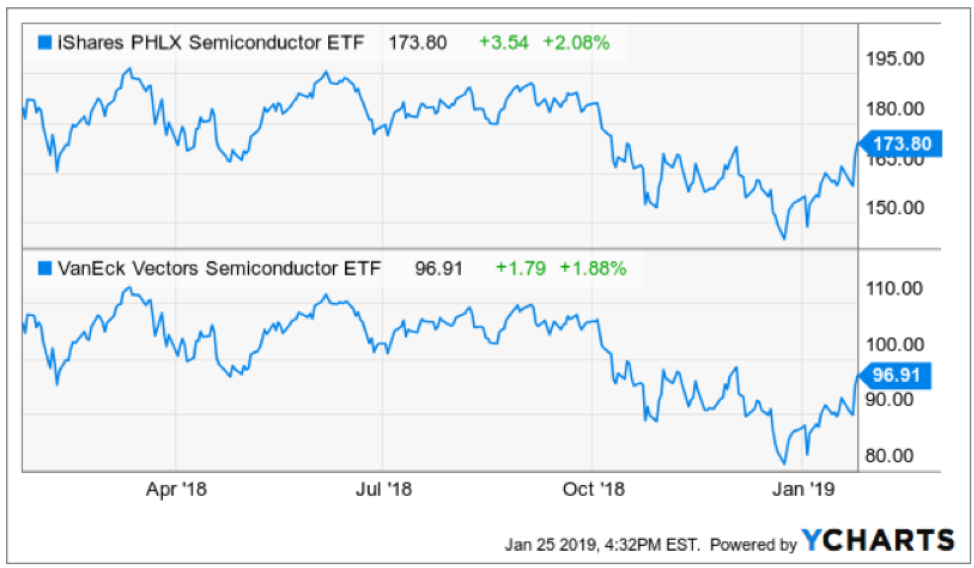
Don’t buy the dead cat bounce – that was the takeaway from a recent trading day that saw chips come alive with vigor.
Semiconductor stocks had their best day since March 2009.
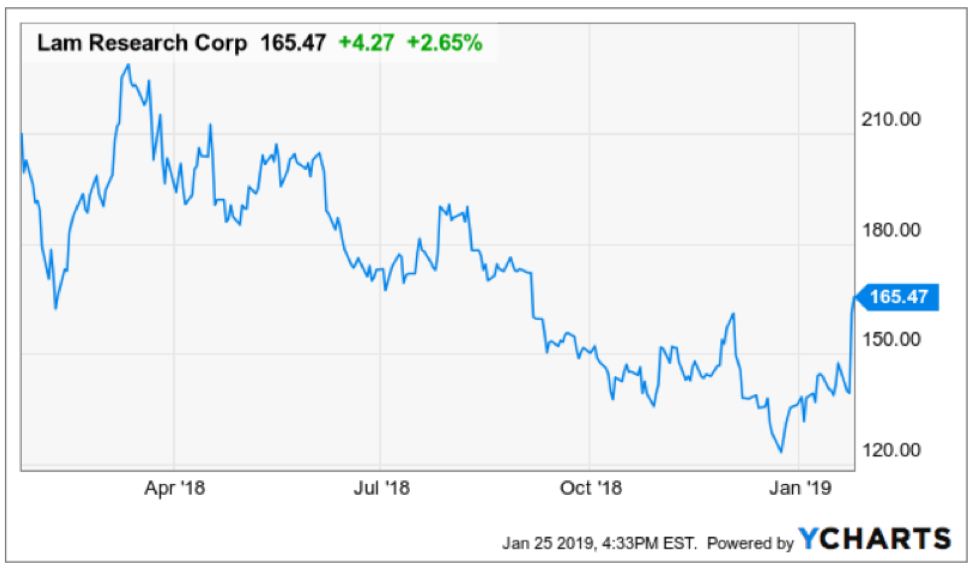
The price action was nothing short of spectacular with names such as chip equipment manufacturer Lam Research (LRCX) gaining 15.7% and Texas Instruments (TXN) turning heads, up 6.91%.
The sector was washed out as the Mad Hedge Technology Letter has determined this part of tech as a no-fly zone since last summer.
When stocks get bombed out at these levels - sometimes even 60% like in Lam Research’s case, investors start to triage them into a value play and are susceptible to strong reversal days or weeks in this case.
The semi-conductor space has been that bad and tech growth has had a putrid last six months of trading.
In the short-term, broad-based tech market sentiment has turned positive with the lynchpins being an extremely oversold market because of the December meltdown and the Fed putting the kibosh on the rate-tightening plan.
Fueled by this relatively positive backdrop, tech stocks have rallied hard off their December lows, but that doesn’t mean investors should take out a bridge loan to bet the ranch on chip stocks.
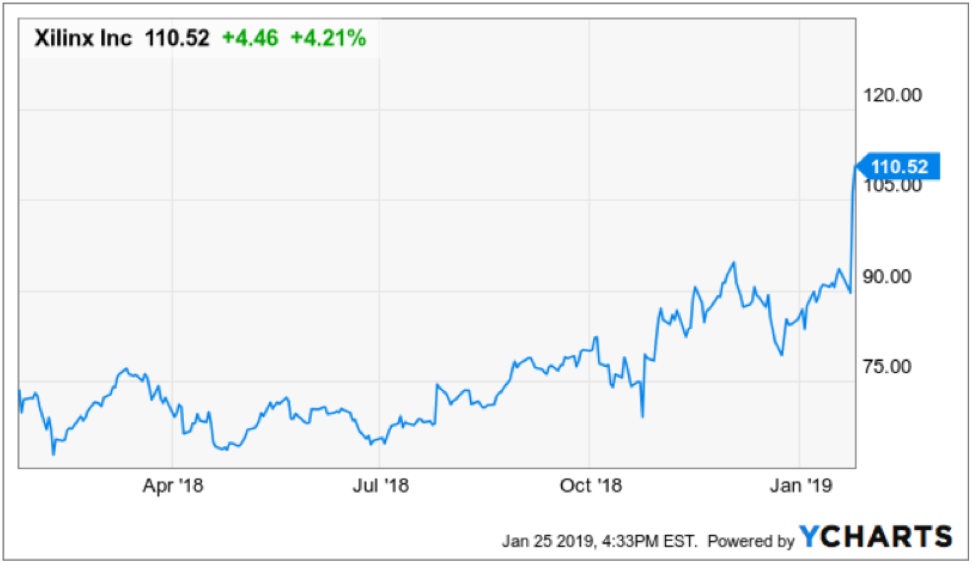
Another premium example of the chip turnaround was the fortune of Xilinx (XLNX) who rocketed 18.44% in one day then followed that brilliant performance with another 4.06% jump.
A two-day performance of 22.50% stems from the underlying strength of the communication segment in the third quarter, driven by the wireless market producing growth from production of 5G and pre-5G deployments as well as some LTE upgrades.
Give credit to the company’s performance in Advanced Products which grew 51% YOY and universal growth across its end markets.
With respect to the transformation to a platform company, the 28-nanometer and 16-nanometer Zynq SoC products expanded robustly with Zynq sales growing 80% YOY led by the 16-nanometer multiprocessor systems-on-chip (MPSoC) products.
Core drivers were apparent in the application in communications, automotive, particularly Advanced Driver Assistance Systems (ADAS) as well as industrial end markets.
Zynq MPSoC revenues grew over 300% YOY.
These positive signals were just too positive to ignore.
Long term, the trade war complications threaten to corrode a substantial chunk of chip revenues at mainstay players like Intel (INTC) and Nvidia (NVDA).
Not only has the execution risk ratcheted up, but the regulatory risk of operating in China is rising higher than the nosebleed section because of the Huawei extradition case and paying costly tariffs to import back to America is a punch in the gut.
This fragility was highlighted by Intel (INTC) who brought the semiconductor story back down to earth with a mild earnings beat but laid an egg with a horrid annual 2019 forecast.
Intel telegraphed that they are slashing projections for cloud revenue and server sales.
Micron (MU) acquiesced in a similar forecast calling for a cloud hardware slowdown and bloated inventory would need to be further digested creating a lack of demand in new orders.
Then the ultimate stab through the heart - the 2019 guide was $1 billion less than initially forecasted amounting to the same level of revenue in 2018 - $73 billion in revenue and zero growth to the top line.
Making matters worse, the downdraft in guidance factored in that the backend of the year has the likelihood of outperforming to meet that flat projection of the same revenue from last year offering the bear camp fodder to dump Intel shares.
How can firms convincingly promise the back half is going to buttress its year-end performance under the drudgery of a fractious geopolitical set-up?
This screams uncertainty.
Love them or crucify them, the specific makeup of the semiconductor chip cycle entails a vulnerable boom-bust cycle that is the hallmark of the chip industry.
We are trending towards the latter stage of the bust portion of the cycle with management issuing code words such as “inventory adjustment.”
Firms will need to quickly work off this excess blubber to stoke the growth cycle again and that is what this strength in chip stocks is partly about.
Investors are front-running the shaving off of the blubber and getting in at rock bottom prices.
Amalgamate the revelation that demand is relatively healthy due to the next leg up in the technology race requiring companies to hem in adequate orders of next-gen chips for 5G, data servers, IoT products, video game consoles, autonomous vehicle technology, just to name a few.
But this demand is expected to come online in the late half of 2019 if management’s wishes come true.
To minimize unpredictable volatility in this part of tech and if you want to squeeze out the extra juice in this area, then traders can play it by going long the iShares PHLX Semiconductor ETF (SOXX) or VanEck Vectors Semiconductor ETF (SMH).
In many cases, hedge funds have made their entire annual performance in the first month of January because of this v-shaped move in chip shares.
Then there is the other long-term issue of elevated execution risks to chip companies because of an overly reliant manufacturing process in China.
If this trade war turns into a several decades affair which it is appearing more likely by the day, American chip companies will require relocating to a non-adversarial country preferably a democratic stronghold that can act as the fulcrum of a global supply chain channel moving forward.
The relocation will not occur overnight but will have to take place in tranches, and the same chip companies will be on the hook for the relocation fees and resulting capex that is tied with this commitment.
That is all benign in the short term and chip stocks have a little more to run, but on a risk reward proposition, it doesn’t make sense right now to pick up pennies in front of the steamroller.
If the Nasdaq (QQQ) retests December lows because of global growth falls off a cliff, then this mini run in chips will freeze and thawing out won’t happen in a blink of an eye either.
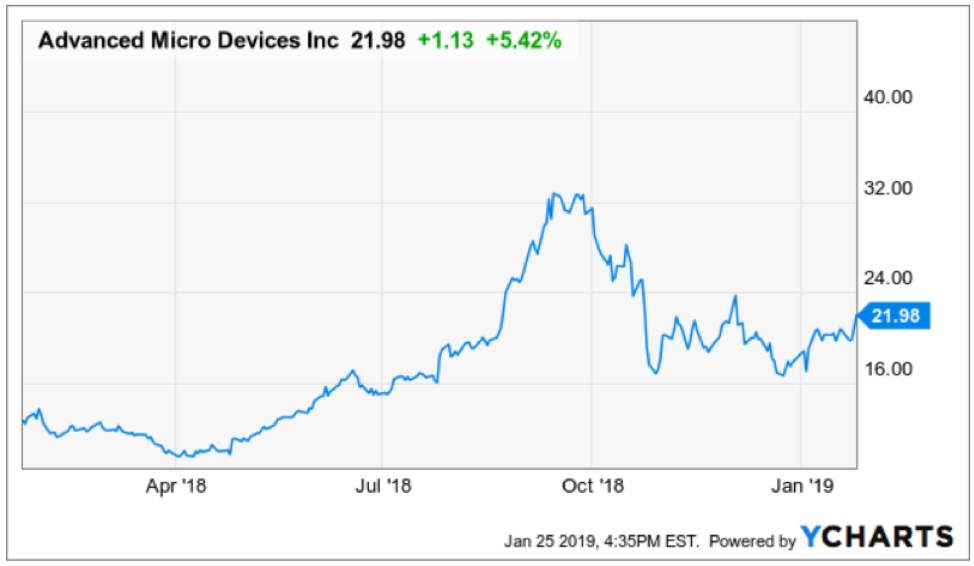
But if you are a long-term investor, I would recommend my favorite chip stock AMD who is actively draining CPU market share from Intel and whose innovation pipeline rivals only Nvidia.
Global Market Comments
January 10, 2019
Fiat Lux
Featured Trade:
(JANUARY 9 BIWEEKLY STRATEGY WEBINAR Q&A),
(SPY), (UUP), (FXE), (FXY), (FXA), (AAPL), (GLD), (SLV), (FCX), (SOYB), (USO), (MU), (NVDA), (AMD), (TLT), (TBT), (BIIB), (TSLA)
(TESTIMONIAL)


Due to technical problems, I was unable to read your questions. However, I was able to get a print out after the fact.
Below please find subscribers’ Q&A for the Mad Hedge Fund Trader January 9 Global Strategy Webinar with my guest and co-host Bill Davis of the Mad Day Trader.
Q: Is the bottom in for stocks?
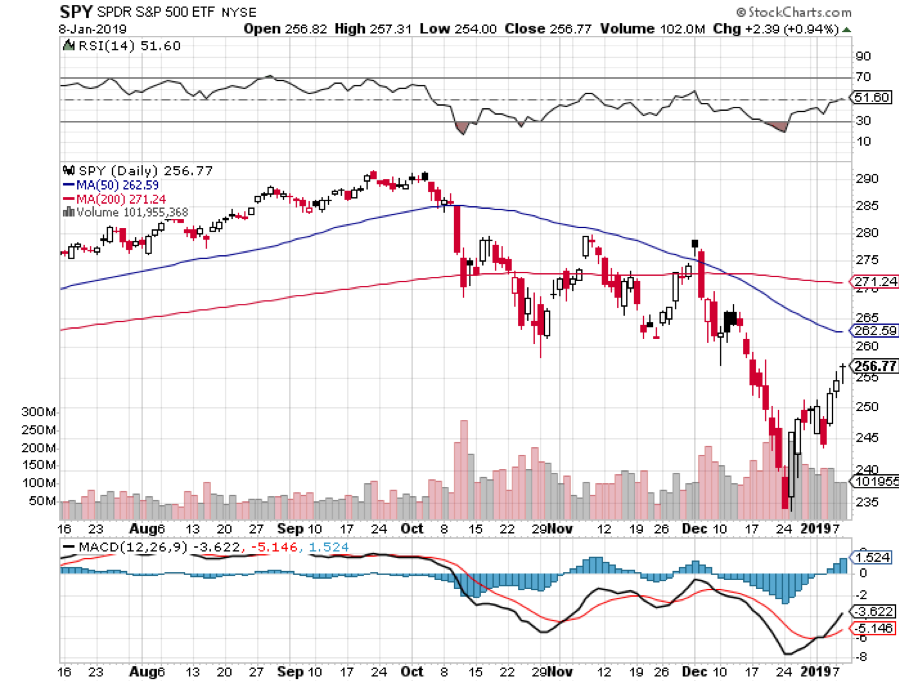
A: It is for six months to a year. A price earnings multiple at 14X seems to be the line in the sand. The Christmas Eve massacre, which took us down to a (SPY) of $230, was the final capitulation bottom of the entire down move. We may try a few more retests of the lows on bad tweets or data points. But from here on, you’re trying to buy the dip. That’s why I cut my vacation short a week and issued eight emergency trade alerts, five for Global Trading Dispatch and three for the tech letter. By the way, I hope you appreciate those trade alerts because I had to call back staff from vacations in four different countries to get them done. But it was worth it. We’ve had the strongest start to a New Year in a decade, up 5.75%. We made back all our Q4 losses in two days!
Q: Is the strong dollar play (UUP) over? Is it time to start buying Euro (FXE) and Yen (FXE)?
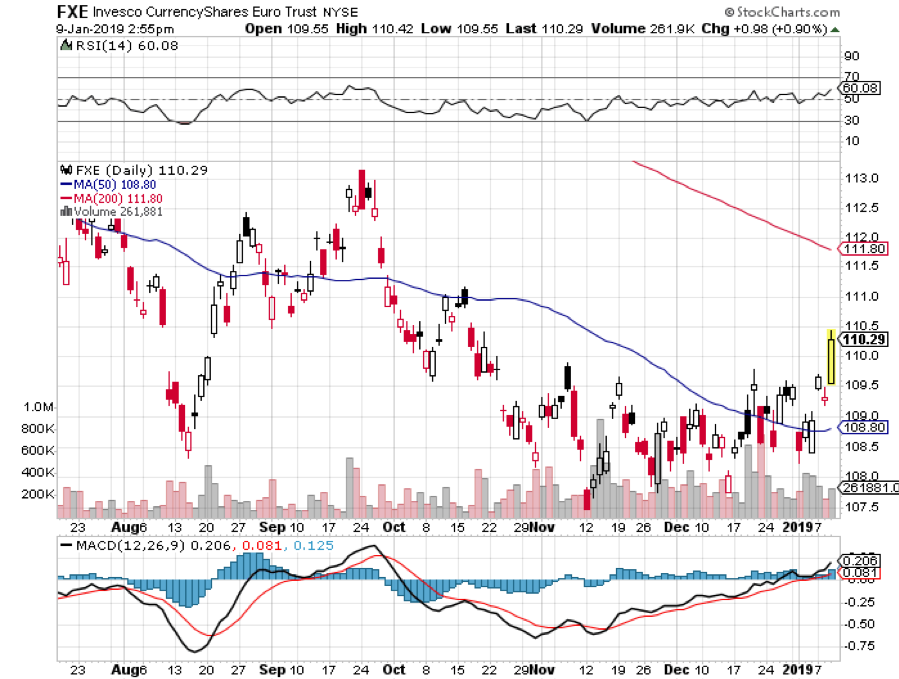
A: Yes, it is. The Fed flipping from hawk to dove sounds the death knell for the dollar. With the expansion of the yield spread between the buck and other currencies stopped dead in its tracks, a massive short covering rally will drive the currencies higher. That’s why I bought the Euro on Monday for the first time in more than a year (FXE). The Japanese yen where the biggest shorts has already moved too far, up 8%. That’s where hedge fund typically finance positions because yen yields have been at zero forever.
Q: How about the Aussie (FXA)? Do we have a shot now?
A: I think so. But the bigger driver with Aussie is the trade war with China. That said, I believe that will get resolved soon too unless Trump wants to run for reelection during a recession. The Aussie also has relatively high-interest rates so it should soar.
Q: Is the government shutdown starting to hurt the economy?
A: Yes, it is. Estimates on the damage the shutdown is doing range from 0.5% to 1% a week. That means at a minimum of 20-week shut down cuts 2019 GDP growth by 1%. If your assumption for growth this year is only 2%, that brings us perilously close to a recession. However, with the big stock market rally of the past week investors clearly believe the shutdown will be over in a week. Buy “Wall” stocks.
Q: What’s the biggest risk to the market now?
A: Companies announced great earnings in October and the stocks promptly collapsed. Q4 earnings start in a few weeks, except this time, the earnings will be smaller. The big one, Apple (AAPL) is reporting on January 29 and will be especially exciting since they already announced a major disappointment. If we get a repeat, you could get another meltdown in February just like we saw last year.
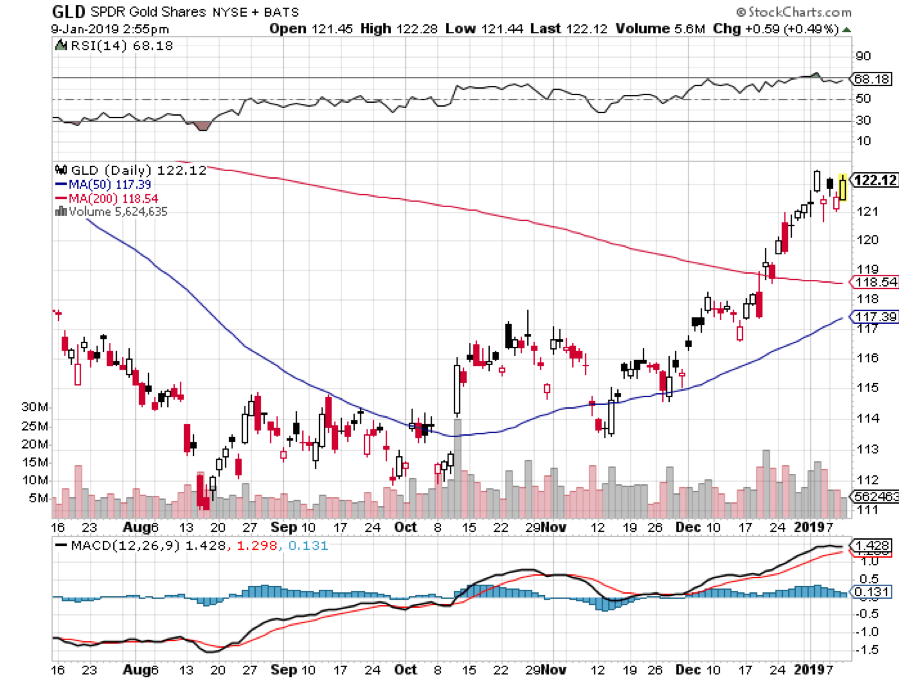
Q: Do you still like gold (GLD)?
A: I did in Q4 as a hedge for a collapsing stock market. Now that stocks are on fire again, I think gold and silver (SLV) will take a rest. You’re not going to get a serious move in gold until we see higher inflation and that is a while off.
Q: Is the bear market in commodities over?
A: I think so, with a flattening interest rate picture and a weakening dollar, the entire commodity complex is looking better. That includes copper (FCX), energy (USO), and the ags (SOYB). What do you buy in an expensive market? Cheap stuff, and all of these are at seven-year lows. I think people are ready to give paper assets a rest. All we need now for these to work is inflation. My cleaning lady just asked for a raise so there’s hope.
Q: The semiconductors have just had a good move. Is it time to get in?
A: You want to buy the semis, like Micron Technology (MU), NVIDIA (NVDA), and Advanced Micro Devices (AMD) when they’ve just had a BAD move. Market conditions have improved, but not to the extent you want to buy the most volatile stocks in the market. That said, if we get another crushing move in February you might dip your toe in with some semis on capitulation day. If you want to buy semis in this environment, you might have a gambling addiction.
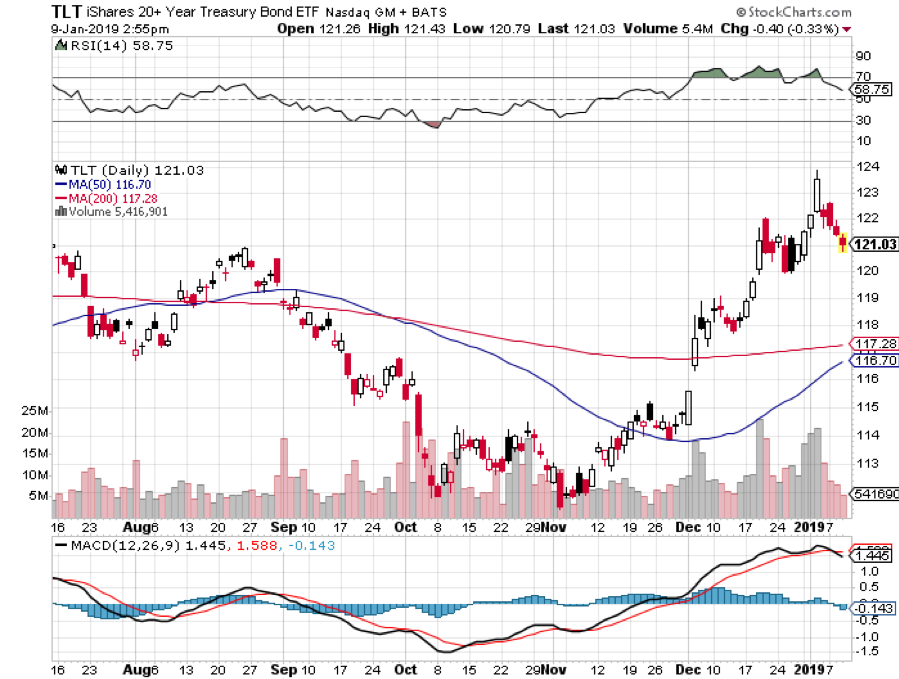
Q: If the Fed has stopped raising rates, are you still bearish on the (TLT) and bullish on the (TBT)?
A: I think what governor Jay Powell’s dovish comments will do is put bonds in a six-month range, say 2.45%-3.0% in yield. All of my future bond alerts will trade around those levels. In the option world, we will be setting up a short strangle, betting that interest rates don’t move out of this range for a while. In that case, our two bond positions will be OK, with the nearest money one expiring in only seven trading days.
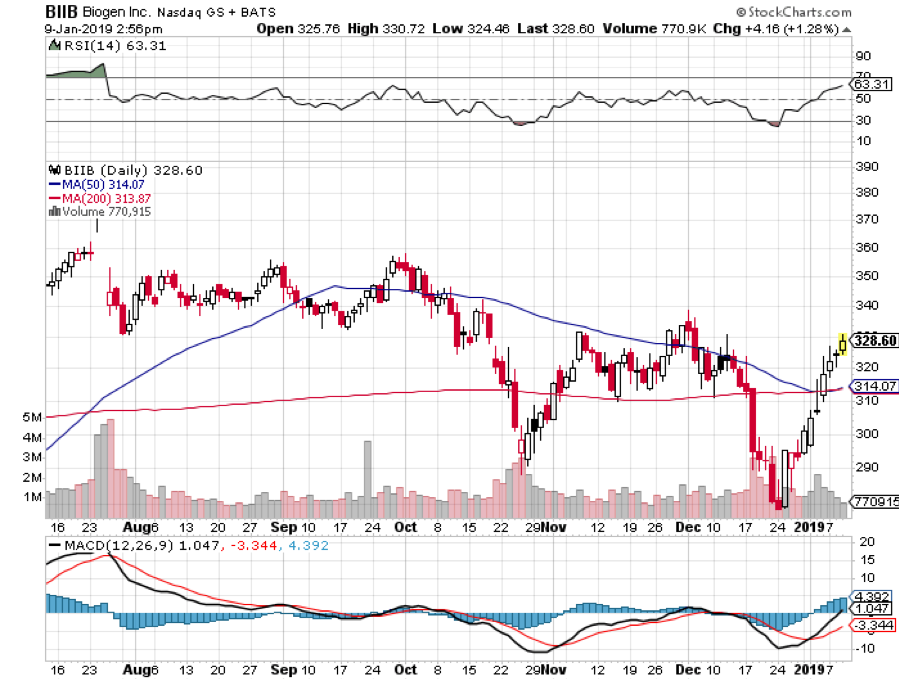
Q: Is it too late to get into biotech (BIIB)?
A: No, along with technology, biotech will be one of the two leading sectors in the entire market for the next ten years. However, me being an eternal cheapskate, I want to get in again on a decent dip. This is the industry that will cure cancer over the next decade and that will be worth a trillion dollars in profits.
Q: You’ve kept us out of Tesla (TSLA) for a couple of years. Is it time to go back in?
A: I think I would. If production can ramp up from 7,000 to 10,000 a week, the stock should do the same. The ten-year view for this stock is that it goes from today’s $330 to $2,500. That said, this is a notorious trading stock so it is very important to buy it on a dip. Wait for the next tweet from Elon Musk.
Q: If we enter a bear market in May 2019, what would be the appropriate long-term investments at that time?
A: Nothing beats cash, especially now that you are actually getting paid something decent. You can find cash equivalents now yielding all the way up to 4%. In a bear market, stocks either go down a lot, or a whole lot, so there is nothing worth keeping. The only reason to stay in is to avoid a monster tax bill (my cost on Apple is 25 cents) or you still work for the company.

Mad Hedge Technology Letter
December 20, 2018
Fiat Lux
Featured Trade:
(MICRON TECHNOLOGY BOMBS AGAIN)
(MU), (FDX), (UPS), (AAPL), (QRVO), (SWKS), (NXPI), (CRUS), (LITE),


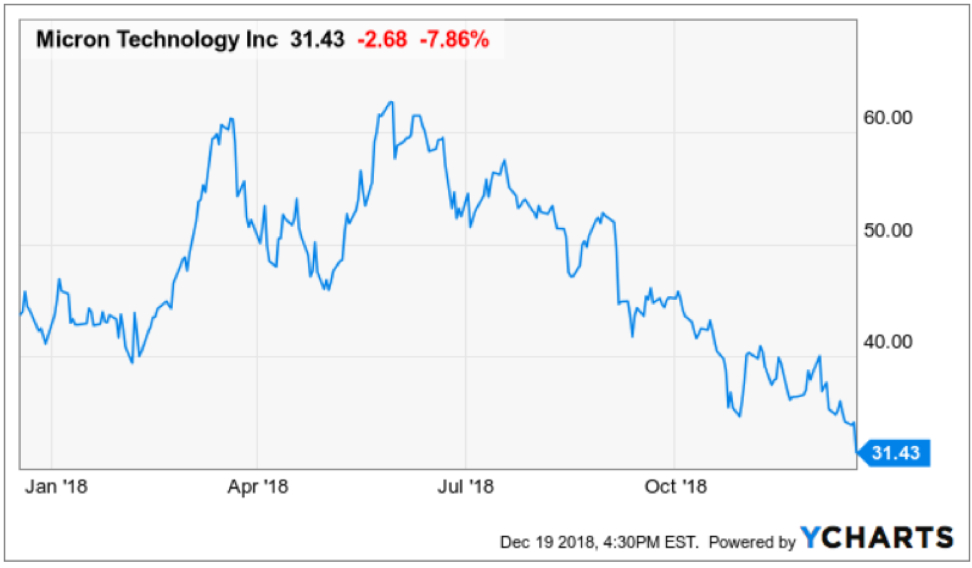
If there was ever a canary in the coal mine, we got one with chipmaker Micron (MU) delivering weak earnings results missing on the top line but squeaking through a one-cent beat on the bottom line.
Love them or hate them, chip companies are susceptible to the boom-bust cycle that is a hallmark of the chip industry.
The beginning of the bust stage of the cycle is upon us with management detailing an “inventory adjustment” that put a damper on revenue.
Micron followed that up by reducing capex for next year and it will take 2-3 quarters to work off this bloated inventory channel.
The perpetrator to the inventory backlog is the smartphone industry.
President and CEO of Micron Sanjay Mehrotra particularly noted “high-end smartphones” as the malefactor tugging down the demand.
This is another damming testament to the prospects of Apple’s (AAPL) suppliers Quorvo (QRVO), Skyworks Solutions (SWKS), NXP Semiconductors (NXPI), Cirrus Logic (CRUS), and Lumentum Holdings (LITE) who can’t catch a break.
The last six months have fired a barrage of poison-tipped arrows at their core business and these stocks are squarely in the no-fly zone until Apple and the trade war can conjure up some good news.
To say these shares are oversold is an understatement, but we are in an extreme trading environment with volatility shooting up the wazoo.
Further reducing the glimmer, Chinese tariffs took up a worrying amount of the conference call dialogue. Investors found out that tariffs pinged half a percent of gross margins.
I have been outright bearish the chip industry from the middle part of the year and Micron is heavily reliant on China for about half of its revenues which is a death sentence in December 2018.
As the China risks have spiked after each head fake détente, so have the execution risks to chip companies with an overly reliant manufacturing process in China.
Not only has the execution risk ratcheted up, but the regulatory risk through costly tariffs is now eroding Micron’s margins.
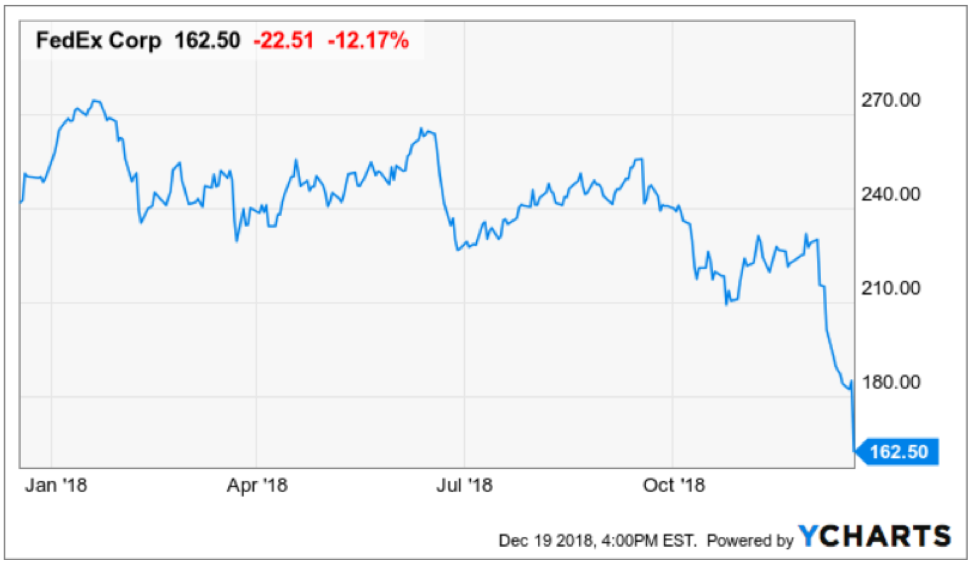
If you thought that was a downer, then FedEx (FDX) made sure the nail was in the coffin by its ghastly earnings report.
The stock sold off hard confirming fears that global growth is decelerating.
Management did not mince their words about the state of the world and investors usually listen because FedEx is a reliable yardstick of the bigger global economy.
CEO of FedEx Fred Smith offered an olive branch painting a picture of a “solid” US economy, but the conundrum is that the US economy and any other country don't exist in a vacuum and that has been highly evident in Britain who is engaging in economic suicide by disengaging from the globalized world.
Smith cited Europe as a stumbling block and blamed the bulk of weak guidance on “bad political choices”, a thinly veiled dig at the poor level of governance carried out around the world lately.
I might chime in that it is quite strange when political parties and sovereign nations adopt the game of chicken as the leading political strategy applying it to everything and anything.
The side effects to business have been startling with management unable to assuage investor sentiment and business plans shredded apart because of impulsive policy moves.
Politicians aren’t grasping fully that stock market moves are inherently tied to the news cycle and the overwhelming volume of bad news that shouldn’t be as bad as it should be, has a multiplier effect on the stock market algos that go haywire.
It truly is the world of the algos and humans are living in their world and not the other way around.
The most important takeaway from FedEx is what they didn’t say.
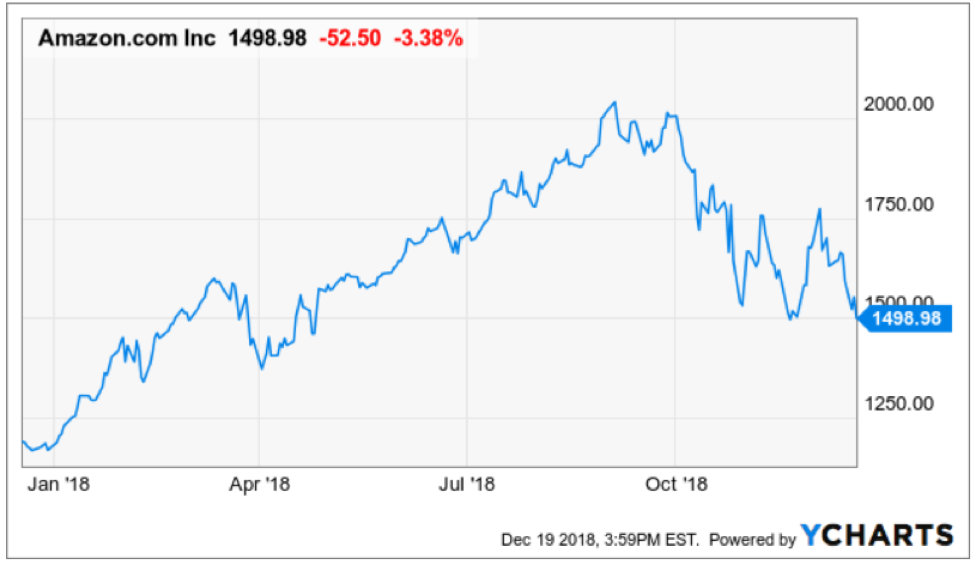
Early development of the de-facto Amazon Airlines has already cost FedEx up to 3% of total volume growth.
And this is just the beginning.
Amazon is still feeling around for the rocks at the bottom while it tries to cross the river.
Once it masters logistics, expect a radical swivel towards the integration of their own airline into the bulk of Amazon.com’s package deliveries.
And when FedEx’s management claims that the market has gotten it wrong about the Amazon threat, that means the market is completely correct.
The market is always right.
Amazon’s master plan is to vertically integrate every last process down to the last mile, the doorbell, and now the microwave as Amazon has rolled out a myriad of smart home products.
FedEx management has to be blind to understand this won’t damage future sales.
It is materially false if FedEx thinks Amazon is not competing with them, and the sad part of this is there is not much FedEx can do about it.
The shipping giant cut its 2019 earnings forecast between $15.50 and $16.60 per share — from $17.20 to $17.80 a share.
FedEx’s goal of eclipsing $1.5 billion in operating income by fiscal 2020 has been shelved disappointing investors. FedEx cratered 12% on a day that saw the Fed do its best body slam imitation on the market.
The first phase of the logistics swivel is taking delivery of 40 planes and constructing a hub that will be able to operate 100 planes, then it will do as Amazon does with everything – scale it to the hills.
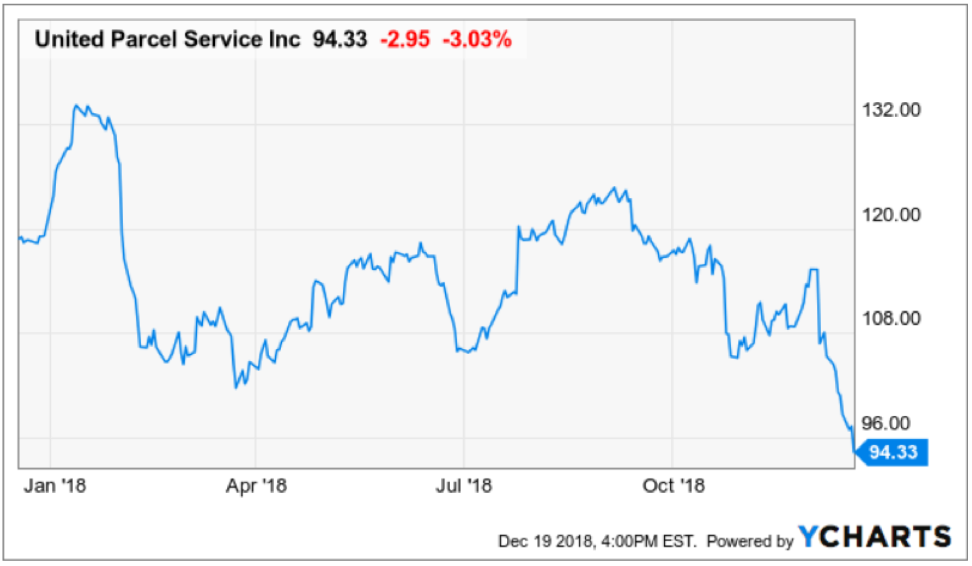
FedEx and UPS have a few years to figure out how to counteract this existential crisis and not decades.
Technology moves that fast now in this interconnected world.
Domestic volume comprises 17% of revenues at UPS and 19% at FedEx, management won’t be able to hide this problem under the carpet as the drag becomes highly visible like a sore thumb.
Analysts expect Amazon Air to offer more than slim savings to its business model saving between $2 to $4 per package next year.
The annual savings add up from $1 billion to $2 billion or 3% to 6% of its global shipping costs.
It is spot-on to admit that over the last few years, the explosion of packages during the holiday shopping season has put higher levels of stress on the U.S. Postal Service, UPS (UPS), and FedEx.
Even though overloaded with business, all three carriers have posted record levels of on-time deliveries and they appear to be handling the surge in volume.
But there will come a moment in time when an inflection point will give Amazon the keys to the car.
They will suddenly stop offering their e-commerce packages to these three carriers and business will drop off a cliff for them.
That is the future these three are confronted with and there is nothing they can do unless they build their own Amazon.com which is a pie in the sky dream at this point.
Amazon is out to prove they can execute the logistic part of their business cheaper and faster than anyone else because of the superior management and mountain of data they can act on.
I believe it will happen.
Part of stretching themselves with a new army of minions in Washington D.C., New York, and Nashville is partly about fulfilling the job of comprehensively and vertically integrating their e-commerce platform.
It will take a horde of workers to make this happen.
If the prophecy from FedEx management comes true and the global economy indeed softens next year, the stock will bear the brunt of the downside momentum and UPS too.
Stay away from the trio of deliverers. There are healthier fishes in the sea.
And as for the chip sector and Apple, wait on the sidelines for some good news.

Global Market Comments
December 14, 2018
Fiat Lux
Featured Trade:
(DECEMBER 12 BIWEEKLY STRATEGY WEBINAR Q&A),
(SPX), (MU), (PYPL), (SPOT), (FXE), (FXY), (XLF), (MSFT), (AMZN), (TSLA), (XOM),
(SIGN UP NOW FOR TEXT MESSAGING OF TRADE ALERTS)

Below please find subscribers’ Q&A for the Mad Hedge Fund Trader December 12 Global Strategy Webinar with my guest and co-host Bill Davis of the Mad Day Trader
Q: Is the bottom in on the S&P 500 (SPX) or are we going to go on another retest?
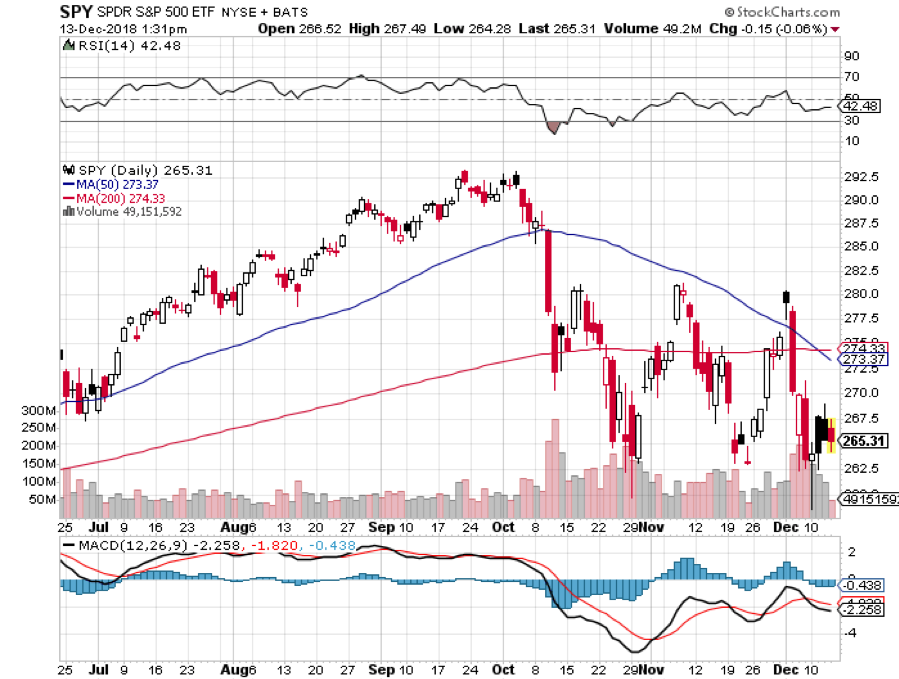
A: It’s stuck right in the 2600-2800 range, and I think that’s probably where we bounce off of 2600 again. The question is whether or not we can clear the top of the range at 2800. If we can’t, I would fully expect a retest of this bottom in which case I could see it going down to 2500.
Q: You say you’ll go 100% cash by Dec 21st but also stated that the S&P 500 will go up 5% by the year's end. Should we stay in until we get the up 5% move?
A: Yes, all of our options positions expire by the 21st but if you’re just long in stocks, I would stay long, probably through the end of the year.
Q: Will the Chinese-U.S. dispute ruin the Tech industry?
A: No, I think the Trump Administration will have to do some kind of deal and call it a victory, otherwise the trade war will pull the U.S. into recession. If we go into the next presidential election with another recession—well, no one has ever survived that. Even with the China-U.S. dispute, the U.S. is still dominant in the Tech industry and will continue to do so for decades to come.
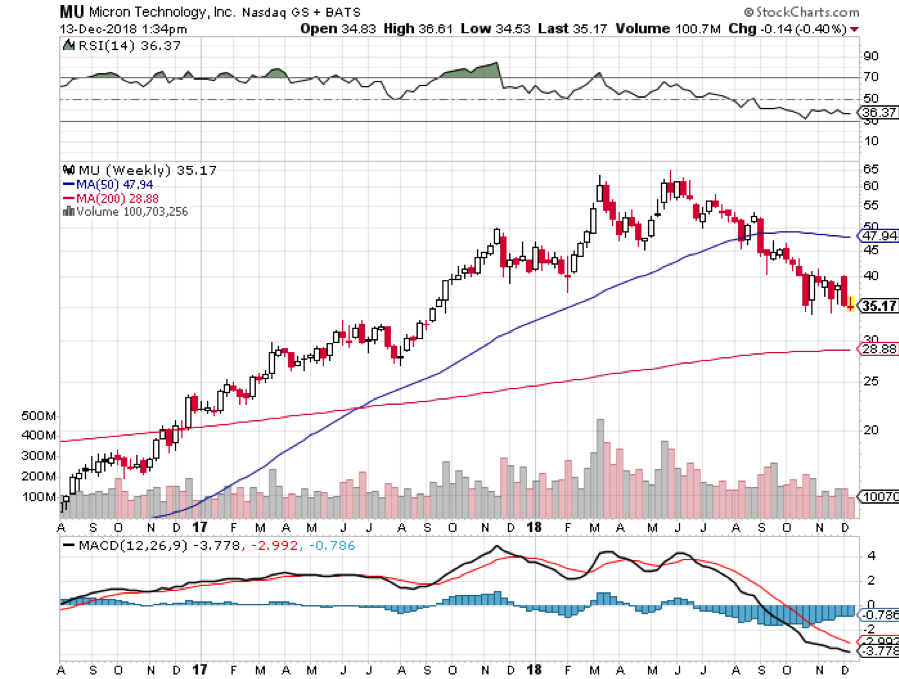
Q: China has managed to duplicate Micron Technology’s (MU) biggest selling chip, undercutting prices—thoughts?
A: True, Micron is the lowest value added of the major chip producers, therefore their stock has gotten hit the worst of any of the chip stocks down by about 46%, but I know Micron very well and they have a whole range of chips they’re currently upgrading, moving themselves up the value change to compete with this. So, that makes it a great company to own for the long term.
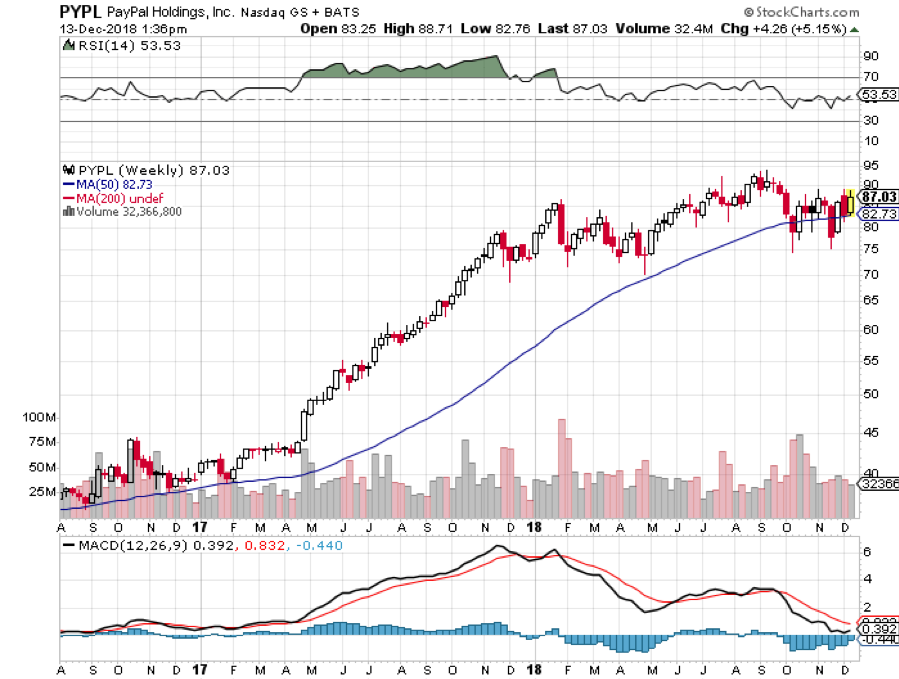
Q: I’m up 90% on my PayPal (PYPL) position—should I take a profit?
A: Yes! Absolutely! How many 90% profits have you had lately? You are hereby excused from this webinar to go execute this trade. And well-done Dr. Denis! And thank you for the offer of a free colonoscopy.
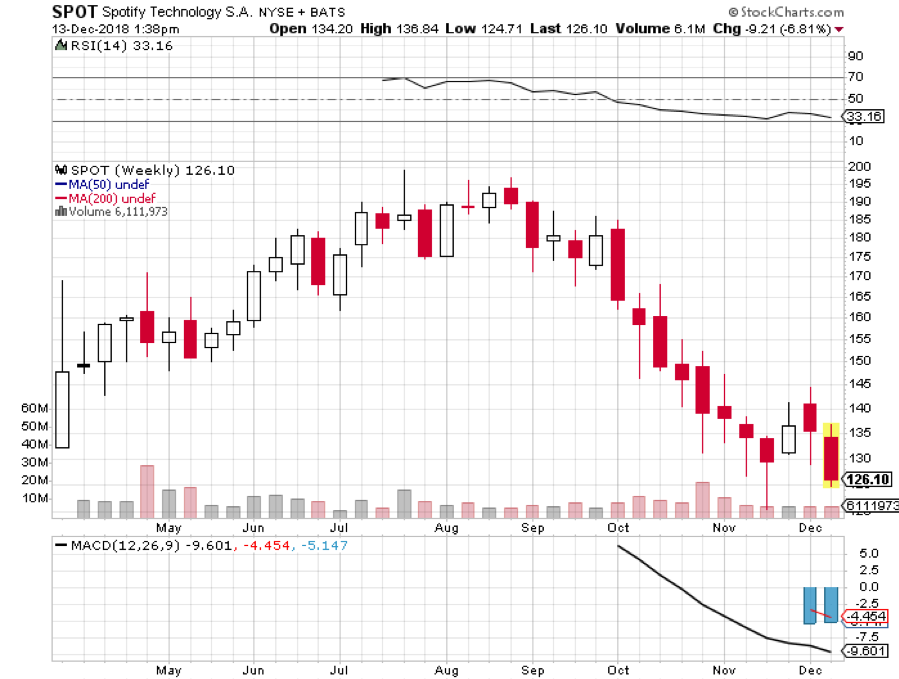
Q: What can you say about Spotify (SPOT)?
A: No, thank you—there’s lots of competition in the music streaming business. We are avoiding the entire space. The added value is not great, and many of these companies will have a short life. And with China’s Tencent growing like crazy, life for Spotify is about to become dull, mean, and brutish.
Q: What’s your view on currencies?
A: So you’re looking to make another fortune? Yes, I think the Euro (FXE) and the Yen (FXY) really are looking hard to rally, and the trigger could be dovish language in the next Fed meeting. Once the Fed slows its rate of interest rates rises, the currencies should take off like a scalded chimp.
Q: Will the banks (XLF) rally in the next 6 months for a better sell?
A: Many people are waiting for a rally in the banks so they can unload them and haven’t gotten it—they’re back to pre-election price levels. The issue here is structural, and you don’t get recoveries from major structural changes in an industry. It’s significant that this is the first bull market that had no net new employment in the banks whatsoever; the business is fading away. They are the new buggy whip makers. These gigantic national branch networks will all be gone in ten years because the banks can’t afford them.
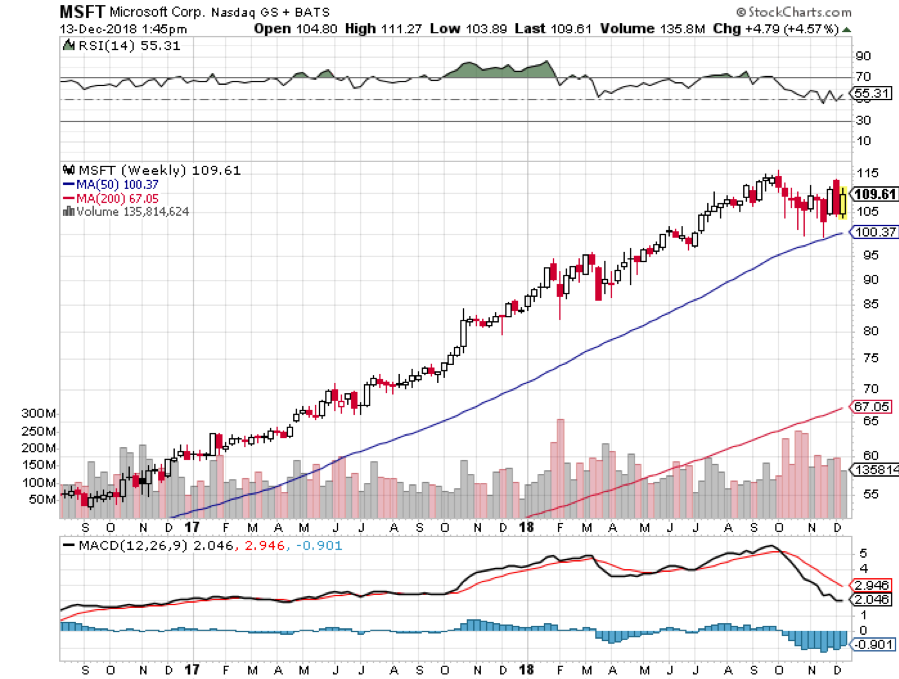
Q: Would you enter the Microsoft (MSFT) trade today?
A: I actually think I would; Microsoft only pulled back 10% when everything else was dropping 30%, 40%, or 50%. That shows you how many people are trying to get into this name so if you could take a little short-term pain (like 5%), the stock outright is probably a screaming buy here. I think it’ll go to $200 one day, so here at $110-$111 it looks like a pretty good deal. The story here is that Microsoft is rapidly taking market share from Amazon (AMZN) in the cloud business and that’s going to continue.
Q: When will you be updating your long-term model portfolio?
A: I usually do it at the end of the year, and rarely make any big changes. I’ll still be selling short bonds and still like Tesla (TSLA) and Exxon (XOM).
Q: I just joined your service. What is the best way to get started?
A: I’ll give you the same advice that I gave every starting trader at Morgan Stanley (MS). Start trading on paper only. When you are making money reliably on paper, move up to using real money, but only with one contract per position. When that is successful, slowly increase your size to 2, 3, 5, 10, and 20 contracts. Pretty soon, you will be swinging around 1,000 contracts a lot like I do. The further you move down the learning curve the greater you can increase your size and your risk. If you never get past the paper stage at least it’s not costing you any money.
I hope this helps.
Good luck and good trading.
John Thomas
CEO & Publisher
The Diary of a Mad Hedge Fund Trader

Mad Hedge Technology Letter
November 21, 2018
Fiat Lux
Featured Trade:
(FIVE TECH STOCKS TO SELL SHORT ON THE NEXT RALLY)
(WDC), (SNAP), (STX), (APRN), (AMZN), (KR), (WMT), (MSFT), (ATVI), (GME), (TTWO), (EA), (INTC), (AMD), (FB), (BBY), (COST), (MU)
Next year is poised to be a trading year that will bring tech investors an added dimension with the inclusion of Uber and Lyft to the public markets.
It seemed that everything that could have happened in 2018 happened.
Now, it’s time to bring you five companies that I believe could face a weak 2019.
Every rally should be met with a fresh wave of selling and one of these companies even has a good chance of not being around in 2020.
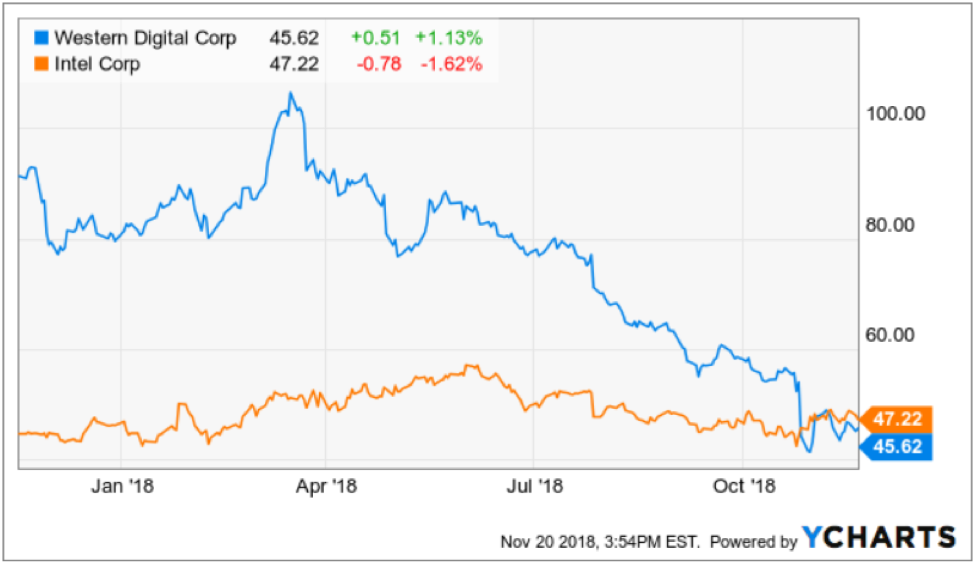
Western Digital (WDC)
I have been bearish on this company from the beginning of the Mad Hedge Technology Letter and this legacy firm is littered with numerous problems.
Western Digital’s structural story is broken at best.
They are in the business of selling hard disk drive products.
These products store data and have been around for a long time. Sure the technology has gotten better, but that does not mean the technology is more useful now.
The underlying issue with their business model is that companies are moving data and operations into cloud-based products like the Microsoft (MSFT) Azure and Amazon Web Services.
Why need a bulky hard drive to store stuff on when a cloud seamlessly connects with all devices and offers access to add-on tools that can boost efficiency and performance?
It’s a no-brainer for most companies and the efficiency effects are ratcheted up for large companies that can cohesively marry up all branches of the company onto one cloud system.
Even worse, (WDC) also manufactures the NAND chips that are placed in the hard drives.
NAND prices have faltered dropping 15% of late. NAND is like the ugly stepsister of DRAM whose large margins and higher demand insulate DRAM players who are dominated by Micron (MU), Samsung, and SK Hynix.
EPS is decelerating at a faster speed and quarterly sales revenue has plateaued.
Add this all up and you can understand why shares have halved this year and this was mainly a positive year for tech shares.
If there is a downtown next year in the broader market, watch out below as this company is first on the chopping block as well as its competitor Seagate Technology (STX).
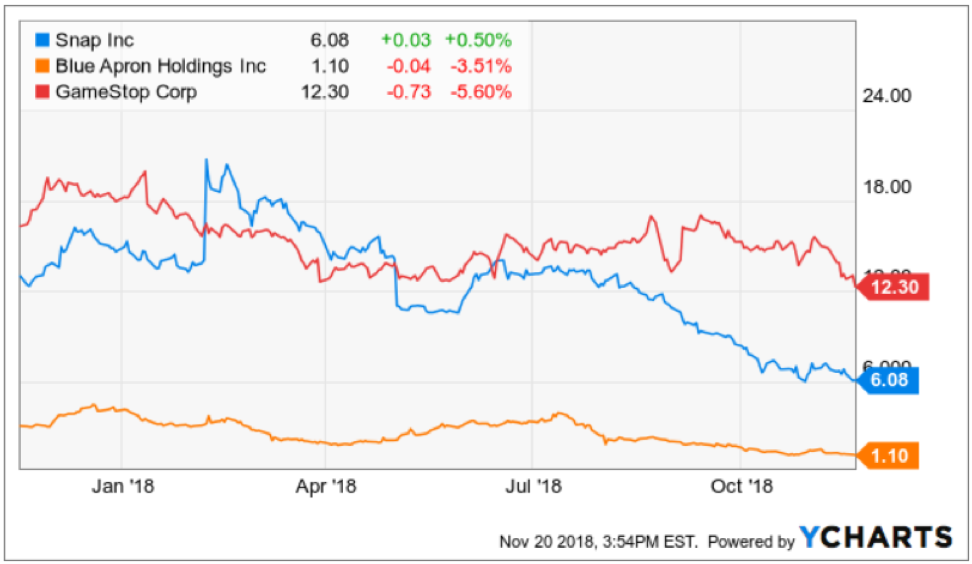
Snapchat (SNAP)
This company must be the tech king of terrible business models out there.
Snapchat is part of an industry the whole western world is attempting to burn down.
Social media has gone for cute and lovable to destroy at all cost. The murky data-collecting antics social media companies deploy have regulators eyeing these companies daily.
More successful and profitable firm Facebook (FB) completely misunderstood the seriousness of regulation by pigeonholing it as a public relation slip-up instead of a full-blown crisis threatening American democracy.
Snapchat is presiding over falling daily active user growth at such an early stage that usership doesn’t even pass 100 million DAUs.
Management also alienated the core user base of adolescent-aged users by botching the redesign that resulted in users bailing out of Snapchat.
Snapchat has been losing high-level executives in spades and fired a good chunk of their software development team tagging them as the scapegoat that messed up the redesign.
Even more imminent, Snapchat is burning cash and could face a cash crunch in the middle of next year.
They just announced a new spectacle product placing two frontal cameras on the glass frame. Smells like desperation and that is because this company needs a miracle to turn things around.
If they hit the lottery, Snap could have an uptick in its prospects.
GameStop (GME)
This part of technology is hot, benefiting from a generational shift to playing video games.
Video games are now seen as a full-blown cash cow industry attracting gaming leagues where professional players taking in annual salaries of over $1 million.
Gaming is not going away but the method of which gaming is consumed is changing.
Gamers no longer venture out to the typical suburban mall to visit the local video games store.
The mushrooming of broad-band accessibility has migrated all games to direct downloads from the game manufacturers or gaming consoles’ official site.
The middleman has effectively been cut out.
That middleman is GameStop who will need to reinvent itself from a video game broker to something that can accrue real value in the video game world.
The long-term story is still intact for gaming manufactures of Activision (ATVI), EA Sports (EA), and Take-Two Interactive (TTWO).
The trio produces the highest quality American video games and has a broad portfolio of games that your kids know about.
GameStop’s annual revenue has been stagnant for the past four years.
It seems GameStop can’t find a way to boost its $9 billion of annual revenue and have been stuck on this number since 2015.
If you do wish to compare GameStop to a competitor, then they are up against Best Buy (BBY) which is a better and more efficiently run company.
Then if you have a yearning to buy video games from Best Buy, then you should ask yourself, why not just buy it from Amazon with 2-day free shipping as a prime member.
The silver lining of this business is that they have a nice niche collectibles division that hopes to deliver over $1 billion in annual sales next year growing at a 25% YOY clip.
But investors need to remember that this is mainly a trade-in used video game company.
Ultimately, the future looks bleak for GameStop in an era where the middleman has a direct path to the graveyard, and they have failed to digitize in an industry where digitization is at the forefront.
Blue Apron
This might be the company that is in most trouble on the list.
Active customers have fallen off a cliff declining by 25% so far in 2018.
Its third quarter earnings were nothing short of dreadful with revenue cratering 28% YOY to $150.6 million, missing estimates by $7 million.
The core business is disappearing like a Houdini act.
Revenue has been decelerating and the shrinking customer base is making the scope of the problem worse for management.
At first, Blue Apron basked in the glory of a first mover advantage and business was operating briskly.
But the lack of barriers to entry really hit the company between the eyes when Amazon (AMZN), Walmart (WMT), and Kroger (KR) rolled out their own version of the innovative meal kit.
Blue Apron recently announced it would lay off 4% of its workforce and its collaboration with big-box retailer Costco (COST) has been shelved indefinitely before the holiday season.
CFO of Blue Apron Tim Bensley forecasts that customers will continue to drop like flies in 2019.
The company has chosen to focus on higher-spending customers, meaning their total addressable market has been slashed and 2019 is shaping up to be a huge loss-making year for the company.
The change, in fact, has flustered investors and is a great explanation of why this stock is trading at $1.
The silver lining is that this stock can hardly trade any lower, but they have a mountain to climb along with strategic imperatives that must be immediately addressed as they descend into an existential crisis.
Intel (INTC)
This company is the best of the five so I am saving it for last.
Intel has fallen behind unable to keep up with upstart Advanced Micro Devices (AMD) led by stellar CEO Dr. Lisa Su.
Advanced Micro Devices is planning to launch a 7-nanometer CPU in the summer while Intel plans to roll out its next-generation 10-nanometer CPUs in early 2020.
The gulf is widening between the two with Advanced Micro Devices with the better technology.
As the new year inches closer, Intel will have a tough time beating last year's comps, and investors will need to reset expectations.
This year has really been a story of missteps for the chip titan.
Intel dealt with the specter security vulnerability that gave hackers access to private data but later fixed it.
Executive management problems haven’t helped at all.
Former CEO of Intel Brian Krzanich was fired soon after having an inappropriate relationship with an employee.
The company has been mired in R&D delays and engineering problems.
Dragging its feet could cause nightmares for its chip development for the long haul as they have lost significant market share to Advanced Micro Devices.
Then there is the general overhang of the trade war and Intel is one of the biggest earners on mainland China.
The tariff risk could hit the stock hard if the two sides get nasty with each other.
Then consider the chip sector is headed for a cyclical downturn which could dent the demand for Intel chip products.
The risks to this stock are endless and even though Intel registered a good earnings report last out, 2019 is set up with landmines galore.
If this stock treads water in 2019, I would call that a victory.