• support@madhedgefundtrader.com
  • Member Login
Mad Hedge Fund Trader
  • Home
  • About
  • Store
  • Luncheons
  • Testimonials
  • Contact Us
  • Click to open the search input field Click to open the search input field Search
  • Menu Menu

Tag Archive for: (TDOC)

Mad Hedge Fund Trader

The Market Outlook for the Week Ahead, or Parachuting Without a Parachute

Diary, Newsletter, Research

It has been the worst New Year stock market opening in history.

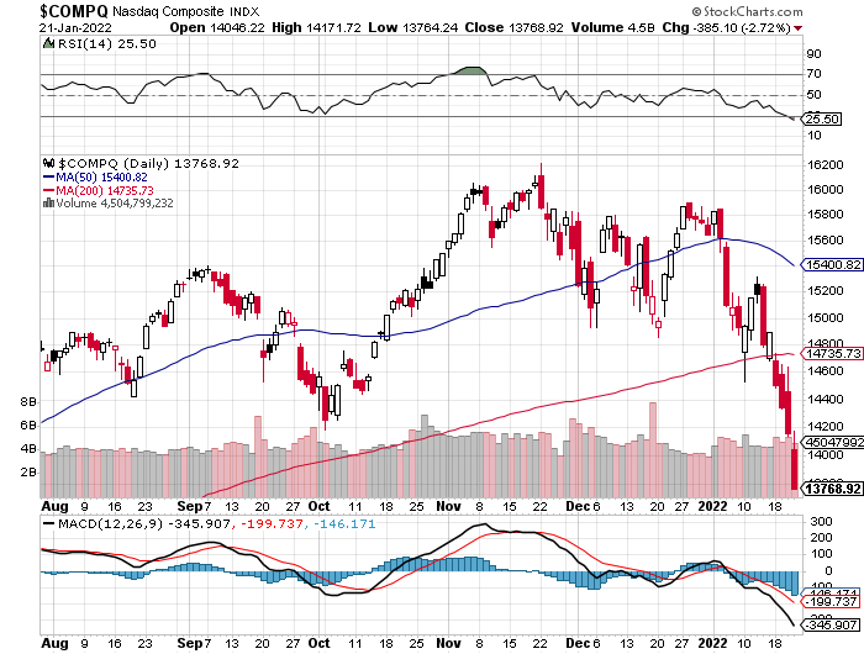
After a two-day fake-out to the upside, stocks rolled over like the Bismarck and never looked up. NASDAQ did its best interpretation of flunking parachute school without a parachute, posting the worst month since 2008.

Markets can’t hold on to any rally longer than nanoseconds, and the last hour of the day has turned into one from hell.

What is even more confusing is that stocks are now trading like commodities, with massive one-way moves, while commodities, like oil (USO), copper( FCX), and iron ore (VALE) have resumed a steady grind up.

We had a lovefest going on here at Incline Village, Nevada for Technology and Bitcoin researcher Arthur Henry has been staying with me for the week to plot market strategy.

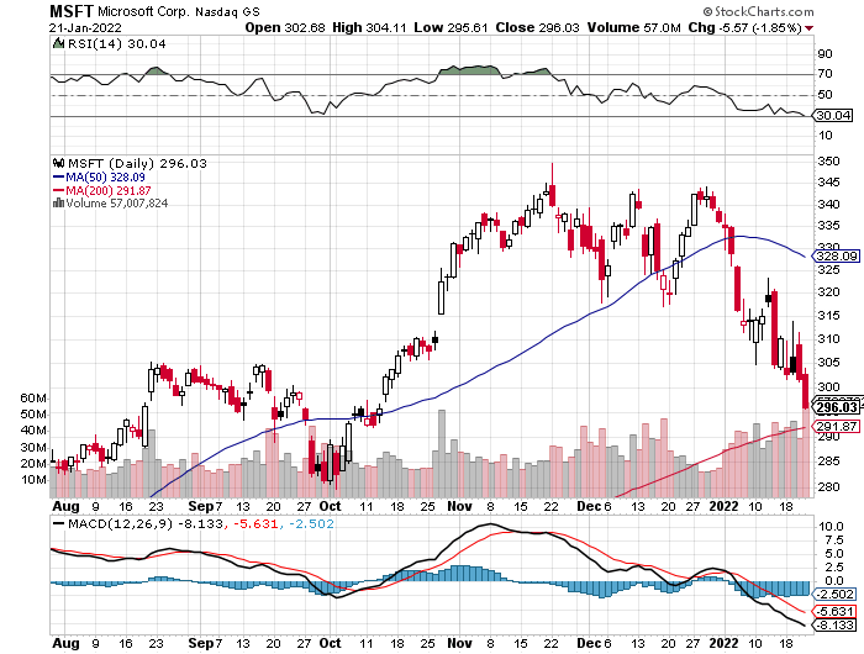
Once the market showed its hand, I sold short Microsoft (MSFT), which elicited torrents of complaints from readers. Then Arthur sold short Netflix (NFLX), inviting refund demands. Then I sold short Apple (AAPL), prompting accusations of high treason. Then Arthur sold short Teledoc (TDOC). There wasn’t a lot of talking, but frenetic writing and emailing instead.

Followers cried all the way to the bank.

In a mere two weeks, the price earnings multiple for the S&P 500 plunged from 22X to 20X. A lot of traders were only buying stock because they were going up. Take out the “up” and Houston we have a problem.

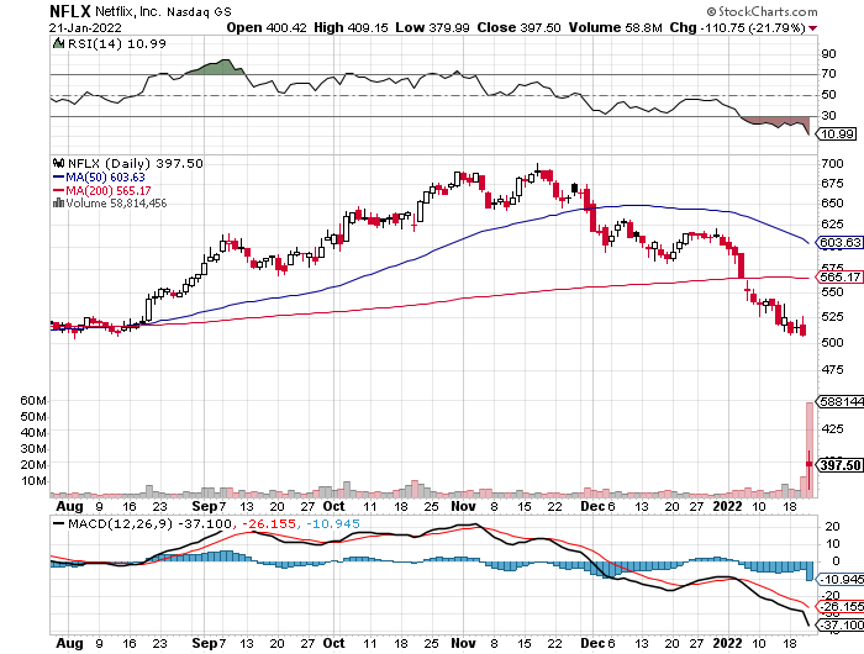
The entire streaming industry seems to have gone up in smoke and ex-growth practically overnight. Netflix (NFLX) delivered a gob smacking 29.5% swan dive in the wake of disappointing subscriber growth forecasts. Walt Disney (DIS), which ate the Netflix lunch, was dragged down 10% through guilt by association.

It is often said that the stock market has discounted 12 of the last six recessions. It is currently pricing in one of those non-recessions. What we are seeing is a sudden growth scare of the first order.

Despite last week’s carnage, stocks are still the most attractive asset class in the world, offering a potential 10% return in 2022. The problem is that they may make that 10% profit starting from 10% lower than here.

Despite all the red ink, big tech stocks are still on track to see a 30% earnings growth this year, and they account for a hefty 28% of the market.

Let’s look at Apple’s past declines for guidance on this meltdown.

Steve Jobs’ creation gave back 60% in the 2008 Great Recession, 34% during the 2015 growth scare, 48% during the great 2018 Christmas collapse, and 28% in the 2020 pandemic crash. So, the good news is that you won’t get killed by this selloff, you’ll just lose an arm and a leg. But they’ll grow back.

Remember, it’s always darkest just before it goes completely black. This correction is survivable, although it may not seem so at the moment.

It does vindicate my 2022 view that the first half will be about survival and that big money can be had in the second half.

So far, so good.

The Market is De-Grossing Big Time. That means cutting total market exposure and selling everything, regardless of stock or sector. The market is discounting a recession and bear market that isn’t going to happen, which occurs often. When it ends in a few weeks, interest rate sensitives, especially the banks, will bounce back hard, but tech won’t. Buy (JPM), (WFC), and (BAC) on bigger dips.

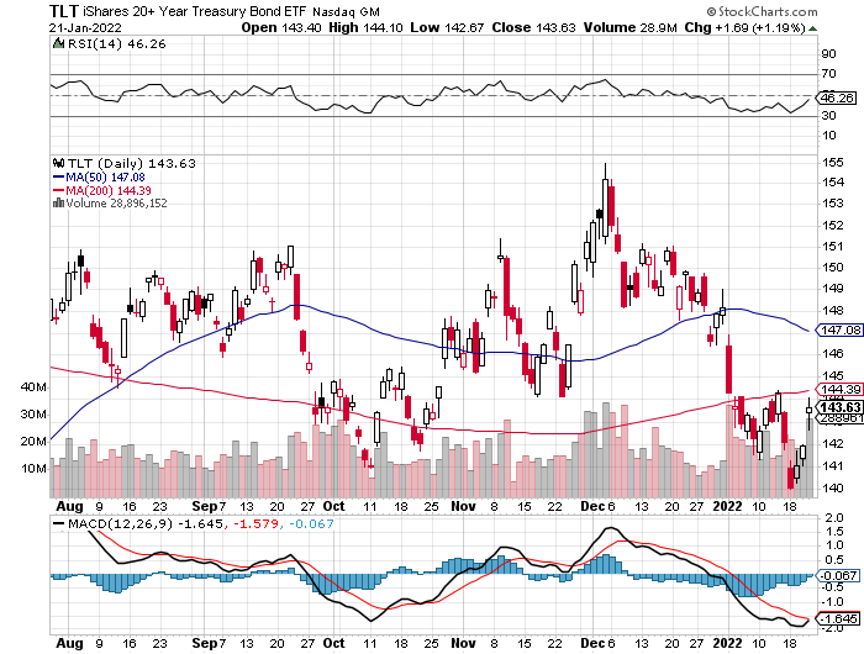
The Bond Collapse Goes Global, with German 10-year bunds going positive for the first time in three years, up 40 basis points in a month. Yes, inflation is finally hitting the Fatherland, home of post-WWI billion percent inflation. Eurozone inflation just topped 5%, well above its 2% target. British inflation hit a 30-year high.  The move has lit a fire under all Euro currencies. Methinks the down move in (TLT) has more to go.

Fed to Raise Rates Eight Times, says Marathon Asset Management. That’s what will be needed to curb the current runaway inflation now at 7.0% and still rising. Personally, I think it will be 12 quarter-point increments to peak out at a 3 ¼% overnight rate. Any more and Powell might bring on a recession.

NASDAQ
is Officially in Correction, down 10%, in the wake of poor performance this month. It’s the fourth one since the pandemic began two years ago. Tesla (TSLA), Amazon (AMZN), and NVIDIA (NVDA) have been leading the swan dive, all felled by rapidly rising interest rates. This could go on for months.

Weekly Jobless Claims Hit 286,000, a four-month high, as omicron sends workers fleeing home.

Goldman Sachs (GS) Gets Crushed, down 8%, on disappointing earnings. Tough market conditions are fading trading volumes while 2021 bonuses were through the roof. The move is particularly harsh in that buyers were flooding in right at support at the 200-day moving average.

China GDP (FXI) Grows 8.1% YOY but is rapidly slowing now, thanks to Omicron. China was first in and first out with the pandemic but is getting hit much harder in this round. That has prompted new mass lockdowns which will make out own supply chain problems worse for longer. In Chinese, “lockdown” means they weld your door shut, unlike here. Harsh, but it works.

Oil (USO) Hits Seven-Year High, as inventories hit a 21-year low. No new capital is entering the industry, crimping supplies as old fields play out. The threat of a Russian invasion of the Ukraine is prompting advance stockpiling. Russia is the world’s second-largest oil exporter.

Existing Homes Sales Hit a 15-Year High, at 6.12 million, the best since 2006. December fell 4.6%. Extreme inventory shortage is the issue, with only 910,000 homes for sale at the end of the year, an incredibly low 1.8-month supply. You can’t find anything on the market now, to buy or rent. The median price of a home sold in December was $358,000, a 15.8% gain YOY.

Bitcoin (BITO) Crashes, decisively breaking key support at $40,000. Non-yielding assets of every description are getting wiped. Bail on all crypto options plays asap.


My Ten-Year View

When we come out the other side of pandemic, we will be perfectly poised to launch into my new American Golden Age, or the next Roaring Twenties. With interest rates still at zero, oil cheap, there will be no reason not to. The Dow Average will rise by 800% to 240,000 or more in the coming decade. The American coming out the other side of the pandemic will be far more efficient and profitable than the old. Dow 240,000 here we come!

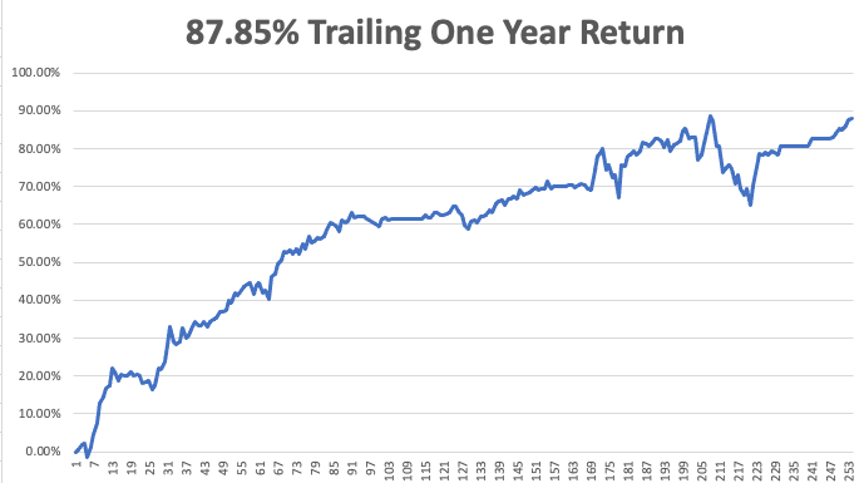
With the pandemic-driven meltdown on Friday, my January month-to-date performance bounced back hard to 5.05%. My 2022 year-to-date performance also ended at 5.05%. The Dow Average is down -6.12% so far in 2022.

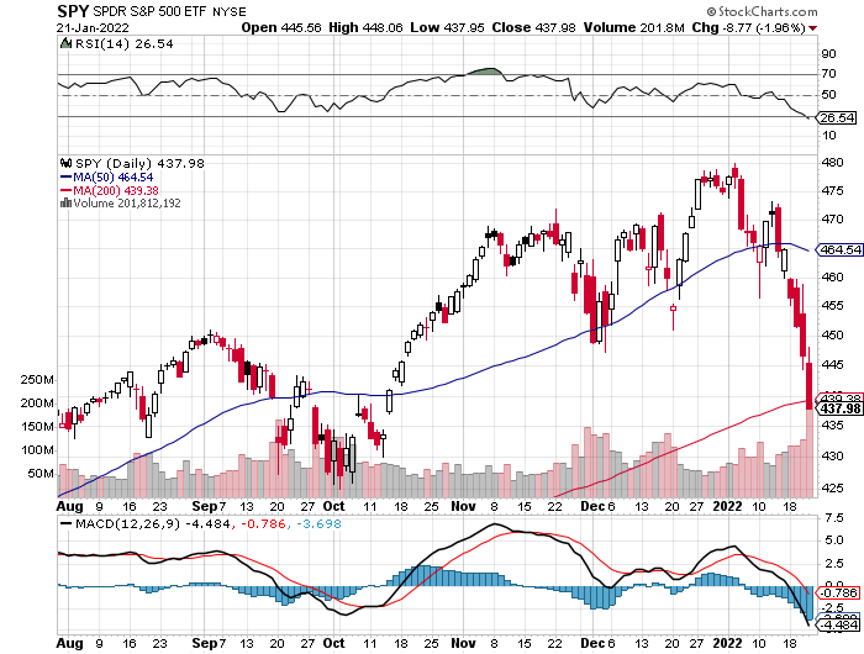
Once stocks went into free fall, I piled on the short positions as fast as I could write the trade alerts, including in Microsoft (MSFT), Apple (AAPL), and a double short in the S&P 500 (SPY). I also increased my shorts in the bond market (TLT) to a triple position. When prices became the most extreme, when the Volatility Index (VIX) hit $30, I bought both (SPY) and (TLT).

If everything goes our way, we should be up 14.26% by the February 18 options expiration.

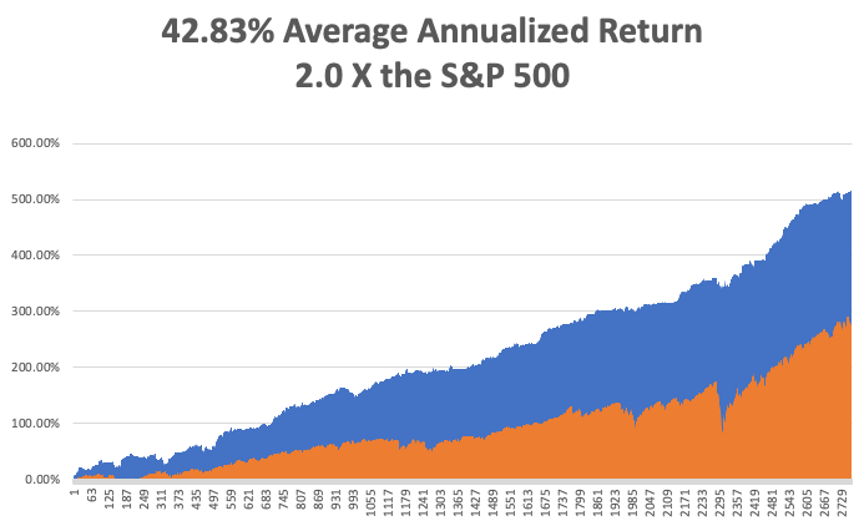
That brings my 12-year total return to 517.61%, some 2.00 times the S&P 500 (SPX) over the same period. My 12-year average annualized return has ratcheted up to 42.82% easily the highest in the industry.

We need to keep an eye on the number of US Coronavirus cases at 71 million and rising quickly and deaths topping 866,000, which you can find here.

On Monday, January 24 at 6:45 AM, The Market Composite Flash PMI for January is out. Haliburton (HAL) reports.

On Tuesday, January 25 at 6:00 AM, the S&P Case Shiller National Home Price Index for November is released. American Express (AXP) reports.

On Wednesday, January 26 at 7:00 AM, the New Home Sales for December are published. At 11:00 AM The Federal Reserve interest rate decision is announced. Tesla (TSLA), Boeing (BA), and Freeport McMoRan (FCX) report.

On Thursday, January 27 at 8:30 AM the Weekly Jobless Claims are disclosed. We also get the first look at US Q4 GDP. Alaska Air (ALK) and US Steel (X) report.

On Friday, January 28 at 5:30 AM EST US Personal Income & Spending is printed. Caterpillar (CAT) reports. At 2:00 PM, the Baker Hughes Oil Rig Count is out.

As for me, when I drove up to visit my pharmacist in Incline Village, Nevada, I warned him in advance that I had a question he never heard before: How good is 80-year-old morphine?

He stood back and eyed me suspiciously. Then I explained in detail.

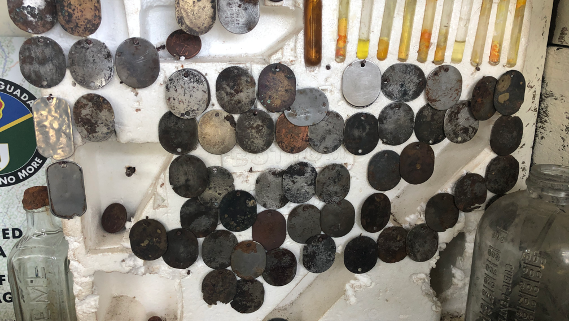
Two years ago, I led an expedition to the South Pacific Solomon Island of Guadalcanal for the US Marine Corps Historical Division (click here for the link). My mission was to recover physical remains and dog tags from the missing-in-action there from the epic 1942 battle.

Between 1942 and 1944, nearly four hundred Marines vanished in the jungles, seas, and skies of Guadalcanal. They were the victims of enemy ambushes and friendly fire, hard fighting, malaria, dysentery, and poor planning.

They were buried in field graves, in cemeteries as unknowns, if not at all left out in the open where they fell. They were classified as “missing,” as “not recovered,” as “presumed dead.”

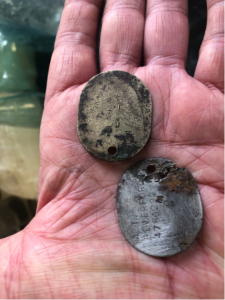
I managed to accomplish this by hiring an army of kids who knew where the most productive battlefields were, offering a reward of $10 a dog tag, a king's ransom in one of the poorest countries in the world. I recovered about 30 rusted, barely legible oval steel tags.

They also brought me unexploded Japanese hand grenades (please don’t drop), live mortar shells, lots of US 50 caliber and Japanese 7.7 mm Arisaka ammo, and the odd human jawbone, nationality undetermined.

I also chased down a lot of rumors.

There was said to be a fully intact Japanese zero fighter in flying condition hidden in a container at the port for sale to the highest bidder. No luck there.

There was also a just discovered intact B-17 Flying Fortress bomber that crash-landed on a mountain peak with a crew of 11. But that required a four-hour mosquito-infested jungle climb and I figured it wasn’t worth the malaria.

Then, one kid said he knows the location of a Japanese hospital. He led me down a steep, crumbling coral ravine, up a canyon and into a dark cave. And there it was, a Japanese field hospital untouched since the day it was abandoned in 1943.

The skeletons of Japanese soldiers in decayed but full uniform laid in cots where they died. There was a pile of skeletons in the back of the cave. Rusted bottles of Japanese drugs were strewn about, and yellowed glass sachets of morphine were scattered everywhere. I slowly backed out, fearing a cave-in.

It was creepy.

I sent my finds to the Marine Corps at Quantico, Virginia, who traced and returned them to the families. Often the survivors were the children or even grandchildren of the MIAs. What came back were stories of pain and loss that had finally reached closure after eight decades.

Wandering about the island, I often ran into Japanese groups with the same goals as mine. My Japanese is still fluent enough to carry on a decent friendly conversation with the grandchildren of their veterans. It turned out I knew far more about their loved ones than they. After all, it was our side that wrote the history. They were very grateful.

How many MIAs were they looking for? 30,000! Every year, they found hundreds of skeletons, cremated in a ceremony, one of which I was invited to. The ashes were returned to giant bronze urns at Yasakuni Ginja in Tokyo, the final resting place of hundreds of thousands of their own.

My pharmacist friend thought the morphine I discovered had lost half of its potency. Would he take it himself? No way!

As for me, I was a lucky one. My dad made it back from Guadalcanal, although the malaria and post-traumatic stress bothered him for years. And you never wanted to get in a fight with him….ever.

I can work here and make money in the stock market all day long. But my efforts on Guadalcanal were infinitely more rewarding. I’ll be going back as soon as the pandemic ends, now that I know where to look.

Stay Healthy.

John Thomas
CEO & Publisher
The Diary of a Mad Hedge Fund Trader
 

True MIAs, the Ultimate Sacrifice
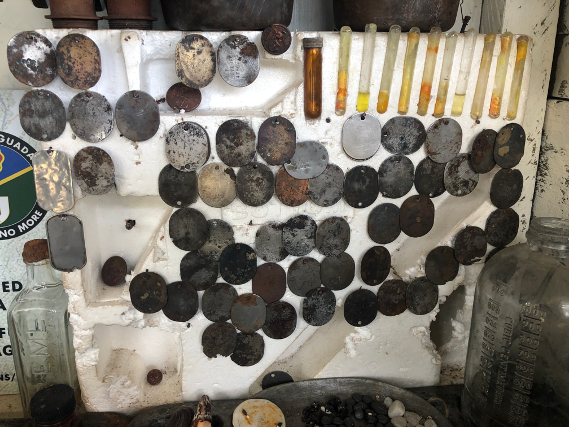
 

My Collection of Dog Tags and Morphine

 

My Army of Scavengers
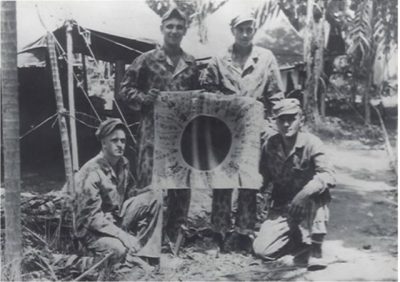
 

Dad on Guadalcanal (lower right)


https://www.madhedgefundtrader.com/wp-content/uploads/2022/01/dog-tags-morphine.png 428 570 Mad Hedge Fund Trader https://madhedgefundtrader.com/wp-content/uploads/2019/05/cropped-mad-hedge-logo-transparent-192x192_f9578834168ba24df3eb53916a12c882.png Mad Hedge Fund Trader2022-01-24 09:02:122022-01-24 16:51:22The Market Outlook for the Week Ahead, or Parachuting Without a Parachute
Mad Hedge Fund Trader

January 14, 2022

Tech Letter

Mad Hedge Technology Letter
January 14, 2022
Fiat Lux

Featured Trade:

(AVOID ARKK INNOVATION FUND LIKE THE PLAGUE)
(ARKK), (GOOGL), (TDOC), (ZM)

https://madhedgefundtrader.com/wp-content/uploads/2019/05/cropped-mad-hedge-logo-transparent-192x192_f9578834168ba24df3eb53916a12c882.png 0 0 Mad Hedge Fund Trader https://madhedgefundtrader.com/wp-content/uploads/2019/05/cropped-mad-hedge-logo-transparent-192x192_f9578834168ba24df3eb53916a12c882.png Mad Hedge Fund Trader2022-01-14 16:04:382022-01-14 16:38:50January 14, 2022
Mad Hedge Fund Trader

Avoid ARKK Innovation Like the Plague

Tech Letter

I was a little taken aback by the content and attitude of boutique investment fund CEO and CIO of Ark Invest Cathie Woods as I watched her podcast -- set in a palatial estate with vaulted ceilings.

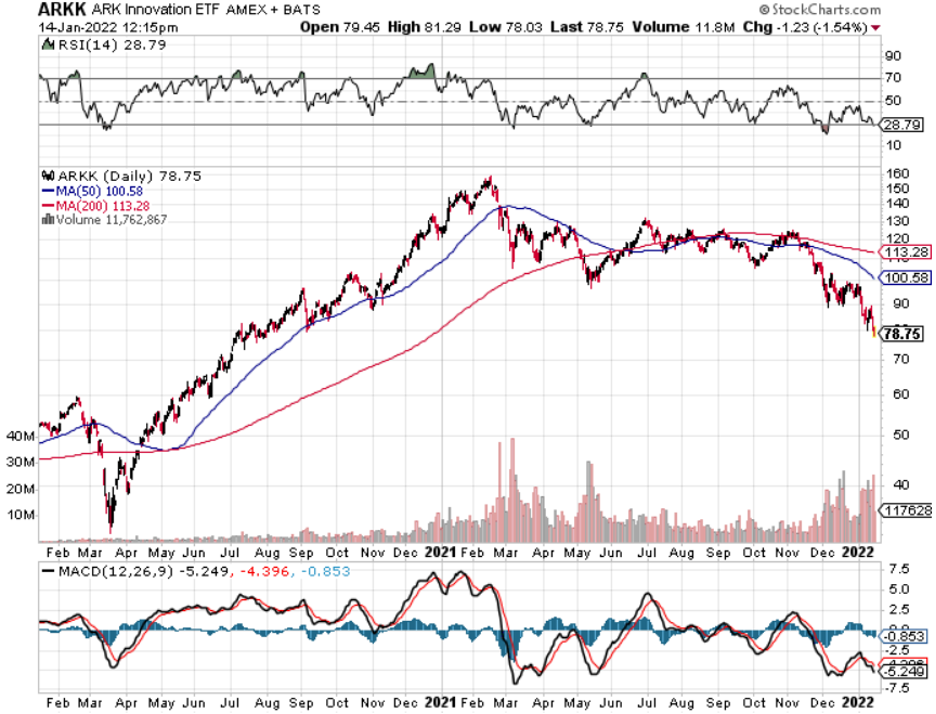
The line that stuck out to me was when she began to explain that the ARK Innovation ETF (ARKK) is made up of “real companies with real revenue.”

Well, so is the liquor store down the street and that doesn’t mean we should all bandy together with each other, sing kumbaya and bet the ranch on this ETF fund that dabbles in ultra-high growth tech stocks.

She continued to praise her strategy by comparing ARKKs relative success with the dot com crash where companies were based on thin air and accrued massive valuations for nothing.

That’s a bad comparison because it was a different era and time, and just because that market then was frothy, it has nothing to do with a higher ARKK stock price in the short term.

She then explains to us viewers that she has never been so convinced by companies like Teledoc (TDOC) and this is a company that has experienced about a 400% drop in share price in the past 365 days.

The reason she gives support for TDOC is because they do $2 billion in annual revenue and then she followed that up by saying how great Zoom Video (ZM) is because their revenue has gone up “4-fold during the coronavirus” but fails to mention that their stock is down about 400% since October 2020.

She laments that these stocks have recently been treated as “stay at home” stocks and I believe that giving such an excuse to why these stocks have been performing poorly lately makes her look like she doesn’t know what she is doing.

If she champions TDOC for doing $2 billion in annual revenue, then why not invest in Alphabet (GOOGL) which does $180 billion of revenue per year. According to her math, GOOGL is a 90X better investment than TDOC.

In her video interview, she starts to explain the inflationary monster which of course, she has an incentive to downplay. Low rates mean a better environment for growth stocks to operate in.

She continues to explain that used car prices are up 60% but that “bubble has burst” because sales are down 4 recently.

Again, she is grasping for straws here because she has an incentive to.

Another data point she tries to spin off as anti-inflationary is the increase in average wages and explains that a 0.6% increase is the “lower end of the guidance” so that certainly will trend down.

Again, nominal wages have exploded in all industries, and this is again proof she likes to reverse engineer stats to fit her own interests.

During this interview or fireside chat, Woods appears to be an expert at cherry-picking data points that are in her best interest.

She fails to acknowledge that her timing of equity purchases is just as important as the type of stocks bought, and her recent timing has been terrible.

Her response to the underperformance was to blame the market and pontificate that the “dismissal (of her ARKK fund ETF) is misplaced” and “analysts and investors aren’t doing their homework.”

Her attempt to shift blame on the market is comical and the real traders in the room know that the market decides the prices of assets and not anyone or any organization can dictate the market to the market.

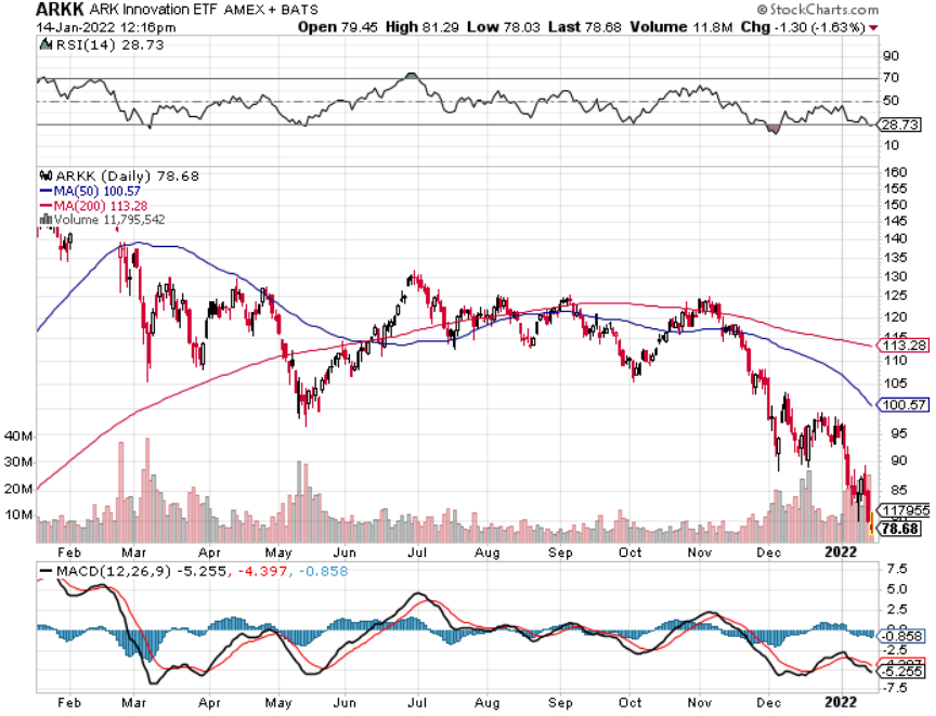
Showing a little humility might do her a little good as Ark Innovation ETF suffered an outflow of $352 million Wednesday, the biggest one-day drop since March.

She explains the Fed policy towards higher rates as just “jawboning” and begins to explain how she is seeing some anti-inflationary data coming down the pipeline imminently.

I will tell Woods that this “jawboning” isn’t just that, it’s real. The Fed is poised to react to combat inflation and not raising interest rates as fast as she thought doesn’t mean the narrative immediately evolves into something even close to anti-inflationary.

We are so far from that sentiment and her reaction is to dismiss anything that is a threat to her fund.

Sadly enough, she wants things how it was in 2020, massive amounts of quantitative easing for that capital to flow into her ARKK fund.

I am not saying that won’t ever happen again, but the zeitgeist must overcome the higher rates narrative that has completely consumed the broader market which is why tech growth has been hammered lately.

Her failure to act has meant her investors are down 50% in the last 13 months. Buying at tops are dangerous and even more important, she doesn’t describe the current market and describes only what she wants to happen in the future as it relates to higher ARKK prices.

I wouldn’t call that breaching her fiduciary responsibilities, but she is playing a snake oil saleswoman at her finest.

This could be a case of her thinking that she is playing with houses’ money, a longer time frame shows that ARKK is still up more than 300% since 2017.

If you ever feel like getting into high tech growth, avoid this fund, just buy the stocks you like outright.

This is an example of how ETFs will not work in today’s climate, as ETFs only function properly if they go up every year.

The markets could spend the first third of the year grappling with higher rates, and there will be another time to buy tech growth. For Woods to completely ignore her failure of timing the tech growth market, it shows she isn’t looking out for your best interest as an investor.

Avoid tech growth today until we get through the short-term challenges.


arkk


https://madhedgefundtrader.com/wp-content/uploads/2019/05/cropped-mad-hedge-logo-transparent-192x192_f9578834168ba24df3eb53916a12c882.png 0 0 Mad Hedge Fund Trader https://madhedgefundtrader.com/wp-content/uploads/2019/05/cropped-mad-hedge-logo-transparent-192x192_f9578834168ba24df3eb53916a12c882.png Mad Hedge Fund Trader2022-01-14 16:02:342022-01-24 01:08:31Avoid ARKK Innovation Like the Plague
Mad Hedge Fund Trader

December 30, 2021

Biotech Letter

Mad Hedge Biotech and Healthcare Letter
December 30, 2021
Fiat Lux

Featured Trade:

(“WHOLE-PERSON CARE” IS THE FUTURE OF HEALTHCARE)
(TDOC), (PFE), (BNTX), (MRNA)

https://madhedgefundtrader.com/wp-content/uploads/2019/05/cropped-mad-hedge-logo-transparent-192x192_f9578834168ba24df3eb53916a12c882.png 0 0 Mad Hedge Fund Trader https://madhedgefundtrader.com/wp-content/uploads/2019/05/cropped-mad-hedge-logo-transparent-192x192_f9578834168ba24df3eb53916a12c882.png Mad Hedge Fund Trader2021-12-30 17:02:002021-12-30 17:59:44December 30, 2021
Mad Hedge Fund Trader

"Whole-Person Care" is the Future of Healthcare

Biotech Letter

Alongside the likes of Pfizer (PFE), BioNTech (BNTX), and Moderna (MRNA), another name stood out during the pandemic: Teladoc (TDOC).

This telehealth company was one of the biggest breakout stars amid the worst periods of the COVID-19 pandemic, with its shares skyrocketing 138%—a feat sustained throughout 2020.

However, Teladoc’s narrative faltered in 2021.

The change wasn’t in terms of the company’s financial future. If anything, the company had been consistent in recording increasing revenues and visits. Teladoc actually even boosted its earnings guidance this year.

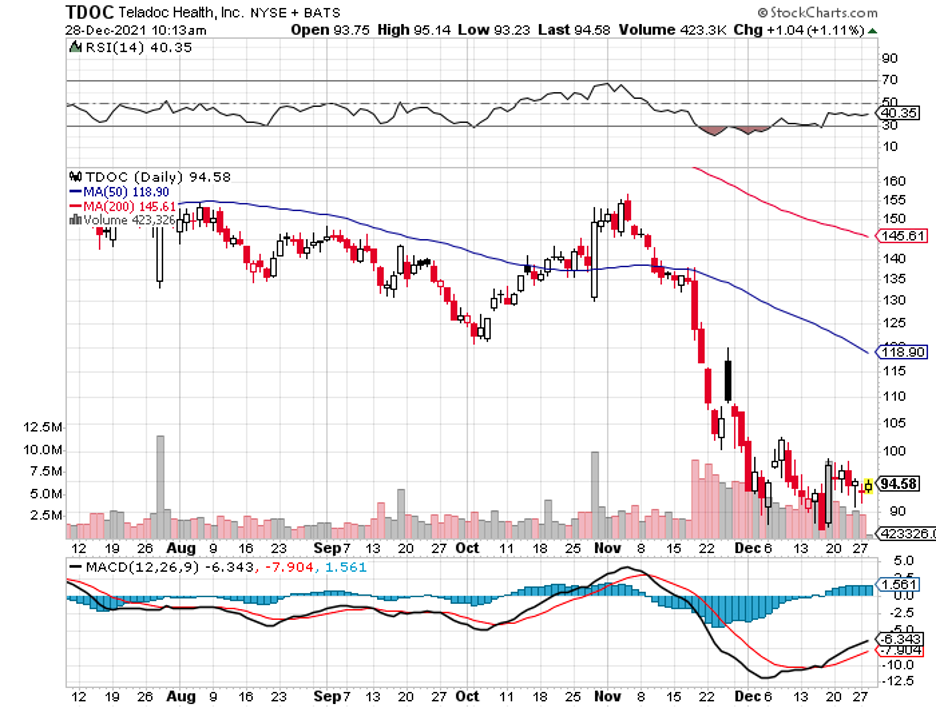
Despite all these, the stock fell by roughly 50%.

Looking at the reasons for this baffling fall, it became evident that investors started to fret over the gradual reopening of the economy and the return of people to offices.

They believed that these would result in patients abandoning virtual health consultations and opting to go back to their doctor’s clinics.

As far as we can see, though, that has not happened yet.

Moreover, the recent events and predictions about the future all but guarantee that these fears are baseless. Now, this raises the question of whether or not Teladoc is set to rebound in 2022.

It’s sort of obvious that the company has been moving alongside the COVID-19 headlines, but this doesn’t necessarily mean that Teladoc’s long-term plans depend heavily on the pandemic.

The vital thing we need to understand is that telehealth is here to stay. The pandemic merely accelerated the adoption of this groundbreaking technology.

There’s actually a widespread misunderstanding of Teladoc’s goal over the long term. Some investors seem to assume that the company aims to replace physical healthcare services.

This is extremely far from the truth.

What Teladoc wants to do is simply provide a complementary platform for the physical system.

That is, the company aims to virtualize all the things that can be virtualized and serve as the front door to the actual physical care.

Doing so will offer a more convenient option for patients and for the entire healthcare industry because this new and improved system can generate savings and better allocate resources in one of the most woefully managed and inefficient sectors across the globe.

Our current traditional healthcare system is extremely fragmented. Patients visit an average of 19 doctors in their lifetime, and every new doctor typically necessitates a new practice, a new professional relationship, and another set of medical records.

To get rid of the stress, prevent “wasting time” in waiting rooms, and sometimes receive unsatisfying experiences, which can even lead to unresolved or undetected health issues, Teladoc has come up with a comprehensive system.

It built Primary360, which it dubbed as the “whole-person care” platform.

The idea behind “whole-person care” is to bring all the services, including mental health, primary healthcare, and even treatments for chronic conditions, in one virtual package. This can then be easily accessed via the patient’s phone.

Teladoc integrates data and analytics to develop personalized healthcare experiences for its users, which became even more accurate and comprehensive thanks to its $18.5 billion acquisition of Livongo.

Another advantage in acquiring Livongo is its ability to work with AI.

Virtual care has the ability to offer more proactive solutions as opposed to reactive treatments.

Having a massive set of data, Teladoc can provide proactive measures to manage or prevent symptoms instead of mitigating them when they manifest.

After all, what would patients want more?

Their doctors informing them that they have a high risk of a heart attack in the following month if they fail to receive treatment or wait until it actually happens?

Wearables, such as smartwatches and Oura rings, can send data to Teladoc, which can then be used to prevent these kinds of health crises from arising.

Aside from Livongo, Teladoc has also acquired BetterHelp in 2015 for $4.5 million to form part of its “whole-person care” platform.

This acquisition, which has been on track to rake in $100 million in revenue in 2021, is geared towards mental health services.

Teladoc’s earnings reports in 2021 have been reassuring. In the third quarter, for instance, the company’s revenue skyrocketed 81% while patient visits rose 37% to reach over 3.9 million.

Meanwhile, the company estimates the “whole-person care” to be worth roughly $75 billion within its current client base.

Moreover, the National Labor Alliance of Health Care Coalitions, the largest organization of labor groups, announced that it will make Teladoc’s complete set of services available to all its members.

For context, these members pay for the health services of over 6 million individuals.

Going back to the question of whether Teladoc shares will bounce back in 2022, I think it’s clear that it can easily recover given its current trajectory.

In 2020, the telehealth industry was valued at $62.45 billion. By 2030, the telemedicine segment worldwide is projected to reach more than $431 billion.

Meanwhile, the compound annual growth rate (CAGR) from 2021 until 2030 is estimated to be at 26%.

Given Teladoc’s pioneering status, the company may even surpass the expectations from the industry. At a target 2022 revenue of $2.6 billion and $4 billion by 2024, the company’s projected CAGR is at 25% to 30% in the next three years.

Undeniably, Teladoc has fallen out of favor this year. However, the company is far from underperforming.

In fact, it has been doing an excellent job at sticking to its long-term objectives.

Looking at its low valuation at the moment, Teladoc holds the potential to become a highly rewarding venture for long-term investors who are capable of focusing on the fundamentals instead of the short-term noise.

healthcare

https://madhedgefundtrader.com/wp-content/uploads/2019/05/cropped-mad-hedge-logo-transparent-192x192_f9578834168ba24df3eb53916a12c882.png 0 0 Mad Hedge Fund Trader https://madhedgefundtrader.com/wp-content/uploads/2019/05/cropped-mad-hedge-logo-transparent-192x192_f9578834168ba24df3eb53916a12c882.png Mad Hedge Fund Trader2021-12-30 17:00:492022-01-05 00:42:20"Whole-Person Care" is the Future of Healthcare
Mad Hedge Fund Trader

December 15, 2021

Tech Letter

Mad Hedge Technology Letter
December 15, 2021
Fiat Lux

Featured Trade:

(BUY THE DIP IS BEING CHALLENGED)
(PTON), (ROKU), (TSLA), (GOOGL), (FB), (DOCU), (TDOC)

https://madhedgefundtrader.com/wp-content/uploads/2019/05/cropped-mad-hedge-logo-transparent-192x192_f9578834168ba24df3eb53916a12c882.png 0 0 Mad Hedge Fund Trader https://madhedgefundtrader.com/wp-content/uploads/2019/05/cropped-mad-hedge-logo-transparent-192x192_f9578834168ba24df3eb53916a12c882.png Mad Hedge Fund Trader2021-12-15 16:04:312021-12-15 16:57:36December 15, 2021
Mad Hedge Fund Trader

Buy the Dip is Being Challenged

Tech Letter

Ominous signals have started to emerge in the short-term patterns of tech stocks over the past few weeks.

We have essentially traded a Santa Claus rally to sell the spiked peaks as inflation numbers have come in way too hot for anyone to handle.

The poor inflation numbers have triggered a cascade of algorithmic selling.

Why is this important?

These stock patterns will offer us clues to how tech stocks will react in a quickly changing backdrop where the Fed is backing away from the cheap money cauldron as fast as it can.

For over ten years now, as tech stocks have bulldozed their way to higher highs and as Apple inches closer to $2.9 trillion in market cap and on its way to $3 trillion, investors have been systematically conditioned to buy the dip.

The Fed is doing its best to recreate a new type of conditioning where the dip is not bought and that is awful for tech stock prognosticators.

This effectively means a large layer of buyers on down days will be stripped away from the tech markets.

Any idiot would understand this means that tech stocks will not go as high as they could if dip buying is conditioned.

The tech market is trying to figure out the new rules of the game and that is resulting in choppy patterns almost in whipsawing fashion.

March 2022 is the new consensus for an interest rate rise which is bad news for tech stocks because pulling forward interest rate rises coincides with higher volatility in the short term.

The Fed could make another interest rate move in the second half of 2022.

This means that anyone dallying in the speculative area of the tech market needs to pull the reigns in immediately.

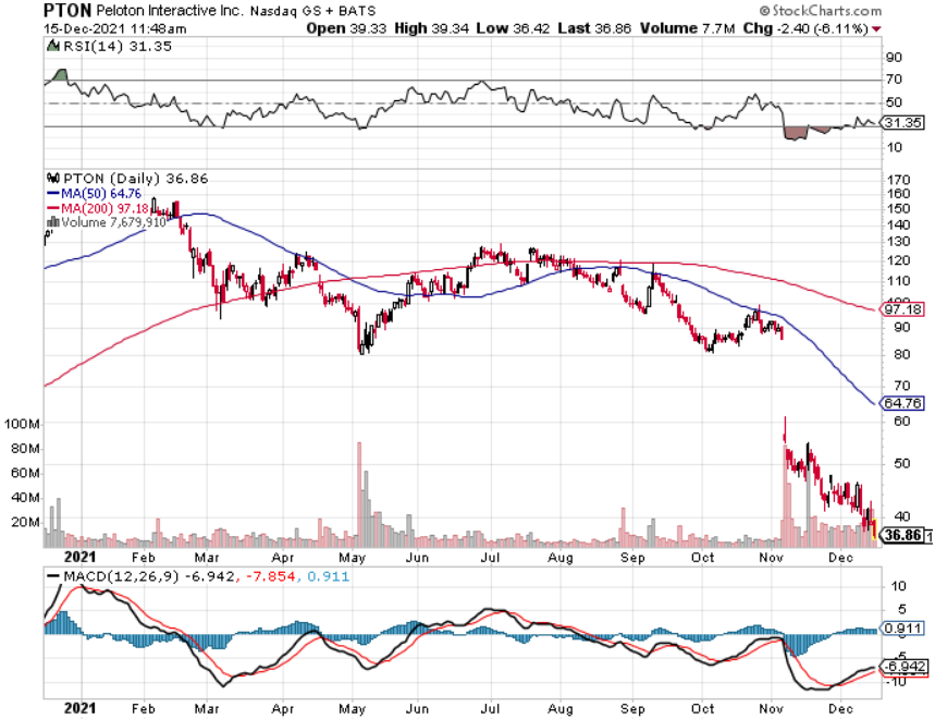
Stocks like Peloton (PTON), essentially a stationary bike with a tablet pasted on the dashboard, will historically underperform in the new environment.

Another tech stock I love to bully is Pinterest (PINS), by far the worst social media platform I have ever seen, will need to face reality without the Fed punchbowl that was most likely their biggest tailwind.

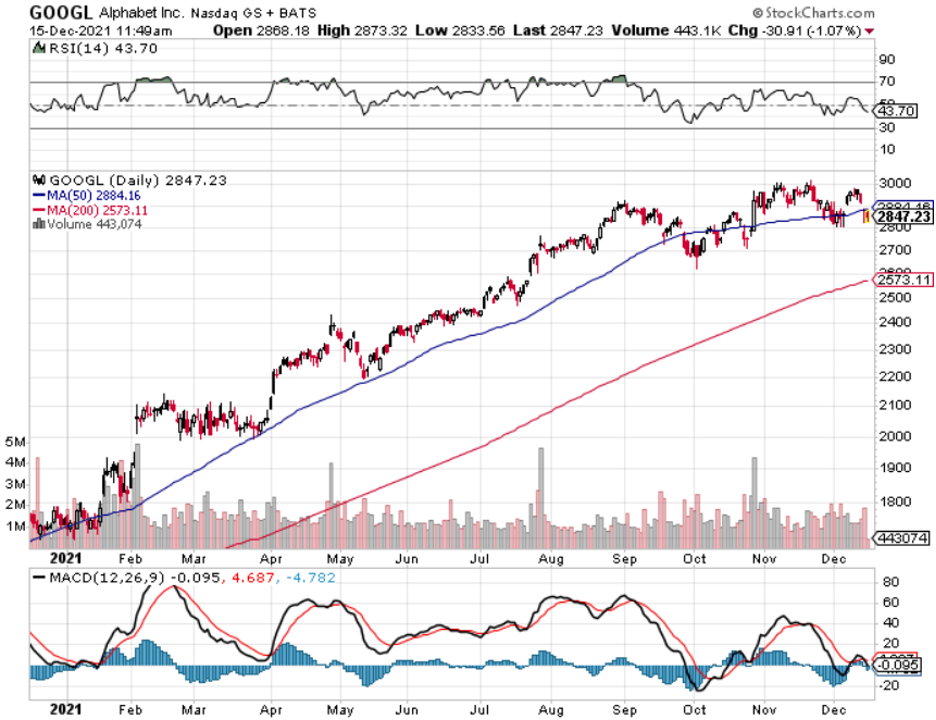
Tech stocks must now stand on their two feet and that’s scary news for all tech stocks not named Tesla, Facebook, Apple, Amazon, Microsoft, and Google.

After these top 5, the quality dwindles fast and expect a slew of rapid downgrades that will throttle the non-elite software stocks.

Adobe’s stock had its second-worst day of the year on Tuesday, as analysts jumped on the higher rates bandwagon and cited high valuations.

Valuations are now “high” even if these business models are the same as they were a few days ago.

Expect poor guidance from management with earnings growth, free cash flow, and annual revenue downgrades in the pipeline.

Other notable sell-offs this week include shares of cybersecurity companies Zscaler and Cloudflare, which crumbled 7.8% and 9%, respectively.

Zscaler had been up 55% for the year, prior to Tuesday, and has an enterprise value to revenue multiple for 2022 of 39. Cloudflare was up 91% and trades at a multiple of 61.

Tech growth works both ways in which they get the benefit of the doubt in a low-rate environment and vice versa in a tightening environment.

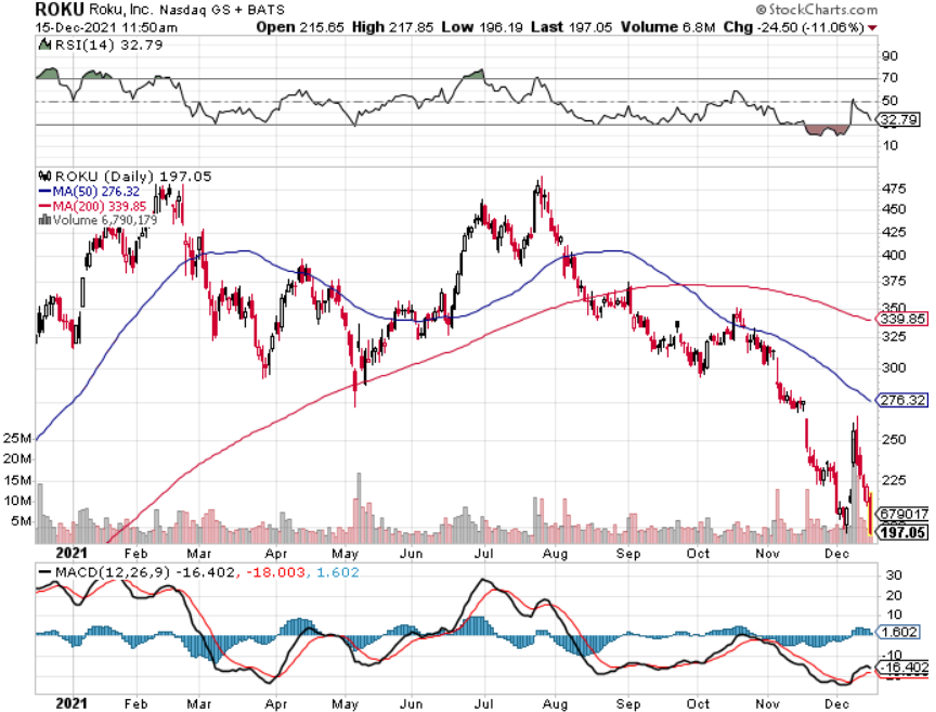
Case in point is a company I really like Roku (ROKU) whose shares are down a hideous 230% since mid-July.

The weakness in the secondary names has been biggest secret untold in tech for quite a while and the confirmation of a tough 2022 was what happened in the first two weeks of December.

And it gets worse when looking at the shelter-at-home darlings of 2020 Teledoc (TDOC) and DocuSign (DOCU) who have been totally neglected this year.

This goes to show that every year is different and as the stock market is levered to the skies, the slightest nudge by the Fed does a lot to wobble the trajectory of tech.

Luckily, tech still has the 6 big tech stocks to rally around and even if the best of the rest must go into hibernation in 2022, we still got guys like Mark Zuckerberg, Tim Cook, Elon Musk powering us through the sludge.

buy the dip


buy the dip


https://madhedgefundtrader.com/wp-content/uploads/2019/05/cropped-mad-hedge-logo-transparent-192x192_f9578834168ba24df3eb53916a12c882.png 0 0 Mad Hedge Fund Trader https://madhedgefundtrader.com/wp-content/uploads/2019/05/cropped-mad-hedge-logo-transparent-192x192_f9578834168ba24df3eb53916a12c882.png Mad Hedge Fund Trader2021-12-15 16:02:372021-12-28 01:51:24Buy the Dip is Being Challenged
Mad Hedge Fund Trader

October 28, 2021

Biotech Letter

Mad Hedge Biotech and Healthcare Letter
October 28, 2021
Fiat Lux

Featured Trade:

(AN ANYTIME, ANYWHERE HEALTHCARE STOCK)
(TDOC), (AMZN), (AMWL), (WMT), (HIM)

https://madhedgefundtrader.com/wp-content/uploads/2019/05/cropped-mad-hedge-logo-transparent-192x192_f9578834168ba24df3eb53916a12c882.png 0 0 Mad Hedge Fund Trader https://madhedgefundtrader.com/wp-content/uploads/2019/05/cropped-mad-hedge-logo-transparent-192x192_f9578834168ba24df3eb53916a12c882.png Mad Hedge Fund Trader2021-10-28 16:02:002021-10-28 18:48:53October 28, 2021
Mad Hedge Fund Trader

An Anytime, Anywhere Healthcare Stock

Biotech Letter

Following massive gains at the onset of the COVID-19 pandemic, several healthcare growth stocks have fallen a long way from their highs.

In fact, some high-quality names have become potential bargains due to the market's recent negative turn.

In this situation, we can apply Warren Buffett’s advice: "We simply attempt to be fearful when others are greedy and to be greedy only when others are fearful."

That is, I think it might just be the time to be a bit greedy.

One of the companies affected by the massive pullback is Teladoc (TDOC).

Over the past 1.5 years, Teladoc has been on a rollercoaster ride when it comes to its price action.

Initially, the stock was regarded as merely a COVID-19 pandemic play with limited growth in the future.

Because of that perception, Teladoc's price started to drop the moment the people got their vaccine shots.

Some investors believe that when things go back to normal, the whole telehealth industry will become pointless.

I don't think that's the case.

I believe that digital medicine and the presence of virtual health services will become mainstays in our lives—and Teladoc is in an enviable position as one of the pioneers in this disruptive industry that's only starting to take on the healthcare system by storm.

When the pandemic started, it was nearly impossible for most people to gain access to healthcare.

Most patients were scared to travel to the doctor for consultations, causing them to cancel and postpone appointments.

What Teladoc offered is to turn the impossible possible for several patients who needed access to their healthcare providers—and its efforts were rewarded in spades.

In 2019, Teladoc reported $553 million in total revenue, increasing by 32% from its 2018 earnings.

By 2020, the business exploded to reach a whopping $1.09 billion, showing a massive 98% growth year-over-year. Moreover, visits and consultations skyrocketed by 206%.

To hold on to its lead, Teladoc has been working hard to bolster its competitive positioning. It seized a blockbuster acquisition and bought Livongo for $18.5 billion in cash and stock.

Adding Livongo to its portfolio means cornering the market on remote monitoring for patients suffering from chronic diseases.

This addition to its business not only expands Teladoc's business, but also opens a massive addressable market worth $50 billion to the company. 

Teladoc can leverage this vast network through cross-selling products and services, thereby creating the Amazon (AMZN) of the healthcare world—a platform with an unbeatable ecosystem and an irresistible value proposition.

Since the merger, the two companies have developed a full-person digital healthcare platform called Primary360.

Meanwhile, Teladoc's growth story carries on, with the total revenue for 2021 already approaching the $2 billion mark.

This signifies an impressive 84% increase on top of the company's COVID-19-induced spurt.

As for 2022, Teladoc is projected to grow at a conservative 29%.

Despite the impressive growth of Teladoc, the company has barely scraped the surface.

Overall, the virtual care market is estimated to be worth $250 billion annually. Although Teladoc holds the most significant share thus far, it's evident that it has less than 1% of the market share.

In fact, the telemedicine industry is projected to be valued at half a trillion dollars globally by 2030.

Considering that Teladoc's yearly revenue thus far is sitting at only $2 billion, the company definitely has a lucrative growth runway in the coming 9 years.

In 2020, its stock price roughly tripled from being under $100 to reaching $300. Recently, though, Teladoc's price has gone down to approximately $130.

Given its obvious room for growth, I say this stock is undervalued. So, investors are granted the chance to add this company to their portfolio at a relatively low price.

With the massive market potential of this industry, it comes as no surprise that Teladoc now faces intense competition in the field.

The strongest rivals of the company in the telehealth segment include Amwell (AMWL), Walmart (WMT), Hims and Hers Health (HIM), and even Amazon.

With the market's sheer size, though, the situation doesn't seem to be a winner-takes-all type.

The space is definitely massive enough to support more than one telehealth company.

However, Teladoc does have the advantage as the first mover. It also has its impeccable partnership with Livongo, making it an anytime-anywhere-healthcare service.

So far, I can say that Teladoc is off to an excellent start in a rapid growth segment. I especially appreciate the company's goal to disrupt the medicine and healthcare space—a field that is in dire need of a revolution to eliminate the debilitating costs and crippling inefficiencies.

More than that, I think Teladoc is becoming instrumental in boosting the reach of the most effective medical professionals and offering a remarkable platform to promote artificial intelligence innovation in healthcare.

Ultimately, this will help enhance the quality of healthcare received by patients.

When looking at disruptive technologies, I always say that it's best to invest in companies working to shape the future.

This goal is typically a surefire way to make money in the long run, and Teladoc perfectly suits the description.

teladoc healthcare

https://madhedgefundtrader.com/wp-content/uploads/2019/05/cropped-mad-hedge-logo-transparent-192x192_f9578834168ba24df3eb53916a12c882.png 0 0 Mad Hedge Fund Trader https://madhedgefundtrader.com/wp-content/uploads/2019/05/cropped-mad-hedge-logo-transparent-192x192_f9578834168ba24df3eb53916a12c882.png Mad Hedge Fund Trader2021-10-28 16:00:572021-11-04 18:28:49An Anytime, Anywhere Healthcare Stock
Mad Hedge Fund Trader

September 28, 2021

Biotech Letter


Mad Hedge Biotech & Healthcare Letter
September 28, 2021
Fiat Lux

FEATURED TRADE:

(A RINSE-WASH-REPEAT PLAY FOR OPPORTUNISTIC INVESTORS)
(EXEL), (BMY), (RHHBY), (VRTX), (TDOC)

https://madhedgefundtrader.com/wp-content/uploads/2019/05/cropped-mad-hedge-logo-transparent-192x192_f9578834168ba24df3eb53916a12c882.png 0 0 Mad Hedge Fund Trader https://madhedgefundtrader.com/wp-content/uploads/2019/05/cropped-mad-hedge-logo-transparent-192x192_f9578834168ba24df3eb53916a12c882.png Mad Hedge Fund Trader2021-09-28 15:02:442021-09-28 15:59:35September 28, 2021
Page 4 of 8«‹23456›»

tastytrade, Inc. (“tastytrade”) has entered into a Marketing Agreement with Mad Hedge Fund Trader (“Marketing Agent”) whereby tastytrade pays compensation to Marketing Agent to recommend tastytrade’s brokerage services. The existence of this Marketing Agreement should not be deemed as an endorsement or recommendation of Marketing Agent by tastytrade and/or any of its affiliated companies. Neither tastytrade nor any of its affiliated companies is responsible for the privacy practices of Marketing Agent or this website. tastytrade does not warrant the accuracy or content of the products or services offered by Marketing Agent or this website. Marketing Agent is independent and is not an affiliate of tastytrade. 

Legal Disclaimer

There is a very high degree of risk involved in trading. Past results are not indicative of future returns. MadHedgeFundTrader.com and all individuals affiliated with this site assume no responsibilities for your trading and investment results. The indicators, strategies, columns, articles and all other features are for educational purposes only and should not be construed as investment advice. Information for futures trading observations are obtained from sources believed to be reliable, but we do not warrant its completeness or accuracy, or warrant any results from the use of the information. Your use of the trading observations is entirely at your own risk and it is your sole responsibility to evaluate the accuracy, completeness and usefulness of the information. You must assess the risk of any trade with your broker and make your own independent decisions regarding any securities mentioned herein. Affiliates of MadHedgeFundTrader.com may have a position or effect transactions in the securities described herein (or options thereon) and/or otherwise employ trading strategies that may be consistent or inconsistent with the provided strategies.

Copyright © 2025. Mad Hedge Fund Trader. All Rights Reserved. support@madhedgefundtrader.com
Scroll to top