Mad Hedge Biotech and Healthcare Letter
July 19, 2022
Fiat Lux
Featured Trade:
(A RECESSION-PROOF STOCK)
(UNH), (CVS), (LHCG)


Mad Hedge Biotech and Healthcare Letter
July 19, 2022
Fiat Lux
Featured Trade:
(A RECESSION-PROOF STOCK)
(UNH), (CVS), (LHCG)
The economy isn’t built to be recession-proof. Generally, it follows a relatively predictable albeit irregular pattern called the economic cycle.
Some periods of growth can typically last for several years before reaching its peak. What comes after is a period of contraction—aka a recession—before the economy once again moves towards another expansion.
Needless to say, periods of recession can be really brutal for investors. During this time, cyclical stocks or businesses that are highly sensitive to the economic cycle tend to be hit the hardest.
Meanwhile, certain stock market segments are relatively immune to these cycles. These companies provide investors with stocks that are nearly recession-proof, allowing them to buy and hold while awaiting the end of economic turmoil.
Among these companies, healthcare stocks are some of the most recession-proof options for investors.
After all, people can’t exactly suspend most healthcare needs. When you are sick, you have no choice but to visit the doctor and purchase medication.
Within the healthcare sector, health insurers appear to be beating the market recently.
When the pandemic began, health insurers had to adjust some aspects of their operations.
Reduced spending on non-essential medical care is an obvious change. However, this was counterbalanced by the increased costs of other procedures. These changes brought about by the pandemic greatly benefited the health insurance industry.
The emergence of more technological innovations and inflation are the primary reasons behind the increase in healthcare spending.
As these costs continue to accumulate and rise, an increasing number of clients will rely on health insurance companies as a hedge.
This is one of the key factors why the health insurance market worldwide is projected to grow by 4.6% annually from $2.8 trillion in 2020 to an impressive $3.9 trillion by 2027.
With a market capitalization of roughly $483 billion, UnitedHealth Group (UNH) is considered the largest health insurer across the globe.
For comparison, the second biggest health insurer is CVS Health (CVS) with a market capitalization of $123 billion, or about one-fourth the size of UNH.
Thanks to UNH’s sheer size and the positive industry outlook, the health insurance company is estimated to deliver 14.6% earnings growth annually over the next five years.
In its second-quarter earnings report, the company topped estimates of $5.21 per share and delivered $5.57 instead.
Its revenue of $80.3 billion was also above the earlier forecast of $79.7 billion.
This promising growth potential could be the main reason UNH announced a 13.8% per share rise in its quarterly dividend during its last earnings report.
Riding this momentum, UNH is expected to move forward with the $5.4 billion acquisition of LHC Group (LHCG) within the year.
As the first company within its segment to post earnings this quarter, UNH will be the “bellwether for the group.”
Although there’s a possibility that this health insurer’s report could be the best news in the sector, the overall outlook for its peers still remains positive.
It can be stressful and unnerving to even consider investing in the stock market at the moment. Considering that the S&P 500 is down 18% this year, it feels like a terrible time to buy stocks. But, that couldn’t be further from the truth.
Despite the fact that there are unquestionably some weak businesses in existence, there are also a great number of strong businesses with the capacity for long-term expansion and growth.
Accumulating shares of quality companies during a recession can position you for substantial long-term returns.
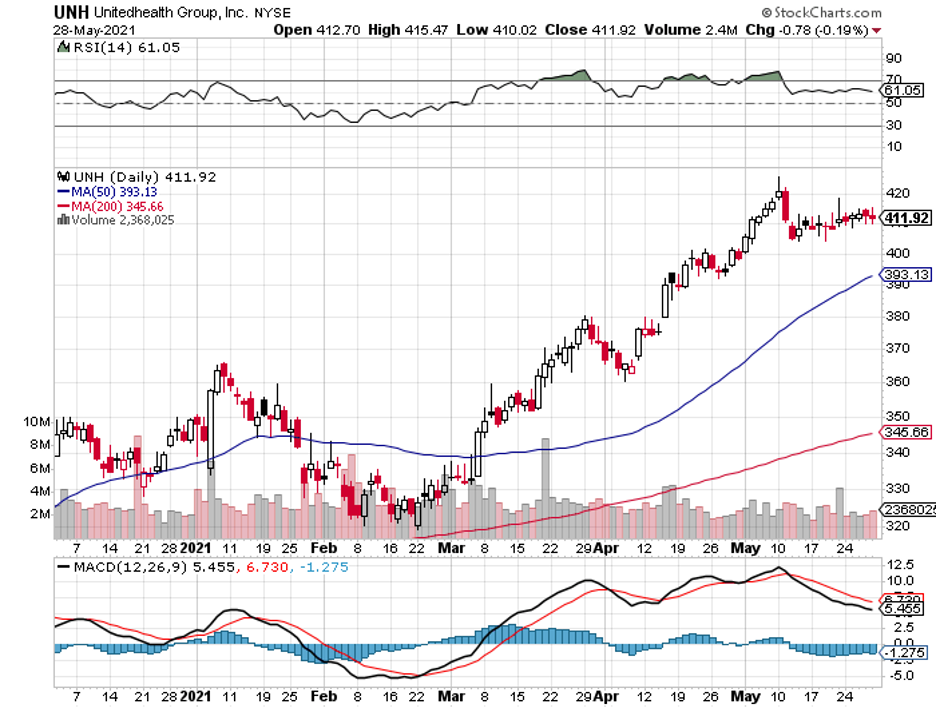
UNH’s performance is aligned with recent observations: the healthcare sector has been largely outperforming the market in 2022.
Amid the turbulent macroeconomic climate, this industry has managed to survive and even thrive.
While health insurers are not exactly risk-free, UNH's diversified business model enables it to withstand any economic downturn. Therefore, it would be prudent to buy the dip.
Mad Hedge Biotech and Healthcare Letter
July 7, 2022
Fiat Lux
Featured Trade:
(A BIOTECH WITH A QUIVER FULL OF ARROWS)
(VRTX), (UNH), (SIGA), (CRSP)

Even with the decline of the general market, several stocks have managed to buck the trend and thrive.
However, no stock is worthy of serious consideration if it isn’t at least delivering some positive returns.
In the biotechnology sector alone, there are roughly 750 biotech stocks on the major US exchanges.
Approximately 50 of these have been in the positive territory in the last 12 months. Among them, only 25 have shown a 20% or above jump.
In this very short list of promising biotechnology stocks in 2022, one name stands out as a huge winner amid a growing number of losers: Vertex Pharmaceuticals (VRTX).
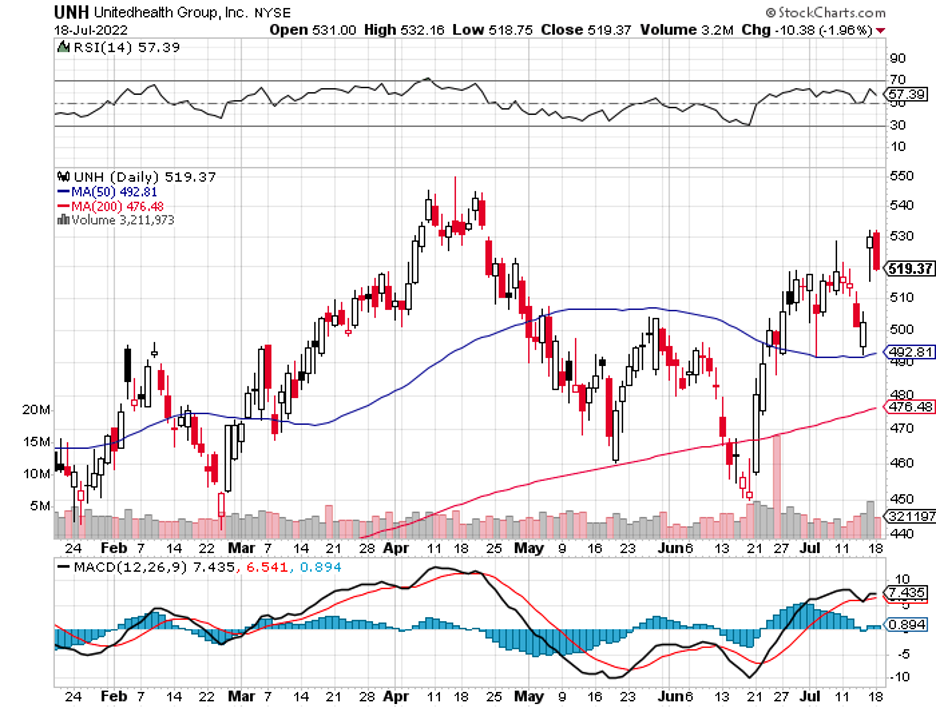
Vertex shares have increased and soared near 50% over the past 12 months. In fact, the stock is up by over 30% thus far this year.
On top of stock performance, another factor to consider is the quality of the underlying business.
At the very least, the company needs to show potential to grow sales and deliver profits. Vertex once again delivers on these aspects.
The durability and dependability of revenue and earnings growth are critical.
This year, only three of the surviving biotechnology companies from the whittled-down list managed to generate positive top- and bottom-line growths over the past five years.
These are United Therapeutics (UNH), Siga Technologies (SIGA), and, of course, Vertex.
Vertex’s recent performance is a complete 180 from earlier times. The stock fell more than 30% from October 2020 until October 2021. This decline was primarily due to the investors’ anxiety over the company’s heavy reliance on its cystic fibrosis (CF) program.
Evidently, the tide has turned for Vertex. More importantly, this could only be the start.
While a biotech with an excellent track record is a good indicator, it’s not a guarantee that it can deliver the same results in the future.
However, Vertex appears to be doing an exceptional job of continuing its winning streak.
The company holds a rare advantage that only a handful of biotechs have: a rock-solid moat.
While investors may not like Vertex’s complete reliance on its CF business, it’s critical to remember that expansion is far from over for this particular therapeutic segment.
Moreover, Vertex is the market leader in this field worldwide—and it’s expected to keep this position until the late 2030s at the very least.
Four CF treatments have been approved in both the US and Europe, and Vertex makes all of them.
Sure, several companies are attempting to enter this market and compete against Vertex, but none of them have gotten past Phase 2. Actually, most of the potential rivals are still in the preclinical testing phase.
This monopoly enables Vertex to generate solid revenue and earnings growth continuously. In the first quarter of 2022, the company’s cash position reached $8.2 billion.
If that’s not enough to secure Vertex’s position in this market, then here’s another one. The biggest threat to Trikafta, one of Vertex’s CF blockbusters, is a candidate being studied and developed by none other than Vertex itself.
That’s right: Vertex’s biggest threat is another Vertex candidate.
In terms of patent exclusivity, Vertex has this concern covered as well because its best-selling CF treatment won’t expire until 2037.
Nonetheless, investors aren’t the only people hoping to expand Vertex’s portfolio. The company has been steadfastly working on that, too.
Aside from working on a potential groundbreaking mRNA-based CF treatment with Moderna (MRNA), Vertex has been developing candidates in several key segments, including diabetes, blood disorders, and pain.
Vertex and CRISPR Therapeutics (CRSP) are expected to seek regulatory approval for exa-cel (CTX001), a potential one-time cure for sickle cell disease and transfusion-dependent beta-thalassemia, within 2022.
It also moved its kidney disease candidate, VX-147, into late-stage trials last March. If this works out, the treatment can target a larger patient population than CF.
Another program expected to move into late-stage trials in the second half of 2022 is VX-548, an experimental non-opioid pain drug.
Meanwhile, its Type 1 diabetes pipeline is anticipated to grow soon. The company already has at least one cell therapy queued for early-stage testing, and the plan is to advance another program into clinical trials by the fourth quarter of this year.
Simply put, Vertex’s pipeline is akin to a quiver full of arrows. Considering the company’s track record, it would no longer be surprising if it hits all its targets.
Mad Hedge Biotech and Healthcare Letter
February 3, 2022
Fiat Lux
Featured Trade:
(A ‘BORING’ BUSINESS RESISTING THE ‘AMAZON EFFECT’)
(CVS), (UNH), (ANTM), (TDOC), (AMZN), (BRK.A), (BRK.B), (JPM)

The healthcare market is under attack.
Amazon (AMZN) is invading the healthcare sector, wielding its far-reaching online presence and countless distribution warehouses to dominate the market.
Leveraging its ability to offer quick shipping to practically all locations, Amazon has transformed into a grab-anything-and-everything-possible business.
Now, it has set its sights on the healthcare and prescription sector. In fact, it has been attempting to infiltrate this segment since 2018 when it acquired PillPack.
The only limitation of that deal was that customers still had to get prescriptions from their doctors to avail of the PillPack service.
However, Amazon’s not the only one seeing the potential of this sector.
Following the difficulties it encountered in cornering the market, the e-commerce giant collaborated with fellow Wall Street titans Berkshire Hathaway (BRK.A) (BRK.B) and JPMorgan (JPM). Together, the three companies launched a service they called “Haven.”
Unfortunately, the venture eventually fell apart, and they canceled the deal altogether.
Despite that unfortunate end, Amazon refuses to back down on its vision. Recently, it decided to take another stab at the venture with a rebranding, giving birth to AmazonCare.
The goal is to offer assistance to customers in booking doctor appointments and receiving prescriptions online.
Undeniably, any business endeavor with Amazon’s backing will make waves in any industry. Nonetheless, this new venture could still be a tough sell.
For now, the company's strength is hoping to use the “Amazon effect” to sway members into signing up and using AmazonCare as well.
Surprisingly, Amazon finds itself facing an unlikely challenger in this pursuit: CVS (CVS).
Like Amazon, Berkshire, and JPMorgan, CVS has also recognized the potential of this market.
Unlike Amazon’s partners, CVS has decided to invest to become a frontrunner in terms of dominating the same sector and eventually taking advantage of this rapidly expanding total addressable market.
Instead of following the track of its fellow healthcare providers, such as UnitedHealth (UNH) and Anthem (ANTM), CVS has opted to change its angle of attack in the hopes of gaining more market share and reaping higher profits.
CVS is putting to good use its over 9,900 stores and distributions as means to establish better connections and rapport with customers.
After all, statistics indicate that approximately 80% of American citizens live less than 10 miles from a CVS branch.
This offers CVS a competitive advantage in terms of proximity to its customers. That is, it offers a unique convenience as it serves as the ever-present “corner stores” in practically every city.
Leveraging the locations, CVS has set up about 1,500 branches into “HealthHubs” by the end of 2021.
Basically, HealthHubs serve as emergency care clinics found inside CVS stores, providing customers with easy access to convenient and even cheaper after-hours health checkups.
Aside from this feature, a growing number of CVS stores are starting to get set up to be able to ship medicines or any other products ordered online, while other branches are being eyed as potential UPS drop-off points.
This setup will transform several branches into convenient “mini” distribution centers.
CVS has broken out of its “boring corner drugstore” image following its decision to target a more lucrative and massive healthcare sector.
It started the ball rolling when it acquired Aetna for $69 billion—a decision that so many investors disapproved of at that time.
Until recently, the market has largely ignored CVS because of the debt it incurred from the Aetna deal.
However, the tides had turned when investors finally realized that the drugstore giant had been efficiently and effectively executing a brilliant strategy all this time.
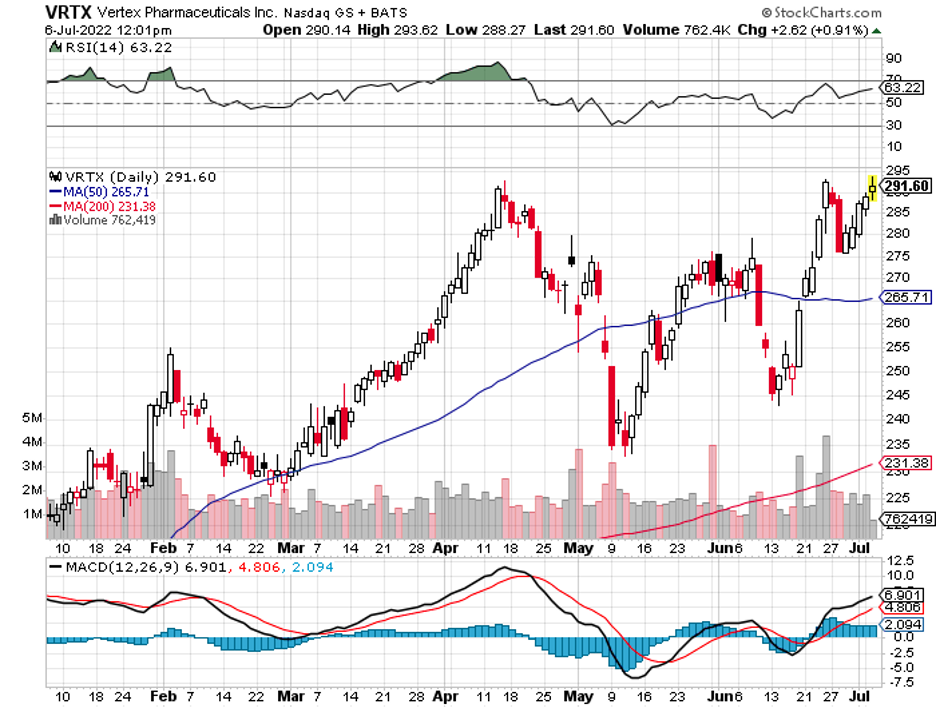
With Aetna under its wing, CVS has been granted access to a multitude of healthcare and managed care benefits availed by more than 23 million members. The sheer number of subscribers transformed the company into the third-biggest health insurer in the United States—next only to decades-long established providers Anthem and UnitedHealth.
Riding this momentum, CVS has been aggressive in revamping its image and expanding its services.
On top of its HealthHubs and Aetna advantages, CVS has recently paired up with Teladoc (TDOC) to leverage its virtual healthcare services to offer even more convenience to its customers.
This is another massive market since CVS already has roughly 35 million digital customers subscribed to its CVS app.
These users are all ordering products and other prescriptions from CVS. Integrating Teladoc’s services to the mix would be a surefire way of boosting its membership and adding a lucrative revenue stream.
Keep in mind that the global market for telehealth services is projected to expand somewhere between $300 billion to $700 billion by 2028—and that’s a conservative estimate.
CVS’ move to use Teladoc software is a positive indication of early technology adoption, positioning the drugstore chain at the forefront of a healthcare revolution.
Overall, CVS can only be described as a company striving to become a unique business that offers a range of products that no one else in the industry provides.
Although it’s improbable that it’ll sustain a monopoly in these services, CVS has been gradually transforming and growing into an almost unbeatable force in the industry by leveraging its strengths in an effective and logical method.
Moreover, it has evolved from a stodgy drugstore into an early tech adopter and a revolutionary business that can stand to challenge the likes of Amazon.
Mad Hedge Biotech & Healthcare Letter
August 17, 2021
Fiat Lux
FEATURED TRADE:
(EYES ON THE PRIZE)
(STAA), (UNH), (LLY), (AMZN), (V), (NKE), (MA), (GOOGL)

The investing world is filled with buzzwords, and one of the most widespread lately is “compounders” – aka stocks with the capacity to generate double-digit compound growth in terms of revenue and earnings.
They’re typically dubbed as the “next” Amazon (AMZN), Visa (V), or Nike (NKE), making them heavy favorites among growth investors aggressively looking for companies that can generate high returns in the next five to 10 years.
Ultimately, the goal is to find the next “10 bagger.”
Most investors are perfectly content with big and popular compounders like Mastercard (MA) and Alphabet (GOOGL).
Since the healthcare and biotechnology sector has its own well-known compounders, such as Eli Lilly (LLY) and UnitedHealth Group (UNH), it’s easy to miss the smaller lesser-known companies that are consistently generating high growth in their profits over the past years.
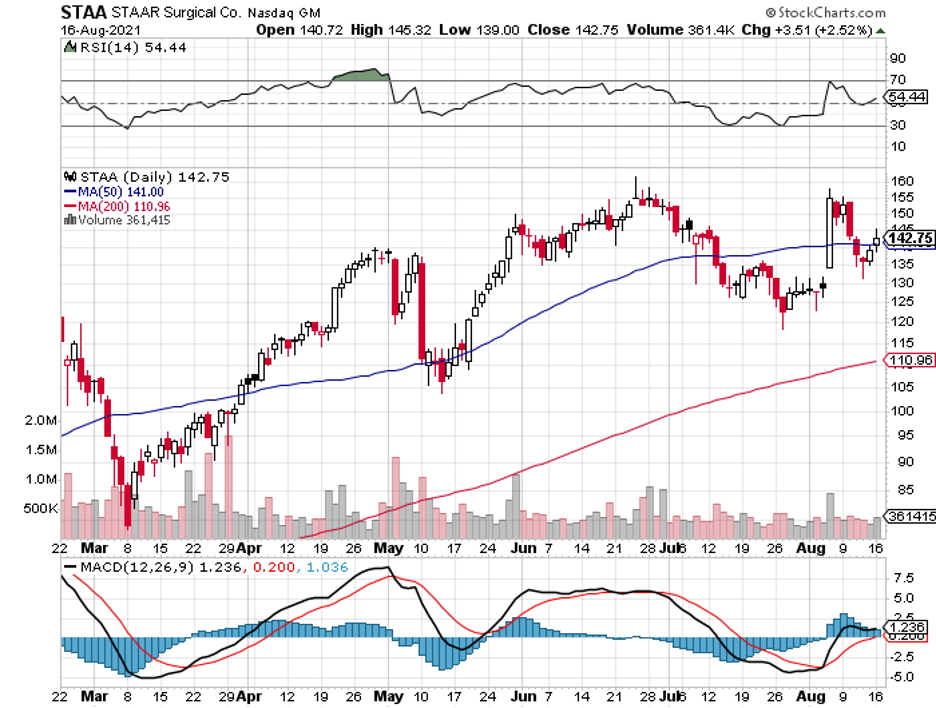
A good example of this is Staar Surgical (STAA).
Founded way back in 1982, this under-the-radar stock is up by over 243% over the past 12 months and more than 85% this year alone.
Saying that the company has had an impressive 2020 despite the pandemic is an understatement.
The company’s latest product is an implantable lens that works to correct myopia or nearsightedness.
This technology addresses a potentially massive market, taking into consideration the growing number of vision-related problems globally.
Staar anticipates the lens, which has already been made available across Europe and even Asia for roughly five years now, to enter the US market by the fourth quarter of 2021.
Inasmuch as the human eyes are considered powerful organs, they are definitely far from perfect. That’s why eyeglasses and even contact lenses have been in the market for decades.
Aside from its new product, Staar’s bread and butter is its Visian implantable collamer lenses, which are designed to deal with various vision issues including myopia (nearsightedness), presbyopia (an incapability to focus on nearby objects), and astigmatism (blurred or distorted vision).
Although they are quite different, many people confuse Staar’s solution with LASIK.
The key difference is that LASIK surgeries necessitate trimming of the cornea using lasers to correct the vision of the patient.
In contrast, what Staar does is to implant the corrective lenses directly in the eye, specifically behind the patient’s iris but right in front of the cornea.
This makes Staar’s solution reversible and, of course, less invasive compared to LASIK.
To date, Staar’s surgery is more expensive at $3,500 per eye, while LASIK costs roughly $2,246 for each eye.
However, this cost is expected to go down as more doctors eventually choose Staar implants over other options.
Looking at its trajectory, Staar could lead to LASIK becoming obsolete in the same way that radial keratotomy stopped being the norm before.
So far, Staar remains profitable and continues to grow its quarterly profits by 18.3% year over year. However, it’s the long-term revenue that shareholders would stand to gain most.
At this point, roughly 30% of the world is diagnosed as nearsighted. By 2050, over half of the population may require vision for myopia alone.
Meanwhile, 75% to 80% of adults between ages 45 and 74 are already struggling with presbyopia.
These figures spell massive opportunities and lucrative markets for Staar’s vision lines, with the annual spending on cheaper alternatives like eyeglasses projected at $48 billion.
Silently growing companies in the seemingly humdrum market are often pretty sneaky.
Vision correction doesn’t appear to be a white-hot investment sector that calls for urgent investment.
Only a handful of investors possess the foresight to view mundane products and services, like eye surgeries, as lucrative investments.
However, there’s usually a flicker of greatness in the most unlikely markets.
Mad Hedge Biotech & Healthcare Letter
June 1, 2021
Fiat Lux
FEATURED TRADE:
(AN UNDERRATED HEALTHCARE STOCK)
(UNH), (ANTM), (HUM)

Value investors on the lookout for stable stocks in the healthcare and insurance sectors should not miss out on a particular company that has consistently delivered strong performance over the years: UnitedHealth Group (UNH).
Despite its notable performance in the past 10 years and tangible plans that lead to more room for growth, UNH is still remarkably undervalued.
With the expanding reach of the COVID-19 vaccines and the promising prospects offered by Medicaid and Medicare expansion efforts, the future of this health insurance provider definitely looks bright.
In fact, this stock managed to weather the devastating effects of the COVID-19 pandemic and did pretty well in 2020.
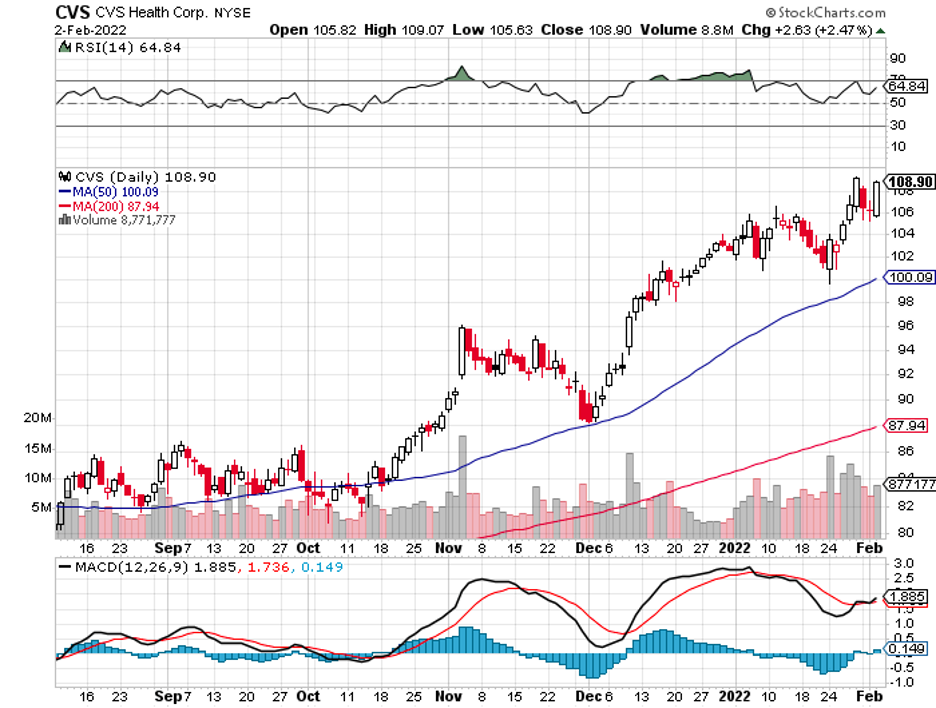
Shares of this health insurance titan actually climbed 19%, beating the S&P 500 index.
What’s even more promising is that UNH appears to be doing better in 2021.
In its first-quarter earnings report, UNH recorded a 9% jump in its revenue for the first quarter of 2021 at $70.9 billion compared to the $64.4 billion reported in the same period in 2020.
In terms of its net income for the quarter, UNH raked in $4.9 billion compared to the $3.4 billion it reported last year.
This puts its earnings per share at $5.31, a notable bump from the $3.72 recorded in the same period a year ago and blowing past analyst estimates of $4.38 per share.
With a $388.73 billion market capitalization, UNH is easily one of the biggest companies in its field. In comparison, competitors like Anthem (ANTM) hold a market cap of $97.5 billion, while Humana (HUM) has $56.47 billion.
Leveraging its size and power, this healthcare giant has ventured into diversifying its portfolio to ensure consistent results amid the never-ending changes in the healthcare industry.
Looking at the numbers closely, UNH’s health insurance segment brought in the bulk of the revenue in the first quarter with $55.1 billion, up by 7.9% compared to last year.
Membership count also increased by over 1 million during this period, which could be primarily attributed to the strong growth of its Medicare Advantage program.
The addition of specialty services, like dental and vision insurance, also contributed to the sustained development of this segment.
Meanwhile, UNH’s Optum division saw a 10% increase in its revenue year-over-year to reach $36.4 billion.
Even its OptumHealth segment delivered a particularly strong performance, with its revenue jumping by 31% compared to the same period last year.
UNH’s technology services sector, OptumInsight, also experienced revenue growth to reach $20.8 billion this quarter.
Even UNH’s weakest link, its OptumRx sector or the pharmacy benefits management division, experienced a slight increase in its revenue to hit $21.6 billion year over year.
These numbers show how UNH is split into two major groups. One sector offers traditional insurance plans, while the other, Optum, offers pharmacy and doctor services.
In 2020, its insurance segment comprised 60% of UNH’s overall revenue, while Optum generated the remaining 40%.
This translated to $257 billion in revenue from the insurance plans and $103 billion generated by its Optum services division.
Considering that UNH appears to be performing better than originally projected, its earnings guidance for 2021 was adjusted to reflect the changes.
To date, the company estimates its adjusted earnings to be somewhere between $18.10 and $18.60 for each share.
UNH utilizes a balanced business approach, which covers both traditional services in the health insurance sector and a variety of innovative solutions courtesy of its Optum units.
So far, this strategy has paid off well in the long run. As we see the world go back to normal, it is expected that UNH would enjoy even more tailwinds in its favor.
UNH is a solid stock that deserves a spot in any value investor’s portfolio.
If the efforts to fight the COVID-19 pandemic prove to be successful this year, then UNH expects an even better performance in 2022.