Global Market Comments
August 12, 2022
Fiat Lux
Featured Trade:
(AUGUST 10 BIWEEKLY STRATEGY WEBINAR Q&A),
(NVDA), (TSLA), (GOOGL), (ROM), (FCX), (AMZN), (AAPL), (MSFT), (MU), (ARKK), (TSLA), (F), (GM)


Global Market Comments
August 12, 2022
Fiat Lux
Featured Trade:
(AUGUST 10 BIWEEKLY STRATEGY WEBINAR Q&A),
(NVDA), (TSLA), (GOOGL), (ROM), (FCX), (AMZN), (AAPL), (MSFT), (MU), (ARKK), (TSLA), (F), (GM)

Below please find subscribers’ Q&A for the August 10 Mad HedgeFund Trader Global Strategy Webinar broadcast from Silicon Valley in California.
Q: What are your yearend targets for Nvidia (NVDA), Tesla (TSLA), and Google (GOOGL)?
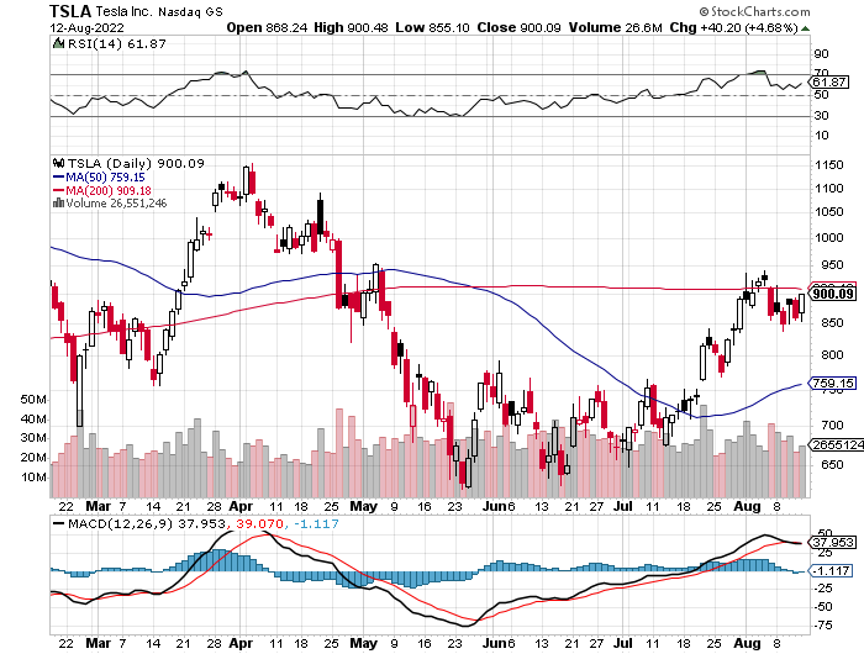
A: Higher for all but I can’t give you the exact date and time. Google has a special situation in that they might be hit with an anti-trust suit in September, so that could cap things. For Tesla, we have the Twitter overhang, and Elon Musk sold $6.9 billion worth of stock last week to fund that. And then Nvidia could have another dive, depending on how much of a glut in chips there is, but I'd be buying any chips from here on. By the way, if Tesla breaks the old high of $1,200, which I expect by the end of the year, we could get to $2,000 very rapidly on yet another massive short squeeze against the permanent Tesla haters, who’ve already been completely decimated by the last 60% move.
Q: How would I play Amazon (AMZN) going forward?
A: Buy the dips. I think they’re going to be the world's dominant retailer going forward and they’re doing the right things and going crazy.
Q: Which sectors?
A: Well, for ETFs, you can look at the ProShares Ultra Technology ETF (ROM). That’s 2x leveraged long tech. But only do that on dips because the volatility of the ROM is enormous since it’s 2x in the most volatile sector. Also, I think we can start taking a look at banks again, what with interest rates rising and a recovery on the horizon, banks could come back into play after sitting at the bottom for the last 3 or 4 months.
Q: I’m doing a LEAP on Freeport-McMoRan Inc. (FCX); should I go for January 2025 or 2024?
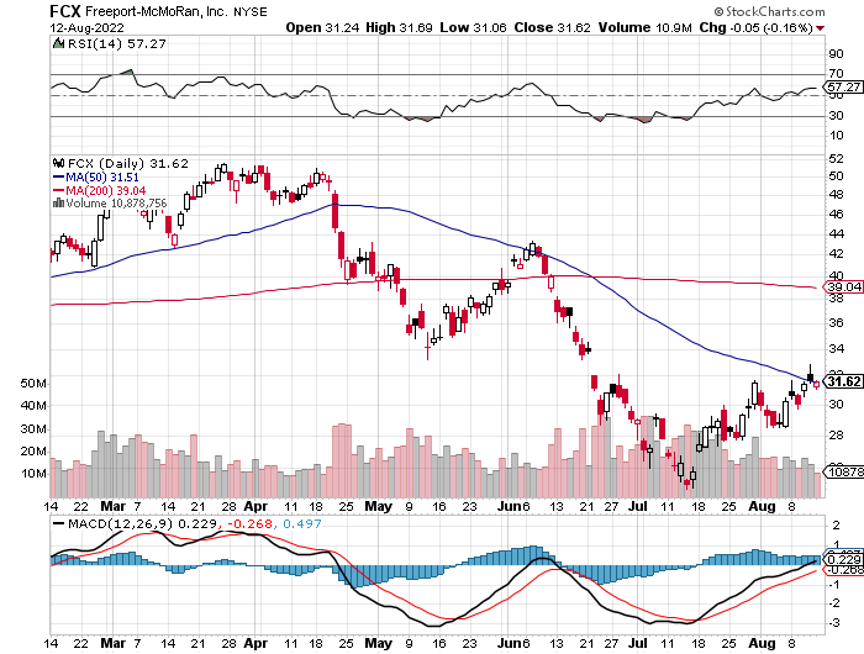
A: I’d go longer dated—that way you can get a bigger move and will almost certainly be on a full-on economic recovery, and massive electrification of the auto fleet by 2025, thanks to the climate bill that will be passed Friday. That means the demand for copper is about to go absolutely through the roof—I'm looking for (FCX) to go from $30 to $100 in the next 3 years.
Q: Thoughts on Disney (DIS)?
A: No one can believe how cheap Disney has gotten, it’s been a disaster. Obviously (DIS) took it on the nose with the recession and some of the parks still have limitations on the number of visitors. It should do better and I'm amazed it got this cheap. I would expect a move to the $200 level by the end of next year.
Q: What LEAPS do you recommend for January 2023?
A: Well it’s not really a LEAPS if you’re only going out 6 months; that’s just a long-dated call spread. LEAPS are usually a year or longer. I’d say pretty much anything in any sector will be higher except maybe energy by 2023. We’re not at LEAPS territory yet, but we’re getting close. The next major selloff I might start putting LEAPS out there.
Q: Is the Consumer Price Index (CPI) dropping from 9.1% YOY down to 8.5% meaning the top is in and deflation’s over?
A: I think so, because there are a lot of price declines that were not reflected in this July number that have yet to come. I'm talking about wheat, lumber, and energy. So yes, we could get another big move down in August, and if that’s the case, the Fed may only raise by 50 basis points in September. That's the hope. The things that aren’t going to go down are rental costs and labor costs. We may never get back to the inflation rate that we had 2 years ago of 2%. The long-term average for the last 100 years is 3% and certainly a move down to 4% is possible this year (and would be very welcome by the stock market as part of my long-term bull case).
Q: What are your thoughts on Elon Musk selling $6.9 billion worth of Tesla shares?
A: It’s amazing he sold that amount of stock last week and only went down $100. It does remove a big overhang on the stock and paves the way on a much bigger move up later in the year. By selling the $9 in January and $7 now, that’s $16 billion he sold this year. He could almost pay for Twitter with a little outside bank financing.
Q: How far above current prices should I place a LEAPS?
A: It depends on where the market is; if we’re having a cataclysmic selloff down 1,000-point days, then you can have the luxury of going 10%, 20%, or even 30% out-of-the-money; and that of course gets you a 100%, 200% and 300% returns. If we have a higher low, then you may want to go lower risk and go at the money, that might get you a 50% return. On LEAPS that are only slightly in-the-money, even those generate 25% returns one year out with the most conservative possible position.
Q: Would you load the boat on dips?
A: I would but remember: a dip is not one hour or on down days, it’s like half of the recent gain, which would be down 1,500 Dow points, or all of the recent gain, which would be down 3,000 points. So be careful that you don’t get too aggressive just because you’ve gotten bullish.
Q: Do you think the semiconductor chips will lead the tech recovery in the second half of the year?
A: I do, but we do have an inventory problem to digest first, and we have to figure out the implications of the CHIPS act that was signed this week which makes available a couple hundred billion dollars to build new chip factories in the US. Chip companies are particularly challenged right now because they have to provision for a recession which is going to cut chip demand, and they also have to provision for a potential oversupply created by the CHIPS Act. Remember that for the industry, creating safe supplies of chips means more lots of chips at lower prices for consumers. Great for us, great for the auto industry, not so great for chip companies. You have to be careful. On the other hand, on the bullish side, chips are being designed into more products faster and in larger numbers than ever before. This is the main reason why most investors underestimated the chip industry for the last 10 years. That also is a factor that’s accelerating. The average car now has 100 chips. 20 years ago they had maybe 10 chips, and 30 years ago they had none.
Q: Will the eventual big win of Ukraine against Russia result in inflation going back to 2%?
A: No, but it will result in it going back to 3% or 4%, which we could hit next year. You get oil back down below $50, gasoline down to $2/gallon, and the world's food supply opened up once again, and inflation will disappear in a heartbeat.
Q: What’s the deal with the 1% buyback tax in the inflation reduction package?
A: Well they had to get revenue somewhere, and 1% is so small it won’t inhibit anyone from buying back stock, especially if it makes the CEO a billionaire. That is a great incentive—even if you had a 50% tax, they would still be doing buybacks for things like Apple (AAPL), Microsoft (MSFT), and the other buyback players.
Q: What will high energy prices do to crypto?
A: It might actually make it go up because the cost of electricity feeds straight into the manufacturing/programming cost of crypto. And if you notice, Bitcoin bottomed at $17,000 per bitcoin. But that's exactly where the new mining cost is. Just like all of the commodities, when you hit cost of production, the supply suddenly dries up because nobody can make any money at it.
Q: Will US homebuyers buy the dip since mortgage rates have come down?
A: Yes, and we’re already seeing that in the statistics. The fact is we still have a huge housing shortage in the United States. You don’t get big price falls when you have a shortage of supply, and you have 10 million millennials who still need to trade up from their one and two-bedroom apartments all over the country. So, things may stall a bit in home buying, but I don’t think you get very big price drops.
Q: Do you think the US consumer is strong?
A: They never stopped being strong, even throughout recession fears. Never, ever bet against the propensity of Americans to spend money, both individuals and governments.
Q: What are the chances the US goes to war with China over Taiwan?
A: Zero. # 1 China doesn't have ships, #2 we have the 7th Fleet there, and #3 they have been threatening to invade Taiwan for 70 years and done nothing. The Taiwanese are used to this. Though there is the other side issue that most of the other private companies in Taiwan are already owned by the Chinese and have Chinese capital, so it’s unlikely they want to blow up their own facilities. So, the answer is no.
Q: What is the Long term outlook for gold and silver?
A: It’s been dead for so long that I’m not inclined to rush into gold. But you have to expect that when you get a recovery in the commodity boom, it’s going drag gold and silver along with it. I see upsides for both of these, especially silver.
Q: Should student loans be paid off by the federal government?
A: I think yes, because as long as these people have massive debts, they cannot borrow and they cannot enter the US economy as consumers. If you forgive all student debt, you unleash 10 million new customers onto the market who can now borrow, get credit cards, and take out home mortgages. As long as they have massive debts, they can’t do that.
Q: With all the major companies in the world moving to EVs, where are we going to get these commodities?
A: We’re not. Tesla (TSLA) has already locked up major supplies of commodities over the next 10 years, and everyone else will have to pay more money. Some of the weaker producers like Ford (F) and General Motors (GM), are being restrained on shortages of not just chips but also basic commodities like chromium for stainless steel. They’re going to have a real problem competing with Tesla, which is why you own Tesla.
Q: What do you think about the unprofitable tech companies like those in the ARK ETFs (ARKK)?
A: I would avoid those for now. Why take on additional risk buying a non-earning company when the highest quality companies are selling at the cheapest valuations in ten years? Maybe when the big companies like Apple get overvalued—go up another 100% — then you might look at the smaller companies if they’re still cheap. But the risk/reward on the nonearners right now is no good, while it’s fantastic in the large tech companies. That is my opinion and I’m sticking to it.
Q: It seems Russia’s strategy has mirrored those of the Czars.
A: Actually, what they’re doing is repeating their WWII strategy, which worked in 1945— not so much in 2022; and that was massive artillery barrages against retreating Germans. Except this time Ukrainians are not retreating and have far more modern weapons than the Russians.
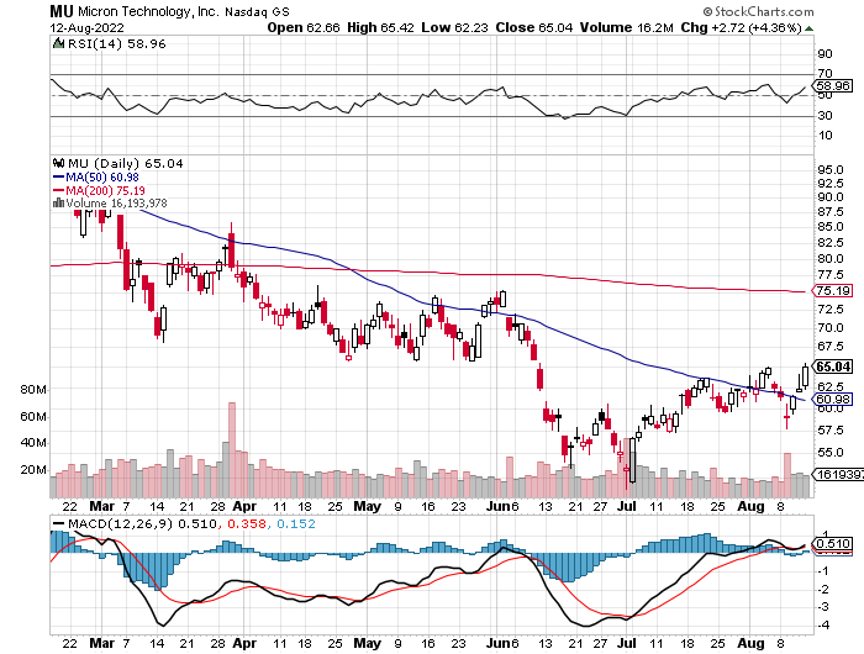
Q: Would you buy Micron Technology (MU) on bigger dips?
A: Absolutely yes; but again, wait for the down days. You have plenty of volatility in chip stocks, no need to pay up or chase higher prices.
To watch a replay of this webinar with all the charts, bells, whistles, and classic rock music, just log in to www.madhedgefundtrader.com, go to MY ACCOUNT, click on GLOBAL TRADING DISPATCH, then WEBINARS, and all the webinars from the last 12 years are there in all their glory.
Good Luck and Stay Healthy
John Thomas
CEO & Publisher
The Diary of a Mad Hedge Fund Trader

Mad Hedge Technology Letter
July 8, 2022
Fiat Lux
Featured Trade:
(THE END OF SAMSUNG)
(SAMSUNG), (QCOM), (MU), (AAPL)

Samsung, Korea’s stalwart chaebol, is toast.
Remember the past two years when lockdowns were in vogue?
Digital products were the hottest item in the world as everybody was stuck in their homes.
Growth brought forward is never a bad thing for a company, especially tech companies.
However, it sets the stage for hard comps to topple and a reversion back to the mean which can look messy.
The world needed chips and phones back then, the world is now traveling, getting on planes, and taking cruise ships to the Caribbean.
This is why video game growth is quite subdued this year.
Samsung internally has also been taking a machete to its forward-looking estimates multiple times in order to front-run collapsing demand.
The boom bust nature of chips and devices is an inherent beast in the industry that is hard to tame.
Samsung was able to hit watered-down targets in the second quarter, but that was mainly due to a 7% currency tailwind of the Korean won sliding fast just like many Asian currencies.
Take a look at the Japanese yen, it’s gone off a cliff all the way to 136 per $1.
I remember when I took a vacation to Tokyo in 2011, Japan felt awfully expensive at 77 yen to $1.
The currency tailwinds are a transitory elixir yet under the hood, these economies are weakening fast.
The aging population and cost of living crisis are also crushing sales.
Internal data reveals deeper damage than initially thought.
Operating profit missed by a wider margin than revenue beat and prices for its premium products isn’t fetching the prices they once did.
For example, Samsung markets its Exynos 2200 chips as on-par rivals to the Snapdragon 8 Gen 1 and Apple’s (AAPL) A15 Bionic chip found in smartphones.
However, the Exynos fails to compete with its supposed flagship chip comps, performing at levels lagging almost a generation behind in speed and functionality.
It’s clear that devices made with Exynos chips simply won’t be able to sell for as much as flagship Android phones with Snapdragon 8 Gen 1 or Apple iPhones with A15 Bionic chips.
I fully expect the operation profit to go from 6% to 3% for Samsung.
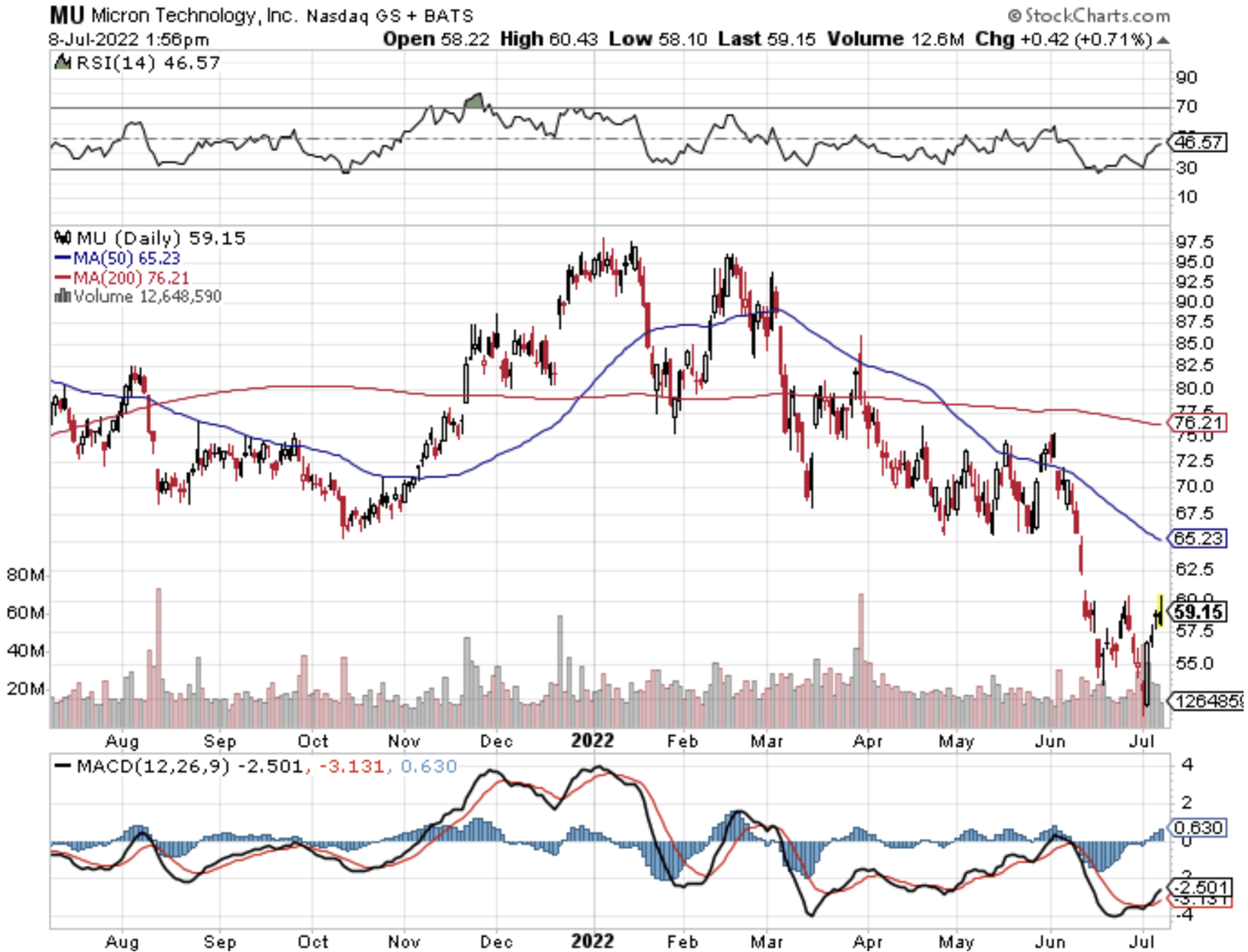
US rival Micron (MU) has already rung the alarm. While the world’s third-largest maker of DRAM posted revenue and operating profit for the quarter in line with estimates, its forecast for the coming three months was 20% lower than expectations.
It now sees the PC and smartphone markets much weaker than previously thought.
Tech has experienced a massive downgrade in terms of sentiment and sales while massive pressure on the supply side costs.
Cloud computing and streaming services which all need chips have been the poster boys of underperformance.
Growth stocks have also gotten killed.
I do believe this is more a signal of deeper individual malaise at Samsung and an indication they are getting trounced by Chinese firms who just do it better for cheaper.
Margins won’t ever come back up for Samsung as they lack the nimbleness of the Chinese and brute power of the American tech.
They are essentially stuck between a rock and a hard place where products will become less competitive, face rapidly shrinking margins, and participate in a Korean economy that lacks vibrancy.
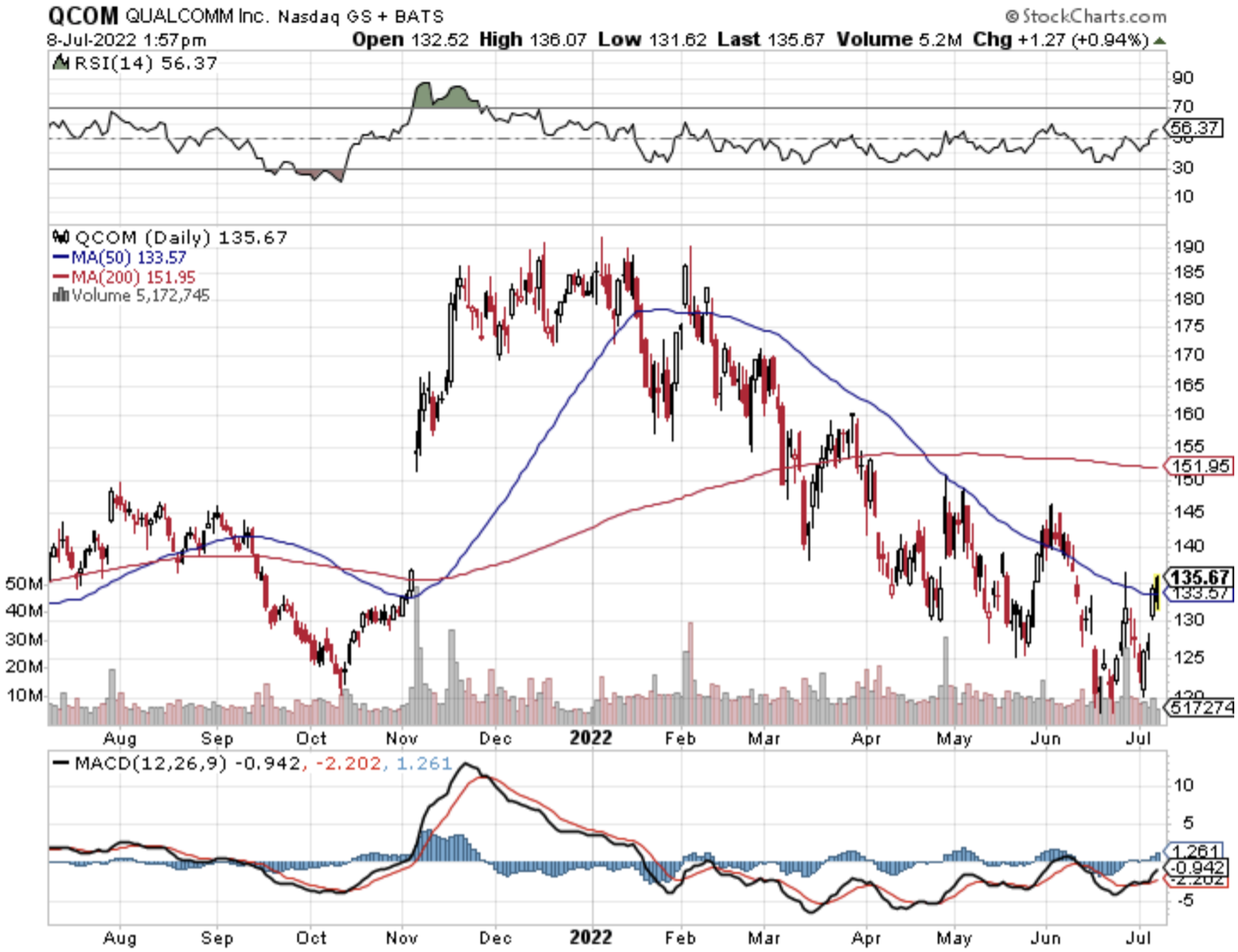
Once chip stocks bottom, avoid Samsung, and get into Qualcomm (QCOM) and Micron (MU).
Mad Hedge Technology Letter
August 25, 2021
Fiat Lux
Featured Trade:
(THE BEST WAY TO ALPHA YOUR TECH PORTFOLIO)
(MU), (PLTR), (AMD), (AMZN), (SQ), (PYPL)

Overperformance is mainly about the art of taking complicated data and finding perfect solutions for it. Trading in technology stocks is no different.
Investing in software-based cloud stocks has been one of the seminal themes I have promulgated since the launch of the Mad Hedge Technology Letter way back in February 2018.
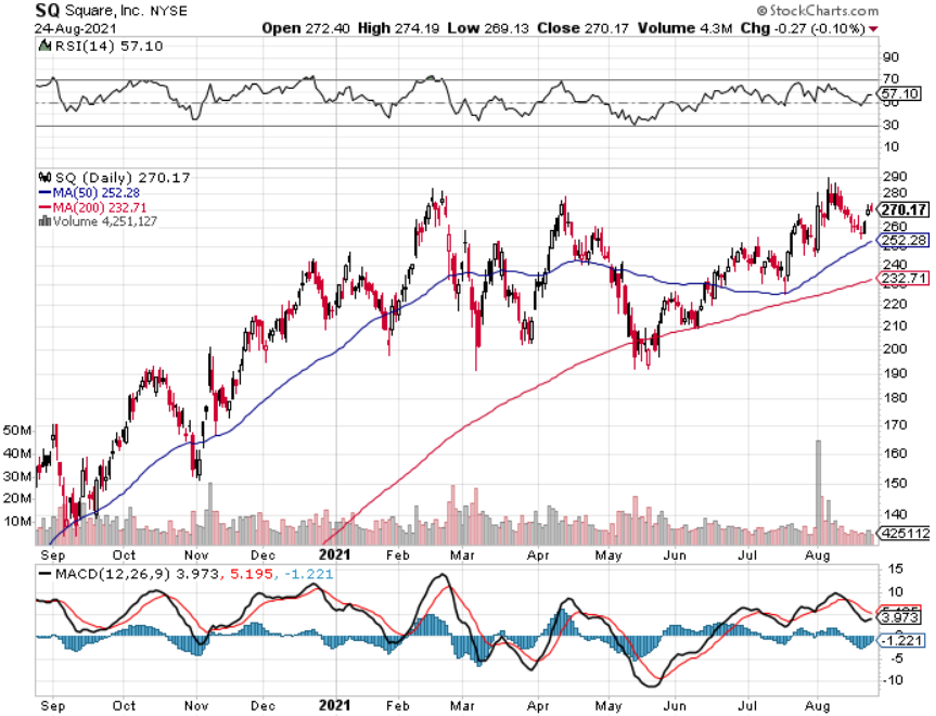
I hit the nail on the head and many of you have prospered from my early calls on AMD, Micron to growth stocks like Square, PayPal, and Roku. I’ve hit on many of the cutting-edge themes.
Well, if you STILL thought every tech letter until now has been useless, this is the one that should whet your appetite.
Instead of racking your brain to find the optimal cloud stock to invest in, instead of scouring the grains of sand to find a diamond, I have a quick fix for you and your friends.
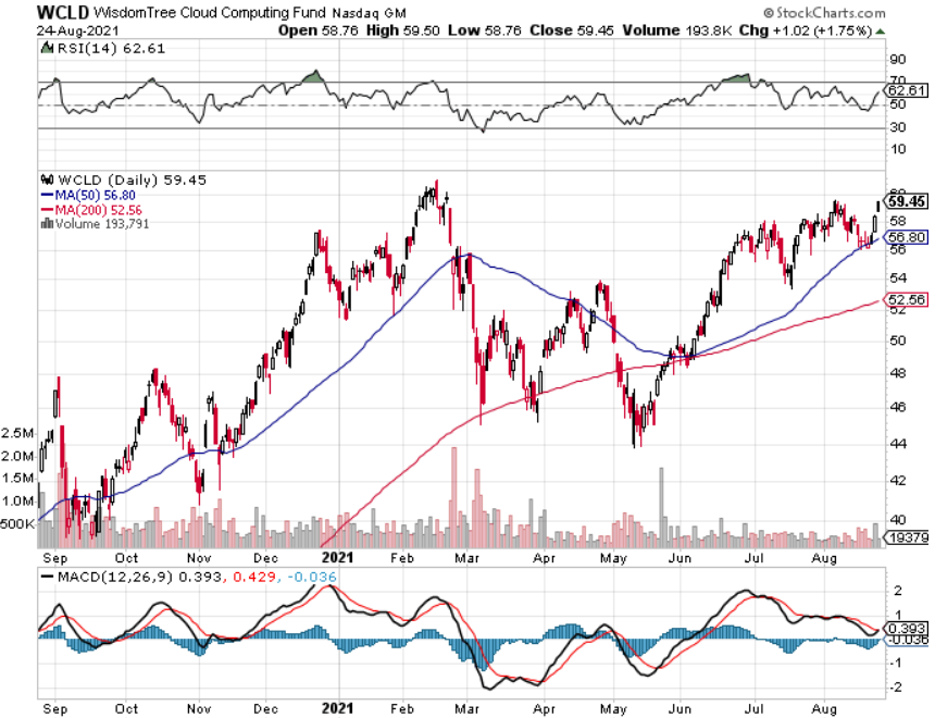
Invest in The WisdomTree Cloud Computing Fund (WCLD) which aims to track the price and yield performance, before fees and expenses, of the BVP Nasdaq Emerging Cloud Index (EMCLOUD).
What Is Cloud Computing?
The “cloud” refers to the aggregation of information online that can be accessed from anywhere, on any device remotely.
Yes, something like this does exist and we have been chronicling the development of the cloud since this tech letter’s launch.
The cloud is the concept powering the “shelter-at-home” trade which has been hotter than hot since March 2020.
Cloud companies provide on-demand services to a centralized pool of information technology (IT) resources via a network connection.
Even though cloud computing already touches a significant portion of our everyday lives, the adoption is on the verge of overwhelming the rest of the business world due to advancements in artificial intelligence and the Internet of Things (IoT) hyper-improving efficiencies.
The Cloud Software Advantage
Cloud computing has particularly transformed the software industry.
Over the last decade, cloud Software-as-a-Service (SaaS) businesses have dominated traditional software companies as the new industry standard for deploying and updating software. Cloud-based SaaS companies provide software applications and services via a network connection from a remote location, whereas traditional software is delivered and supported on-premise and often manually. I will give you a list of differences to several distinct fundamental advantages for cloud versus traditional software.
Product Advantages
Speed, Ease, and Low Cost of Implementation – cloud software is installed via a network connection; it doesn’t require the higher cost of on-premise infrastructure setup maintenance and installation.
Efficient Software Updates – upgrades and support are deployed via a network connection, which shifts the burden of software maintenance from the client to the software provider.
Easily Scalable – deployment via a network connection allows cloud SaaS businesses to grow as their units increase, with the ability to expand services to more users or add product enhancements with ease. Client acquisition can happen 24/7 and cloud SaaS companies can easily expand into international markets.
Business Model Advantages
High Recurring Revenue – cloud SaaS companies enjoy a subscription-based revenue model with smaller and more frequent transactions, while traditional software businesses rely on a single, large, upfront transaction. This model can result in a more predictable, annuity-like revenue stream making it easy for CFOs to solve long-term financial solutions.
High Client Retention with Longer Revenue Periods – cloud software becomes embedded in client workflow, resulting in higher switching costs and client retention. Importantly, many clients prefer the pay-as-you-go transaction model, which can lead to longer periods of recurring revenue as upselling product enhancements does not require an additional sales cycle.
Lower Expenses – cloud SaaS companies can have lower R&D costs because they don’t need to support various types of networking infrastructure at each client location.
I believe the product and business model advantages of cloud SaaS companies have historically led to higher margins, growth, higher free cash flow, and efficiency characteristics as compared to non-cloud software companies.
How does the WCLD ETF select its indexed cloud companies?
Each company must satisfy critical criteria such as they must derive the majority of revenue from business-oriented software products, as determined by the following checklist.
+ Provided to customers through a cloud delivery model – e.g., hosted on remote and multi-tenant server architecture, accessed through a web browser or mobile device, or consumed as an application programming interface (API).
+ Provided to customers through a cloud economic model – e.g., as a subscription-based, volume-based, or transaction-based offering Annual revenue growth, of at least:
+ 15% in each of the last two years for new additions
+ 7% for current securities in at least one of the last two years
Some of the stocks that would epitomize the characteristics of a WCLD component are Salesforce, Microsoft, Amazon-- I mean, they are all up, you know, well over 100% from the nadir we saw in March 2020 and contain the emerging growth traits that make this ETF so robust.
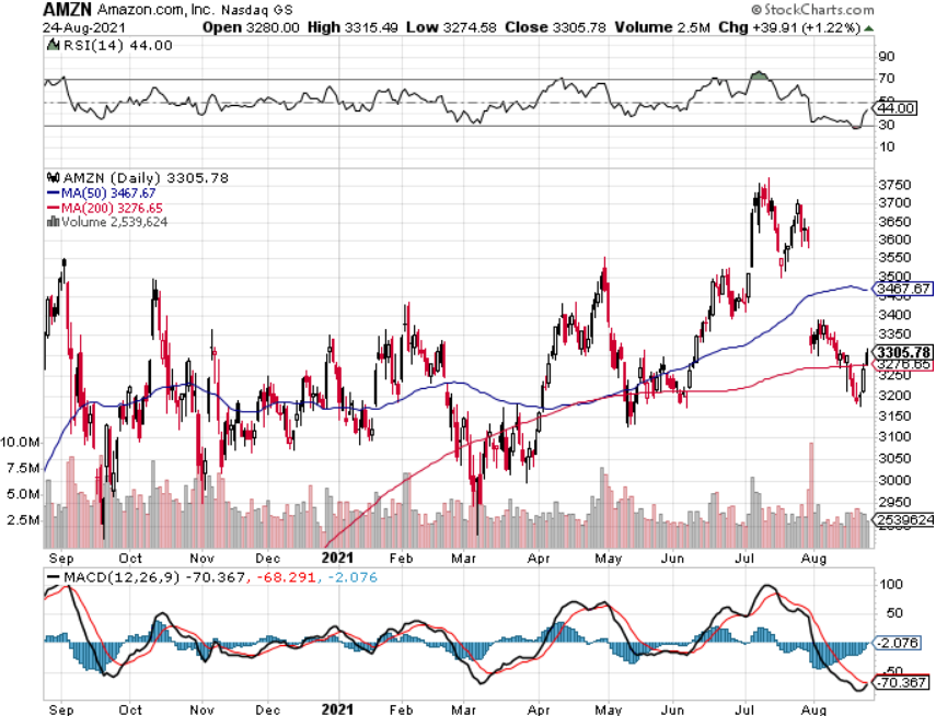
If you peel back the label and you look at the contents of many tech portfolios, they tend to favor some of the large-cap names like Amazon, not because they are “big” but because the numbers behave like emerging growth companies even when the law of large numbers indicate that to push the needle that far in the short-term is a gravity-defying endeavor.
We all know quite well that Amazon isn't necessarily a pure play on cloud computing software, because they do have other hybrid-sort of businesses, but the elements of its cloud business are nothing short of brilliant.
ETF funds like WCLD, what they look to do is to cue off of pure plays and include pure plays that are growing faster than the broader tech market at large. So, you're not going to necessarily see the vanilla tech of the world in that portfolio. You're going to see a portfolio that's going to have a little bit more sort of explosive nature to it, names with a little more mojo, a little bit more chutzpah because you're focusing on smaller names that have the possibility to go parabolic and gift you a 10-bagger precisely because they take advantage of the law of small numbers.
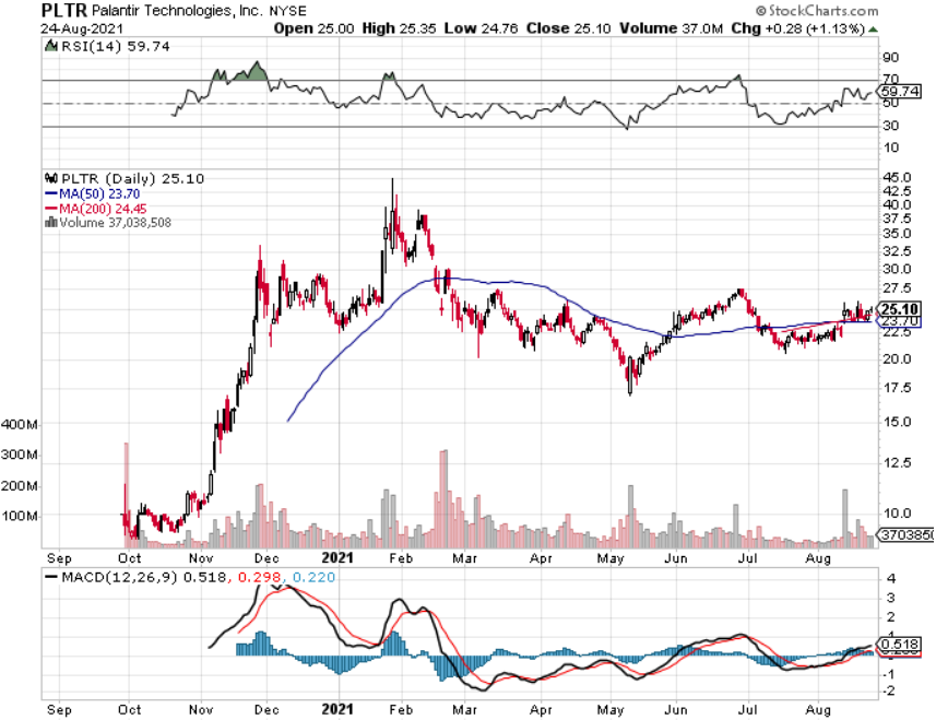
One stock that has the chance for a legitimate ten-bagger is my call on Palantir (PLTR).
Palantir is a tech firm that builds and deploys software platforms for the intelligence community in the United States to assist in counterterrorism investigations and operations.
This is one of the no-brainers that procure revenue from Democrat and Republican administrations.
In a global market where the search for yield couldn’t be tougher right now, right-sizing a tech portfolio to target those extraordinary, extra-salacious tech growth companies is one of the few ways to produce alpha without overleveraging.
No doubt there will be periods of volatility, but if a long-term horizon is something suited for you, this super-growth strategy is a winner, and don’t forget about PLTR while you’re at it.
Mad Hedge Technology Letter
August 13, 2021
Fiat Lux
Featured Trade:
(ARE THE WHEELS FALLING OFF THE CHIP INDUSTRY?)
(MU), (SK HYNIX), (NVDA)

Is the chip industry about to freeze over?
Signs are creeping in of a cyclical downturn in memory chips starting in the first quarter of 2022.
This is all brought about by cycle indicators signaling that we are shifting out of 'midcycle' to 'late-cycle' for the first time since 2019 and this phase change has historically meant a challenging backdrop for forward returns.
The investments have been pouring in from chip companies to build more foundries and to improve chip performance.
Incrementally, new supply will eventually come online to address the giant chip shortage that many industries are grappling with.
However, I will say that whispers of an imminent collapse in the chip dynamics are exaggerated at best.
I don’t believe that the next cyclical downturn begins from Q1 2022 exacerbated by inventory builds.
We are still far from that happening even if the chip environment has tensed up more so now.
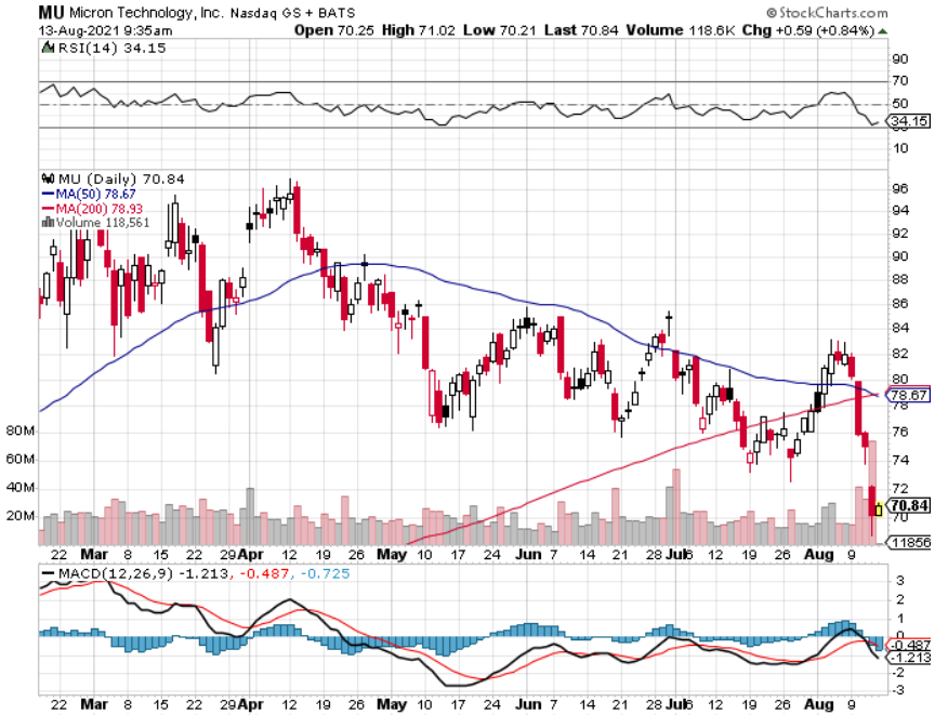
Micron (MU) has said that the order-filling time for chipmakers now exceeds 20 weeks.
The order-filling time represents the period from ordering a semiconductor to receiving it. That metric added on more than eight days in July, putting the total at 20.2 weeks.
Businesses from automakers to consumer-electronics companies are suffering from the chip shortage. Carmakers are expected to miss out on $100 billion in sales due to the lack of critical components.
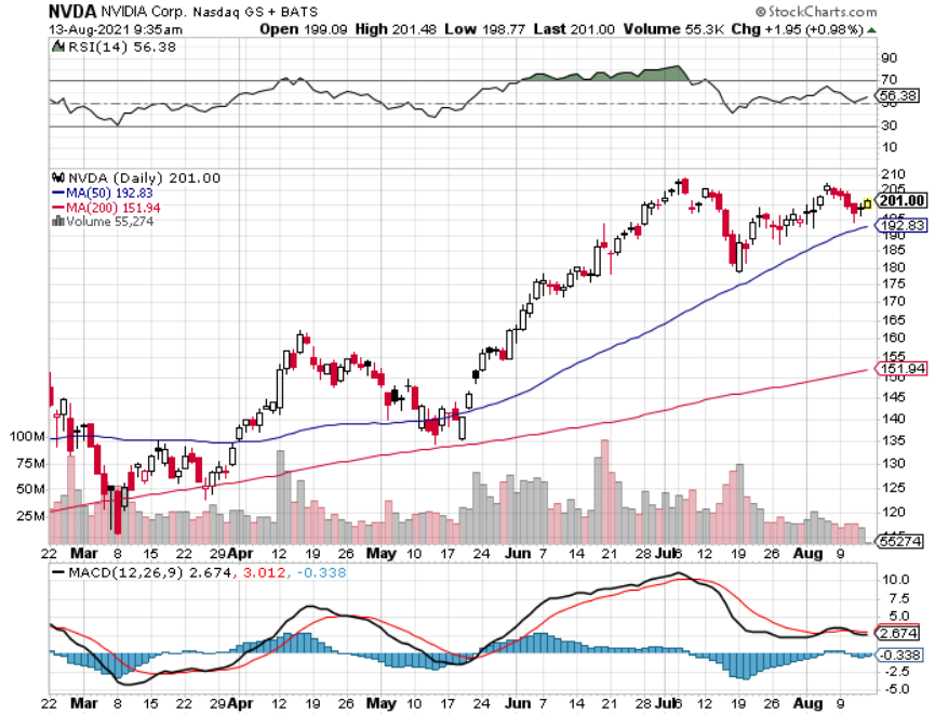
Another industry-wide headwind is the UK's possible blocking of Nvidia’s (NVDA) planned $40 billion acquisition of Arm Holdings over national security issues.
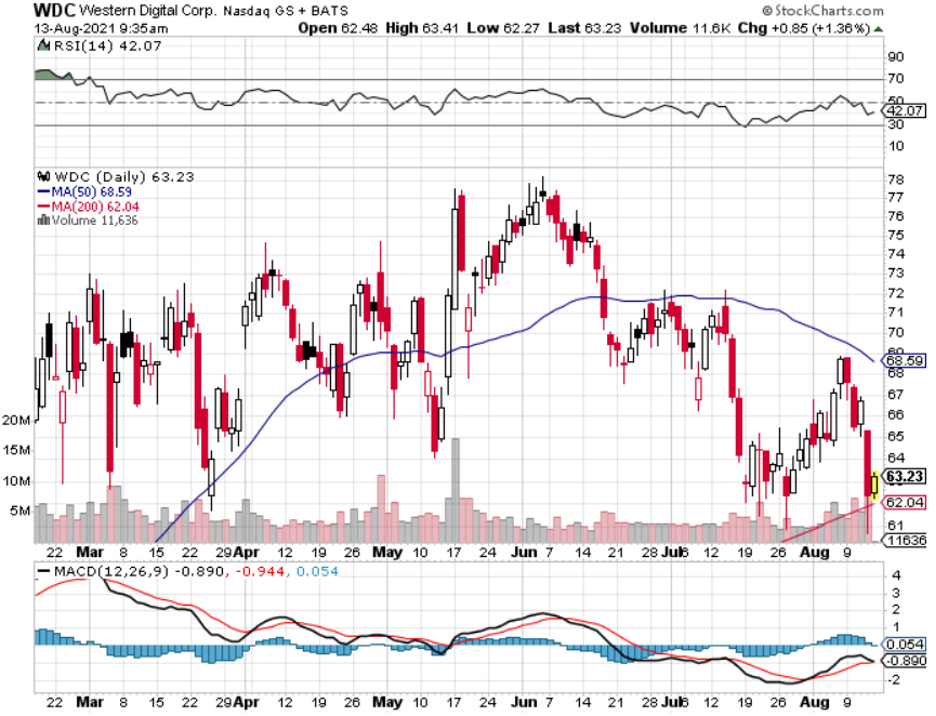
A possible downturn in the chip cycle would also mean heavyweight South Korean memory-chip maker SK Hynix will severely underperform as well.
There are forecasts of contract prices for memory chips used in personal computers that decline by as much as 5% in the December quarter from the September quarter.
The PC market is only 20% of the DRAM market. Smartphone DRAM accounts for 40% of the market and server DRAM is 30% of the market. Miscellaneous device markets make up the remaining 10%.
Therefore, it is safe to say that not all the eggs are in one basket.
However, an analyst downgrade has set the tone for all makers of dynamic random access memory chips and puts the onus on the entrenched to prove the supposed downturn is not the case.
A world in which all relevant companies have hoarded chips because of the fear of not be able to source the right chips would be a transitory issue.
I don’t see demand falling off a cliff.
Many of these DRAM companies have moats around their business models and the case of businesses snapping up a high volume of chips and their inventories peaking out is a problem many companies would love to have.
As we progress into 2022, companies will start to plan their next iterations of devices and gadgets, and no doubt the next generation will need at least 50% more high-performing chips compared to the last version.
The pricing pressure is almost analogous to what happened with lumber prices and builders started buying at whatever prices during the short squeeze earlier this year.
This doesn’t mean the housing industry is doomed, but I understand it more as moderating prices will be a tailwind for the overall health of the industry.
Chips are famous for that boom and bust dynamic.
The price gains in chips cannot be absorbed in the same rate and as prices moderate, companies will start to look at acquiring the next batch of chips even if inventory is high.
In the short term, chip stocks are on course for a short correction that could take around a quarter to digest, but I highly doubt this will last into next year.
The 30,000-foot view shows us that many chip firms are enjoying record demand for their best chips driven by cloud customers’ capital expenditures, and even upside from the popularity of cryptocurrency-related chip products.
Demand is everywhere to be found.
The leading-edge manufacturers will take this dip in stride and adjust for the new environment in 2022.
Lower pricing expectations is something that nobody wants to hear as a chip CEO and absorbing a more challenging pricing environment into 4Q does not beat price spikes.
It gets lost that DRAM prices increased 35% over the past two quarters, with expectations for a “further modest increase” through the end of this year.
The industry can afford a little reversion to the mean pricing and shareholders will mostly stay in these stocks long term.
I understand that this dip in chip shares like Micron caused by moderation of pricing power translates into a great entry point into the stock for new buyers.
Quite quickly will investors start to shrug off this negative element to the industry and pile back into premium names or just stick with Nvidia who doesn’t sell DRAM chips.
Global Market Comments
August 5, 2021
Fiat Lux
Featured Trade:
(THE NEW AI BOOK THAT INVESTORS ARE SCRAMBLING FOR),
(GOOG), (FB), (AMZN), MSFT), (BABA), (BIDU),
(TENCENT), (TSLA), (NVDA), (AMD), (MU), (LRCX)

A better headline for this piece would be “The Future of You,” as artificial intelligence is about to become so integral to your work, your investment portfolio, and even your very existence that you won’t be able to live without it, quite literally.
Well, do I have some great news for you. A blockbuster book about the state of play on all things AI will be released on September 25, and I managed to obtain and read an advanced copy. It is entitled: AI Superpowers: China, Silicon Valley, and the New World Order by Dr. Kai-Fu Lee.
The bottom line: The future is even more unbelievable than you remotely imagined. We are at the very early days of this giant megatrend, and the investment opportunities will be nothing less than spectacular.
And here is a barn burner. The price of AI is dropping fast as hundreds of thousands of new programmers pour into the field. Those $10 million signing bonuses are about to become a thing of the past.
Dr. Lee is certainly someone to take seriously. He obtained one of the first Ph.D.’s in AI from Carnegie Mellon University. He was the president of Google (GOOG) China and put in stints at Microsoft (MSFT) and Apple (AAPL). Today, he is the CEO of Sinovation Ventures, the largest AI venture capital firm in China, and is a board director of Alibaba (BABA).
AI is nothing more than deep learning, or super pattern recognition. Dr. Lee dates the onset of artificial intelligence to 1952, when an IBM mainframe computer learned to play checkers and beat human opponents. By 1955, it learned to develop strategies on its own.
Dr. Lee sees the AI field ultimately divided into two spheres of dominance, the U.S. and China. No one else is devoting a fraction of the resources needed to become a serious player. The good news is that Russia and Iran are nowhere in the game.
While the U.S. dominates in the original theory and algorithms that founded AI, China is about to take the lead in applications. It can do this because it has access to mountains of data that dwarf those available in America. China processes three times more mobile phones, five times more Internet customers, 10 times more eat-out orders, and 50 times more mobile transactions. In a future where data is currency, this is huge.
The wake-up call for China in applications took place two years ago when U.S. and Korean AI programs beat grandmasters in the traditional Chinese game of Go. Long a goal of AI programmers, this great leap forward took place 20 years earlier than had been anticipated. This created an AI stampede in the Middle Kingdom that led to the current bubble.
The result has been applications that are still in the realm of science fiction in the U.S. The Chinese equivalent of eBay (EBAY), Taobao, doesn’t charge fees because its customer base is so big it can remain profitable on ad revenues only. Want to be more beautiful in your selfies sent to friends? A Chinese app will do that for you, Beauty Plus.
The Chinese equivalent of Yelp, Dianping, has 600,000 deliverymen on mopeds. The number of takeout meals is so vast that it has been able to drop delivery costs from $6 a meal to 60 cents. As a result, traditional restaurants are dying out in China.
Teachers in Chinese schools no longer take attendance. Students are checked off when they enter the classroom by facial recognition software. And heaven help you if you jaywalk in a Chinese city. Similar software will automatically issue you a citation with a fine and send it to your home.
Credit card fraud is actually on the decline in China as dubious transactions are blocked by facial matching software. The bank simply calls you, asks you to look into your phone, takes your picture, and then matches it with the image they have on file.
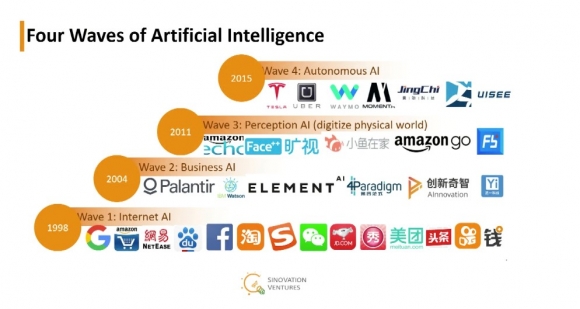
Dr. Lee sees AI unfolding in four waves, and there are currently companies operating in every one of these (see graph below):
1) Internet AI
The creation of black boxes and specialized algorithms opened the door to monetizing code. This was the path for today’s giants that dominate online commerce today, Google (GOOG), Amazon (AMZN), JD.com (JD), and Facebook (FB). Alibaba (BABA), Baidu (BIDU), and Tencent followed.
2) Business AI
Think big data. This is the era we just entered, where massive data from online customers, financial transactions, and health care led to the writing of new algorithms that maximize profitability. Suddenly, companies can turn magic knobs to achieve desired goals, such as stepping up penetration or monetization.
3) Perception AI
Using trillions of sensors worldwide, analog data on any movement, facial expression, sound, and image are converted into digital data, and then mined for conclusions by more advanced algorithms. Cameras are suddenly everywhere. Amazon’s Alexa is the first step in this process, where your conversations are recorded and then mined for keywords about your every want and desire.
Think of autonomous fast food where you walk in your local joint and it immediately recognizes you, offers you your preferred dishes, and then auto bills your online account for your purchase. Amazon has already done this with a Whole Foods store in Seattle.
4) Autonomous AI
Think every kind of motion. AI will get applied to autonomous driving, local shuttles, factory forklifts, assembly lines, and inspections of every kind. Again, data and processing demand take an enormous leap upward. Tesla (TSLA), Waymo (GOOG), and Uber are already very active in this field.
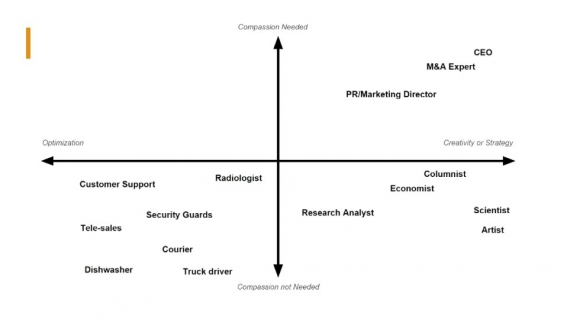
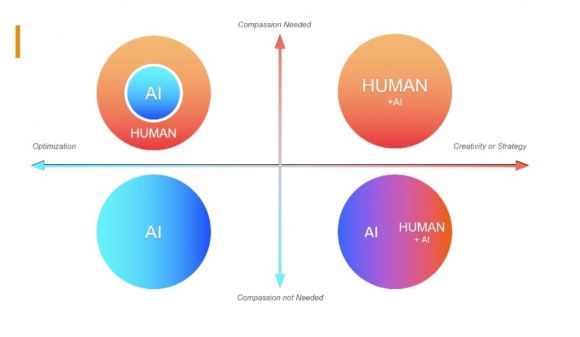
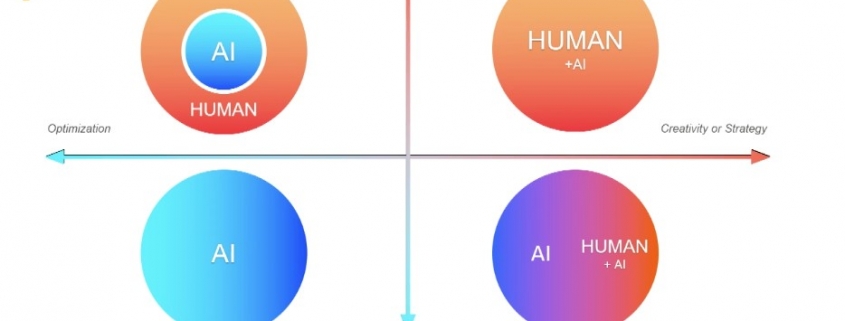
The book focuses a lot on the future of work. Dr. Lee creates a four-part scatter chart predicting the viability of several types of skills based on optimization, compassion, creativity, and strategy (see below).
If you are a truck driver, in customer support, or a dishwasher, or engage in any other repetitive and redundant profession your outlook is grim. If you can supplement AI, such as a CEO, economist, or marketing head you’ll do fine. People who can do what AI can’t, such as teachers and artists, will prosper.
The Investment Angle
There have been only two ways to invest in AI until now. You can buy shares in any of the seven giants above, whose shares have already risen for 100- or 1,000-fold.
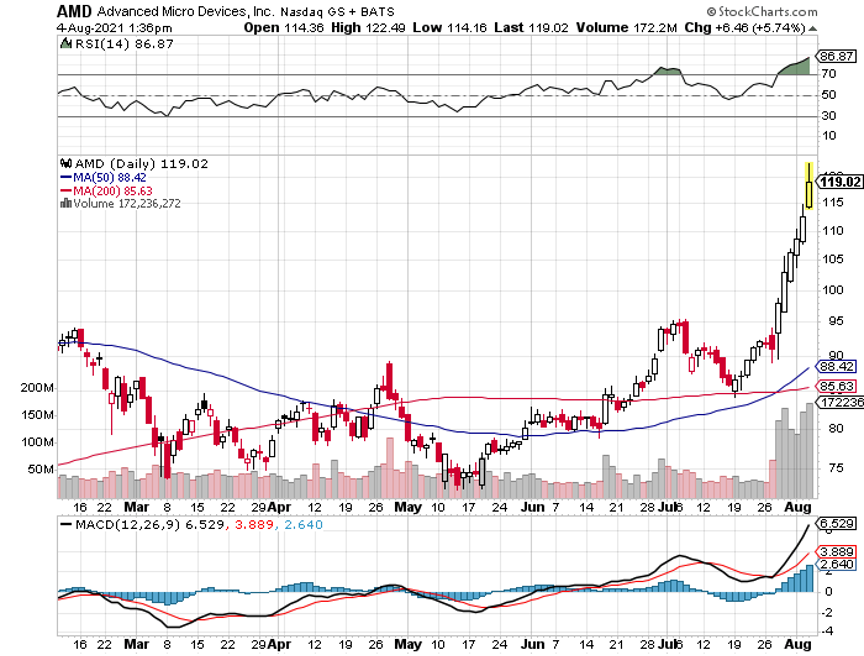
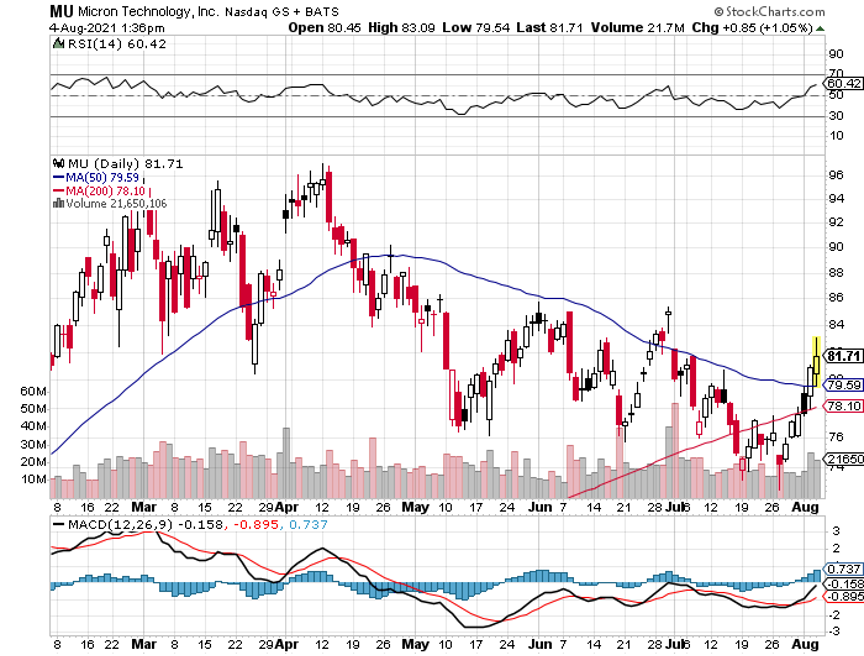
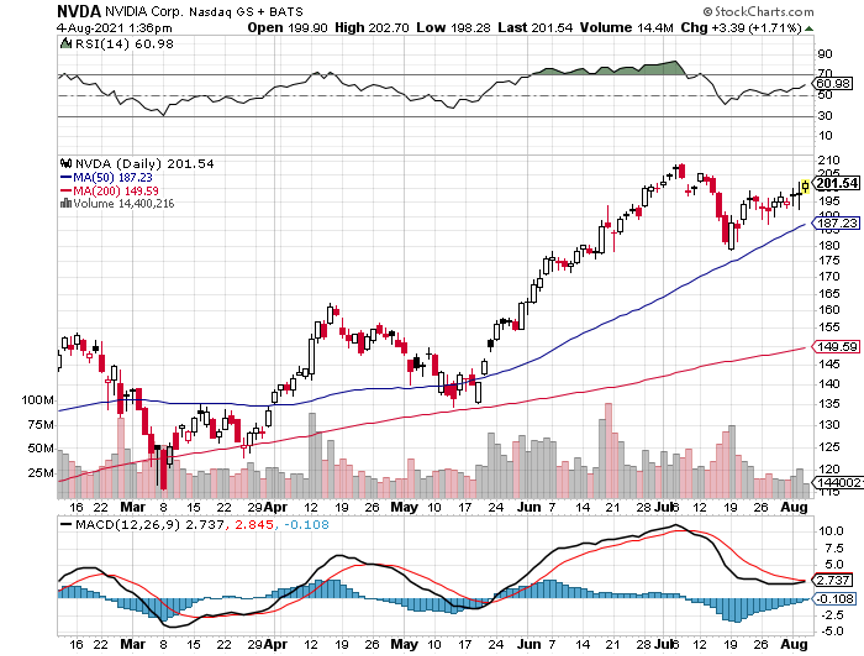
You can invest in the nets and bolts parts providers, such as NVIDIA (NVDA), Advanced Micro Devices (AMD), Micron Technology (MU), and Lam Research (LRCX), which provide the basic building blocks for the Internet infrastructure.
Fortunately for our paid subscribers, the Mad Hedge Trade Alert Service caught all of these very early.
What’s missing is the “in-between companies,” which are out of your reach because they are locked up in university labs or venture capital funds. Many of these never see the light of day as public companies because they get taken over by the tech giants above. It’s effectively a closed club that won’t let outsiders in. It’s a dilemma that vexes any serious technology investor.
When quantum computing arrives in a decade, you can take all the functionality above and multiply it by a trillion-fold, while costs drop a similar amount. That’s when things really get interesting. But then, I’ve seen trillion-fold increases in technology before.
I hope I live to see another.