• support@madhedgefundtrader.com
  • Member Login
Mad Hedge Fund Trader
  • Home
  • About
  • Store
  • Luncheons
  • Testimonials
  • Contact Us
  • Click to open the search input field Click to open the search input field Search
  • Menu Menu

Tag Archive for: (VTRS)

Mad Hedge Fund Trader

Another Foretold Acquisition

Biotech Letter

Another one of my predictions came true.

Last December, I wrote about the impressive potential of Trillium Therapeutics (TRIL) in my letter, titled “The Most Famous Cancer Stock You’ve Never Heard of,” and predicted that it’s going to be an attractive acquisition candidate soon.

Earlier this week, it finally happened.

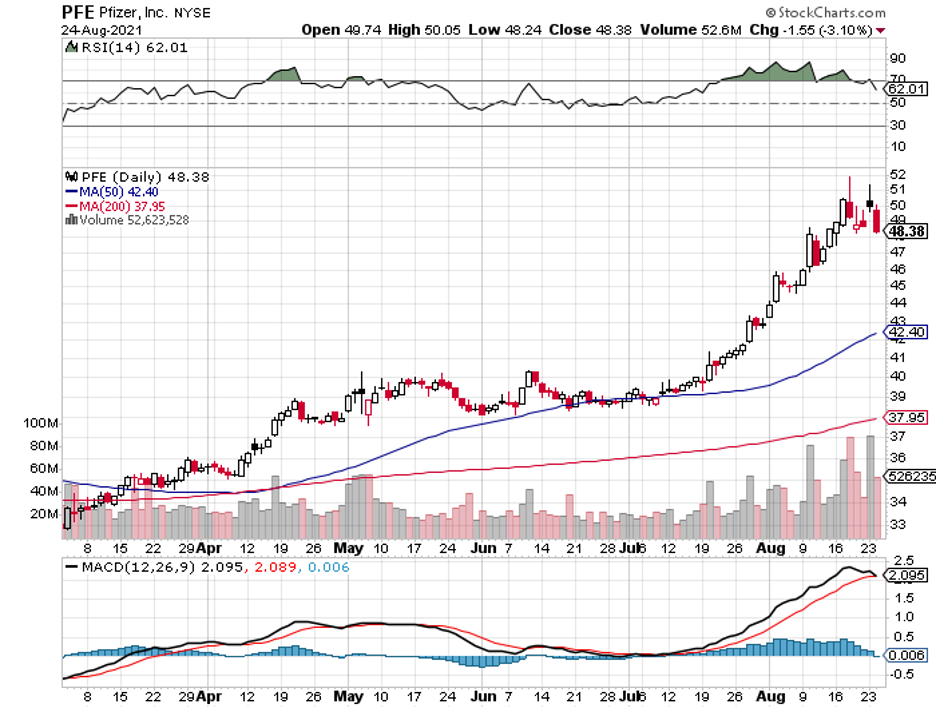
Leveraging its extra cash from Comirnaty, the COVID-19 vaccine it developed with BioNTech (BNTX), Pfizer (PFE) has decided to push through with acquisitions instead of pursuing buybacks.

And the candidate at the receiving end of this cash flow is none other than one of my buyout candidates last year: Trillium Therapeutics.

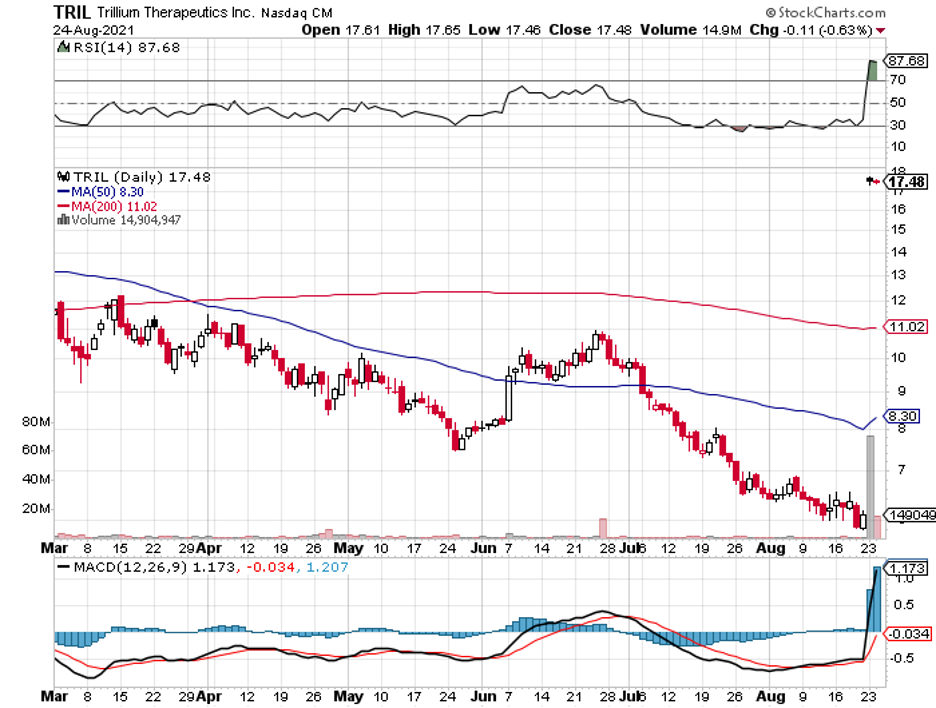
The $2.3 billion acquisition was an excellent deal for Trillium, with Pfizer buying the cancer-centered biotech at a 118% premium over the stock’s average price in the past 60 days.

Given that Trillium stock closed at roughly $6 per share before the announcement, the deal practically tripled its worth at $18.50 each.

The price signifies Pfizer’s willingness to pay up to take over Trillium pipeline and portfolio after initially investing $25 million in the smaller company in 2020.

Trillium shares also skyrocket by 188% following the announcement of the deal.

The plan is for Trillium Therapeutics to bolster Pfizer’s oncology and hematology portfolios, with a focus on blood-related cancers.

This recent turn of events has been long awaited by Pfizer investors.

After all, the last time the company exceeded expectations was during its Viagra-driven frenzy era back in the late 1990s. Since then, the stock has been underperforming the S&P 500.

Unquestionably, Pfizer’s work on the COVID-19 vaccine helped the stock recover. 

In its second quarter earnings report, Pfizer posted $7.8 billion in sales for Comirnaty alone. This brought the company’s total revenue to roughly $18.7 billion, showing off an 86% boost year over year.

However, even without Comirnaty’s contribution, Pfizer’s revenues still managed to rise.

Through the first six months of 2021, Pfizer’s revenue has reached $33.5 billion—up by 68% year over year. This is impressive considering that it followed the Upjohn spinoff with Mylan, which later became Viatris (VTRS).

Even without the COVID-19 vaccine, Pfizer still has promising growth prospects involving its core businesses.

For one, it has a number of blockbuster drugs that can easily become strong revenue streams for years to come.

For example, Prevnar sales grew by 34% year over year to reach $5.85 billion, pushing Pfizer’s oncology segment to climb by 16%.

Another blockbuster in the making is blood clot treatment Eliquis, which grew by 13% from the $5 billion in sales it generated in the second quarter of 2020.

As for its biosimilars, these notched a bit to more than $1.5 billion in sales last year and recorded a whopping 88% growth year over year thanks primarily to the newly released cancer drugs Zirabev, Ruxience, and Trazimera.

Meanwhile, heart failure treatment Vyndagel, which generated roughly $1.3 billion in 2020, reported an impressive 77% climb year over year for its $501 million in sales in the second quarter of 2021 alone.

Another heavy hitter in Pfizer’s portfolio is kidney cancer medication Inlyta, which reported $800 million in sales in 2020. For the second quarter of this year, the sales for this drug is up 29% year over year, with $257 million.

Management also boosted the company’s guidance from $70.5 billion to $72.5 billion.

Then, it raised it again to $78 billion, then once more to $80 billion. As for its COVID-19 vaccine sales, it increased its estimates from $26 billion to $33.5 billion.

While the sales from the COVID-19 vaccine definitely provided a comfortable boost for the company, its own portfolio of drugs demonstrates the capacity of its core business to drive revenues on its own.

Considering the FDA approval and support for the additional third booster shot, though, I anticipate that Pfizer will continue towards this path of acquiring smaller biotechnology companies in the foreseeable future.

In terms of other clinical-stage biotech firms potentially up for grabs next, the work of ALX Oncology (ALXO) has recently been put under the spotlight as it relates closely to Trillium’s cancer-centered technology.
trillium therapeutics


https://madhedgefundtrader.com/wp-content/uploads/2019/05/cropped-mad-hedge-logo-transparent-192x192_f9578834168ba24df3eb53916a12c882.png 0 0 Mad Hedge Fund Trader https://madhedgefundtrader.com/wp-content/uploads/2019/05/cropped-mad-hedge-logo-transparent-192x192_f9578834168ba24df3eb53916a12c882.png Mad Hedge Fund Trader2021-08-26 15:00:482021-08-31 02:54:08Another Foretold Acquisition
Mad Hedge Fund Trader

July 13, 2021

Biotech Letter


Mad Hedge Biotech & Healthcare Letter
July 13, 2021
Fiat Lux

FEATURED TRADE:

(SPINOFF STOCKS POISED FOR LONG-TERM GROWTH)
(VTRS), (OGN), (PFE), (MRK), (JNJ), (LLY), (ABBV),
(AZN), (GSK), (BMY), (GILD), (REGN), (PYPL), (EBAY), (CARR), (UTC)

https://madhedgefundtrader.com/wp-content/uploads/2019/05/cropped-mad-hedge-logo-transparent-192x192_f9578834168ba24df3eb53916a12c882.png 0 0 Mad Hedge Fund Trader https://madhedgefundtrader.com/wp-content/uploads/2019/05/cropped-mad-hedge-logo-transparent-192x192_f9578834168ba24df3eb53916a12c882.png Mad Hedge Fund Trader2021-07-13 14:02:062021-07-13 15:35:32July 13, 2021
Mad Hedge Fund Trader

Spinoff Stocks Poised for Long-Term Growth

Biotech Letter

Spinoffs have historically been known to deliver healthy returns for their investors.

A good example is PayPal (PYPL), which grew sevenfold since 2015 following its spinoff from eBay (EBAY).

A more recent example is Carrier Global (CARR), which tripled its shares amid the pandemic after its spinoff from United Technologies (UTC) last year.

Basically, spinoffs allow smaller segments of companies to thrive on their own or push high-growth divisions to expand faster.

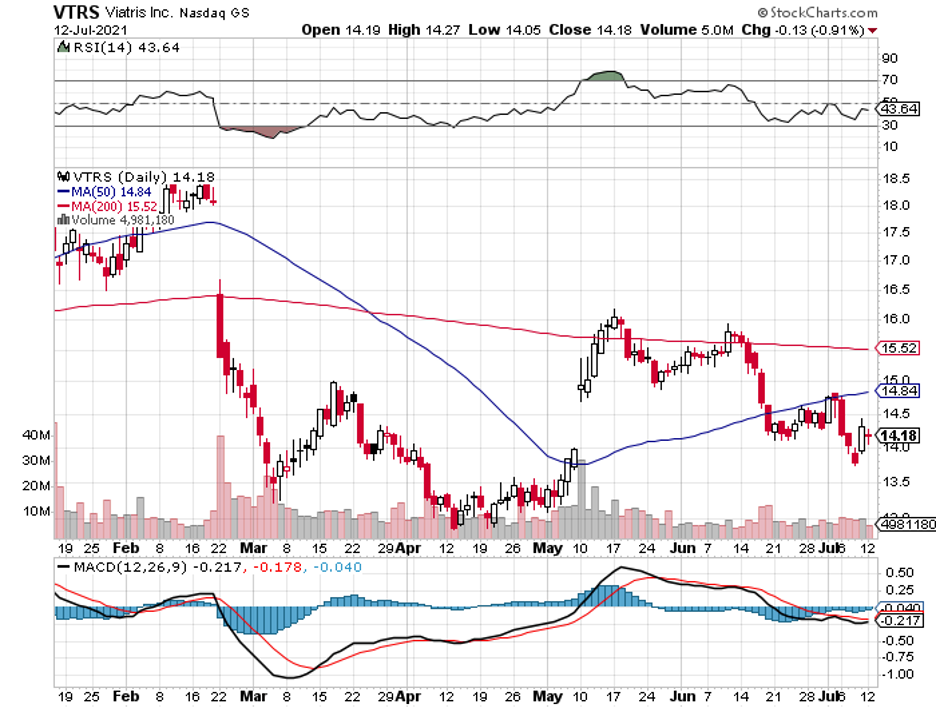
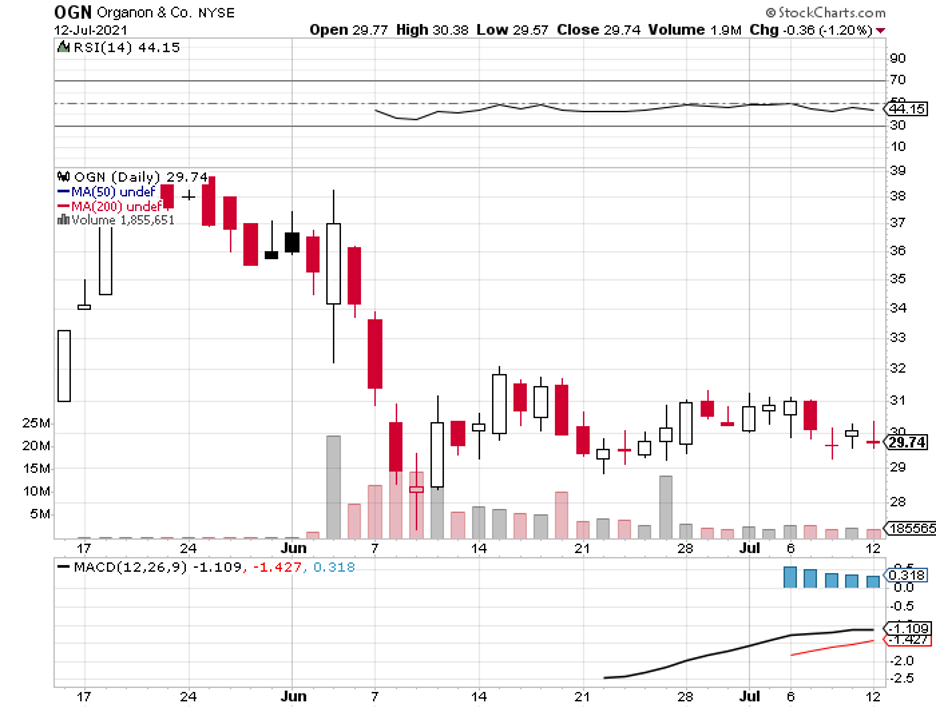
Over the past months, the cheapest stocks found in the S&P 500 have recently spun off pharmaceutical companies: Viatris (VTRS) and Organon (OGN).

Viatris is a spinoff of Pfizer (PFE), which merged with Mylan, while Merck (MRK) jettisoned Organon (OGN) just last month.

Both are brand new and still under the radar, particularly among investors who don’t follow healthcare updates.

While these two have yet to impress the market, both exhibit potential that could make them promising long-term prospects.

Viatris holds an extensive portfolio of drugs courtesy of Pfizer’s Upjohn unit and Mylan’s pipeline.

The list includes the previously top-selling Lipitor, Viagra, Lyrica, and even Norvasc from Pfizer. It also has Mylan’s income-generating EpiPen along with the company’s HIV/AIDS therapies and 7,500 marketed products across the globe.

To date, Viatris has fallen roughly 30% from its average price target. It’s not for the subpar performance of its products though. This is mostly attributed to the lack of attention from investors and possibly a bit of skepticism from some analysts.

However, Viatris has a really good value proposition.

The main goal of the biggest names in the biopharmaceutical sector, such as Johnson & Johnson (JNJ), Eli Lilly (LLY), AbbVie (ABBV), AstraZeneca (AZN), GlaxoSmithKline (GSK), Bristol-Myers Squibb (BMY), and Gilead Sciences (GILD), is to develop and launch the best-in-class treatments to market.

To achieve that, these industry giants are granted a set period to exclusively sell and market each new drug that gains approval.

This would allow them to command a premium price, which in turn would give them the money to fund the next round of research and development needed to come with the next generation of newer and improved versions of the treatment.

However, not everyone can afford those premium prices.

So when the periods of exclusivity end, there are companies like Mylan—now Viatris—that are allowed to manufacture generic versions of those branded drugs and sell them at lower prices.

The list of drugs with soon-to-expire patents for which Viatris has been working on creating biosimilars or generic versions include Humira from AbbVie, which recorded peak sales at $20 billion; Eylea from Regeneron (REGN), which peaked at $7.5 billion; and even Allergan’s Botox, which peaked at $5 billion.

Viatris is also working on biosimilars for Roche’s (RHHBY) cancer treatments Avastin, which had peak sales of $7 billion, and Perjeta, which peaked at $5 billion.

Obviously, Viatris will not reach the same height of success as the companies that created those branded drugs.

But, if it manages to achieve even only 10% of those numbers, then it can generate roughly $4 to $5 billion in sales—and that’s just the tip of the iceberg.

So far, Viatris owns at least 1,400 approved molecules applicable in roughly 10 therapeutic segments.

It has roughly 350 products in its pipeline at the moment, with each item estimated to generate approximately $100 million to $500 million in sales.

With its current performance and access to 165 countries and territories, Viatris is expected to generate roughly $224 billion in global sales annually.

With all these in mind, Viatris’ value proposition looks impressively strong to me.

More importantly, this Pfizer spinoff has the capacity to become the world’s first dominant generic and biosimilar drug manufacturer, with its revenues potentially becoming comparable to major pharmaceutical companies at some point.

The same value proposition could be behind Organon, as this newly spun-off company markets Merck’s off-patent drugs.

While the move to separate from its parent company has yet to show tangible results, Organon is projected to rake $6.1 billion to $6.4 billion in revenue for 2021, with annual sales expected to rise in mid-single digits and dividends anticipated to be about 3%.

The biosimilars market is still relatively young, with only 60 biosimilars approved in the EU and 29 in the US thus far. In total, those represent a market worth approximately $17 billion.

Conservative estimates project that the global biosimilars market will be worth $692 billion by 2027, considerably outpacing the mainstream pharmaceutical sector.

Given their potential and prospect for future gains, the low prices for companies like Viatris and Organon present rare opportunities to grab long-term investments.

viatris


https://madhedgefundtrader.com/wp-content/uploads/2019/05/cropped-mad-hedge-logo-transparent-192x192_f9578834168ba24df3eb53916a12c882.png 0 0 Mad Hedge Fund Trader https://madhedgefundtrader.com/wp-content/uploads/2019/05/cropped-mad-hedge-logo-transparent-192x192_f9578834168ba24df3eb53916a12c882.png Mad Hedge Fund Trader2021-07-13 14:00:032021-07-18 21:45:54Spinoff Stocks Poised for Long-Term Growth
Mad Hedge Fund Trader

May 6, 2021

Biotech Letter

Mad Hedge Biotech & Healthcare Letter
May 6, 2021
Fiat Lux

FEATURED TRADE:

(THE WHITE KNIGHT OF BIOPHARMA)
(PFE), (AMGN), (BMY), (LLY), (GILD), (MRK), (BNTX), (VTRS), (GSK)

https://madhedgefundtrader.com/wp-content/uploads/2019/05/cropped-mad-hedge-logo-transparent-192x192_f9578834168ba24df3eb53916a12c882.png 0 0 Mad Hedge Fund Trader https://madhedgefundtrader.com/wp-content/uploads/2019/05/cropped-mad-hedge-logo-transparent-192x192_f9578834168ba24df3eb53916a12c882.png Mad Hedge Fund Trader2021-05-06 15:02:222021-05-07 09:26:13May 6, 2021
Mad Hedge Fund Trader

The White Knight of Biopharma

Biotech Letter

After a week of dissatisfying earnings reports from huge biopharmaceutical firms like Amgen (AMGN), Bristol-Myers Squibb (BMY), Eli Lilly (LLY), Gilead Sciences (GILD), and Merck (MRK), one company has managed to buck the trend: Pfizer (PFE).

In its first quarter earnings report for 2021, Pfizer reported adjusted diluted earnings of 93 cents per share, surpassing the earlier experts’ estimate of 77 cents.

Even its reported revenue exceeded the earlier predictions of $13.4 billion, raking in $14.6 billion during the period instead.

Aside from those, Pfizer also massively boosted its projected revenue from the COVID-19 vaccine it developed with BioNTech (BNTX).

Pfizer’s COVID-19 vaccine is slated for approval to be used for 12- to 15-year-olds by next week.

On top of these, the company expects data from its third COVID-19 vaccine candidate. This recent trial is for a booster dose, which could have results by early July and possibly a full emergency approval later on the same month.

The company now estimates $26 billion in sales for the vaccine, which is notably up from its $15 billion projection in February 2021.

Pfizer is also confident in its capacity to manufacture at least 3 billion doses of the COVID-19 vaccine in 2022, with the company already negotiating agreements with countries for their 2022 supply and beyond.

While the huge boost in the company’s COVID-19 vaccine sales expectations definitely grabs headlines, Pfizer’s base business brought in notable results as well.

Apart from the vaccine, the company’s operational growth in the first quarter was mostly driven by the sales from its blood clot treatment Eliquis, which went up by 25% operationally.

Sales of its heart drug Vyndagel soared by 88%, while its cancer drug Xeljanz jumped 18%.

One of the most notable moves from Pfizer is spinning off its off-patent drug division, Upjohn, to form a new company with generic drug developer Mylan, called Viatris (VTRS).

This decision would rid Pfizer of several well-known products, such as Viagra, Lyrica, Lipitor, Celebrex, and Chantix, which were responsible for roughly 15% of its total revenues.

However, sales for these items fell by 30% in the first nine months of 2020 alone—a chronically falling performance since 2017.

By eliminating the products that no longer hold any exclusivity rights and signing them off to Viatris, Pfizer can focus on developing and marketing new and innovative treatments.

So far, this strategy has started to bear fruit.

At the moment, Pfizer has several attractive assets in its pipeline. One of them is non-small cell lung cancer (NSCLC) treatment Lorbrena, which could become one of the highest-selling products in the oncology market.

Lorbrena is estimated to grow to over $40 billion each year by the mid-2020s.

At this point, the drug is in its registration phase and was granted a priority-review status. That means approval is on the horizon in the not-so-distant future.

Other potential blockbuster oncology assets include prostate cancer drug Xtandi, NSCLC treatment Bavencio, and breast cancer medication Ibrance.

All these are in late-stage trials, which means they should be available to market soon.

In total, Pfizer currently has at least 33 drugs queued in either Phase 3 trials or registration. The list includes vaccine candidates, immunology treatments, and, of course, oncology assets.

While Pfizer lost Upjohn in 2020, it gained a new partner in GlaxoSmithKline (GSK). The two companies decided to merge their consumer healthcare programs.

This made them the biggest provider of non-prescription drugs across the globe.

By shedding its sluggishly growing assets, Pfizer managed to develop its culture into one that concentrates on developing and marketing new and innovative products.

Additionally, the company’s current portfolio holds several growing products with the potential for expansion.

Given all these changes, Pfizer raised its financial guidance for 2021 as well.

For this year, the company now estimates adjusted diluted earnings to be valued between $3.55 and $3.65 per share compared to the previous range of $3.10 to $3.20 per share.

In terms of its full-year revenue, the company raised it from its estimate between $59.4 billion and $61.4 billion to $70.50 billion and $72.5 billion.

In terms of its projected revenue compound annual growth rate, Pfizer reconfirmed that it could deliver at least 6% through 2025 and a double-digit growth on its bottom line.

Remarkably, this is still not taking into consideration its COVID-19 vaccine.

If you pull out the revenues from its COVID-19 vaccine, then the company’s projected EPS growth for 2021 is at 15%.

Adding the vaccine into the equation gives us an impressive 41% increase in its EPS.

If you consider the wild card that is Pfizer’s COVID-19 vaccine, which would include a price increase coupled with the possibility of booster shots administered annually, and combine it with its base business, then it’s easy to see how the company’s growth could be turbocharged in the next few years.


Pfizer covid

https://madhedgefundtrader.com/wp-content/uploads/2019/05/cropped-mad-hedge-logo-transparent-192x192_f9578834168ba24df3eb53916a12c882.png 0 0 Mad Hedge Fund Trader https://madhedgefundtrader.com/wp-content/uploads/2019/05/cropped-mad-hedge-logo-transparent-192x192_f9578834168ba24df3eb53916a12c882.png Mad Hedge Fund Trader2021-05-06 15:00:192021-05-18 18:30:18The White Knight of Biopharma
Mad Hedge Fund Trader

March 30, 2021

Biotech Letter

Mad Hedge Biotech & Healthcare Letter
March 30, 2021
Fiat Lux

FEATURED TRADE:

(A PURE PLAY STOCK SELLING AT A BARGAIN)
(PFE), (BNTX), (MRNA), (AZN), (JNJ), (NVAX), (MRK), (VTRS), (LLY), (REGN)

https://madhedgefundtrader.com/wp-content/uploads/2019/05/cropped-mad-hedge-logo-transparent-192x192_f9578834168ba24df3eb53916a12c882.png 0 0 Mad Hedge Fund Trader https://madhedgefundtrader.com/wp-content/uploads/2019/05/cropped-mad-hedge-logo-transparent-192x192_f9578834168ba24df3eb53916a12c882.png Mad Hedge Fund Trader2021-03-30 16:02:452021-03-30 17:08:16March 30, 2021
Mad Hedge Fund Trader

A Pure Play Stock Selling at a Bargain

Biotech Letter

It’s virtually impossible to find a period in history when drug development gained the unmitigated attention of the whole world.

Yet, this is exactly what happened in 2020 when we all waited with bated breath for the results of COVID-19 trials from the likes of Pfizer (PFE), BioNTech (BNTX), Moderna (MRNA), AstraZeneca (AZN), Johnson & Johnson (JNJ), and Novavax (NVAX).

Despite this, it is astounding that biopharmaceutical stocks are cheaper than they have ever been in the past 20 years.

Given the fact that its collaboration with BioNTech made a central figure in the COVID-19 vaccine race, I think it’s best to put a spotlight on Pfizer today.

Pfizer was the first biopharmaceutical company to successfully market a COVID-19 vaccine, BNT162b2.

Recently, Pfizer received another good news. The FDA is no longer demanding that the company transport BNT162b2 at ultra-low temperatures.

When Pfizer revealed its strong results last year, the world was impressed and no one barely noticed the ultra-cold storage requirement that the achievement entailed.

But with competitors already gaining approvals as well, this particular requirement started to pose noticeable challenges to Pfizer’s vaccine supply chain and made it extremely challenging transporting the much-needed vaccines to remote areas.

These challenges highlight the significance of the recent FDA announcement regarding BNT162b2.

In terms of market share, Pfizer holds a significant advantage over the others.

As of the year-end of 2020, the company supplied 65 million doses to developed markets.

Meanwhile, the 2021 forecast for this product is at nearly 2 billion doses. This is estimated to rake in roughly $15 billion in revenue for Pfizer.

In comparison, Moderna’s advanced purchase deals are estimated to be worth $18 billion.

To sustain immunity, there’s the possibility that the vaccine would be needed annually.

This could lead to substantial demand for doses, with a two-dose vaccine like BNT162b2 projected to reach about 10 billion doses every year.

Realistically, the rising need for doses and the manufacturing requirements will obviously pressure profit margins.

However, if the vaccine does turn out to be an annual necessity, then it could become a valuable asset.

The entire COVID-19 market is estimated at $39 billion in 2021 and $23 billion in 2022.

Pfizer and even Moderna’s first mover advantage can easily help them dominate the market this year.

This means that the competition will heat up by 2022.

To ensure that it keeps the lead, Pfizer has commenced the Phase 1 trial for a COVID-19 pill.

Pfizer’s pill, dubbed PF-07321332, aims to inhibit the enzymes that cause the SARS-CoV-2 virus to replicate. The goal is to create an antiviral drug that works pretty much the same way as the one developed for HIV and Hepatitis C.

If the trials generate positive results, then PF-07321332 could be taken at the first sign of infection.

So far, lab results have shown the pill’s potent capacity to prevent the SARS-CoV-2 virus and other coronaviruses from replicating.

Pfizer isn’t the only one that came up with the idea of a COVID-19 pill. Merck (MRK), Eli Lilly (LLY), and Regeneron (REGN) have been conducting tests for their own version of the antiviral.

However, Pfizer is more than its COVID-19 programs.

In the past, investors wondered about the long-term growth potential of this company. Some questions are linked to its Upjohn unit, which included several products that lost patent exclusivity.

This segment clouded Pfizer’s pure play revenue and even its earnings growth. However, these questions were put to an end last year when Upjohn’s finally separated from Pfizer and formed a new company, Viatris (VTRS), with Mylan.

The effect of this move showed an amplified growth for Pfizer almost immediately.

In the fourth quarter alone of 2020, the company reported $11.68 billion in revenue, indicating a 12% increase year-over-year. If we exclude the sales from the COVID-19 vaccine, Pfizer’s revenue was still up by 8%.

Every key product segment in the company recorded revenue growth, which is remarkable considering the effects of the pandemic.

Revenue for its oncology sector went up 23% to reach $3 billion, with breast cancer treatment Ibrance leading the charge with an 11% boost to its sales to hit $1.4 billion.

To ensure that it corners the market, Pfizer also launched biosimilars Zirabev and Ruxience in the same quarter. Both generated $171 million in total.

Outside its COVID-19 program, other products in Pfizer’s vaccine segment significantly contributed to the 17% increase in revenue to reach $2 billion.

For example, the pneumonia vaccine Prevnar generated $1.8 billion thanks to the 10% boost in its revenue year-over-year.

As for Pfizer’s rare disease unit, revenue went up 24% to reach $865 million.

The segment leader so far is cardiomyopathy treatment Vyndagel, which achieved a jaw dropping 96% year-over-year boost in its revenue to generate $429 million. This product won’t face patent loss until 2026, so Pfizer still has a few more years to take advantage of it.

Pfizer’s revenues in 2020 were up 2% at $41.9 billion. Considering that it still managed to boost sales despite the pandemic, there’s a good chance that 2021 will be a better year for the company.

In fact, Pfizer estimates that it would reach nearly $60 billion in revenue, with an annualized EPS of roughly $3.15 in 2021.

Global sales in the biotechnology and healthcare industry are projected to be worth $1.2 trillion annually. This is a massive market that is all but guaranteed.

The S&P 500 trades at nearly 21.5x forward earnings, with pharmaceutical companies trading at only 13.2x. That’s a whopping 60% discount.

Considering that drug stocks have historically traded at roughly the same level as the S&P 500, the current situation still offers an unmistakable promise even if nothing else happens.

Continuous development in the sector not only advances our quality of life but also offers reasonable returns to investors.


pfizer

https://madhedgefundtrader.com/wp-content/uploads/2019/05/cropped-mad-hedge-logo-transparent-192x192_f9578834168ba24df3eb53916a12c882.png 0 0 Mad Hedge Fund Trader https://madhedgefundtrader.com/wp-content/uploads/2019/05/cropped-mad-hedge-logo-transparent-192x192_f9578834168ba24df3eb53916a12c882.png Mad Hedge Fund Trader2021-03-30 16:00:282021-04-03 23:48:48A Pure Play Stock Selling at a Bargain
Mad Hedge Fund Trader

December 29, 2020

Biotech Letter

Mad Hedge Biotech & Healthcare Letter
December 29, 2020
Fiat Lux

FEATURED TRADE:

(BUY BEFORE THE RALLY)
(PFE), (MRNA), (AZN), (MRK), (GILD), (VTRS)

https://madhedgefundtrader.com/wp-content/uploads/2019/05/cropped-mad-hedge-logo-transparent-192x192_f9578834168ba24df3eb53916a12c882.png 0 0 Mad Hedge Fund Trader https://madhedgefundtrader.com/wp-content/uploads/2019/05/cropped-mad-hedge-logo-transparent-192x192_f9578834168ba24df3eb53916a12c882.png Mad Hedge Fund Trader2020-12-29 11:02:452020-12-29 16:50:07December 29, 2020
Page 3 of 3123

tastytrade, Inc. (“tastytrade”) has entered into a Marketing Agreement with Mad Hedge Fund Trader (“Marketing Agent”) whereby tastytrade pays compensation to Marketing Agent to recommend tastytrade’s brokerage services. The existence of this Marketing Agreement should not be deemed as an endorsement or recommendation of Marketing Agent by tastytrade and/or any of its affiliated companies. Neither tastytrade nor any of its affiliated companies is responsible for the privacy practices of Marketing Agent or this website. tastytrade does not warrant the accuracy or content of the products or services offered by Marketing Agent or this website. Marketing Agent is independent and is not an affiliate of tastytrade. 

Legal Disclaimer

There is a very high degree of risk involved in trading. Past results are not indicative of future returns. MadHedgeFundTrader.com and all individuals affiliated with this site assume no responsibilities for your trading and investment results. The indicators, strategies, columns, articles and all other features are for educational purposes only and should not be construed as investment advice. Information for futures trading observations are obtained from sources believed to be reliable, but we do not warrant its completeness or accuracy, or warrant any results from the use of the information. Your use of the trading observations is entirely at your own risk and it is your sole responsibility to evaluate the accuracy, completeness and usefulness of the information. You must assess the risk of any trade with your broker and make your own independent decisions regarding any securities mentioned herein. Affiliates of MadHedgeFundTrader.com may have a position or effect transactions in the securities described herein (or options thereon) and/or otherwise employ trading strategies that may be consistent or inconsistent with the provided strategies.

Copyright © 2026. Mad Hedge Fund Trader. All Rights Reserved. support@madhedgefundtrader.com
Scroll to top